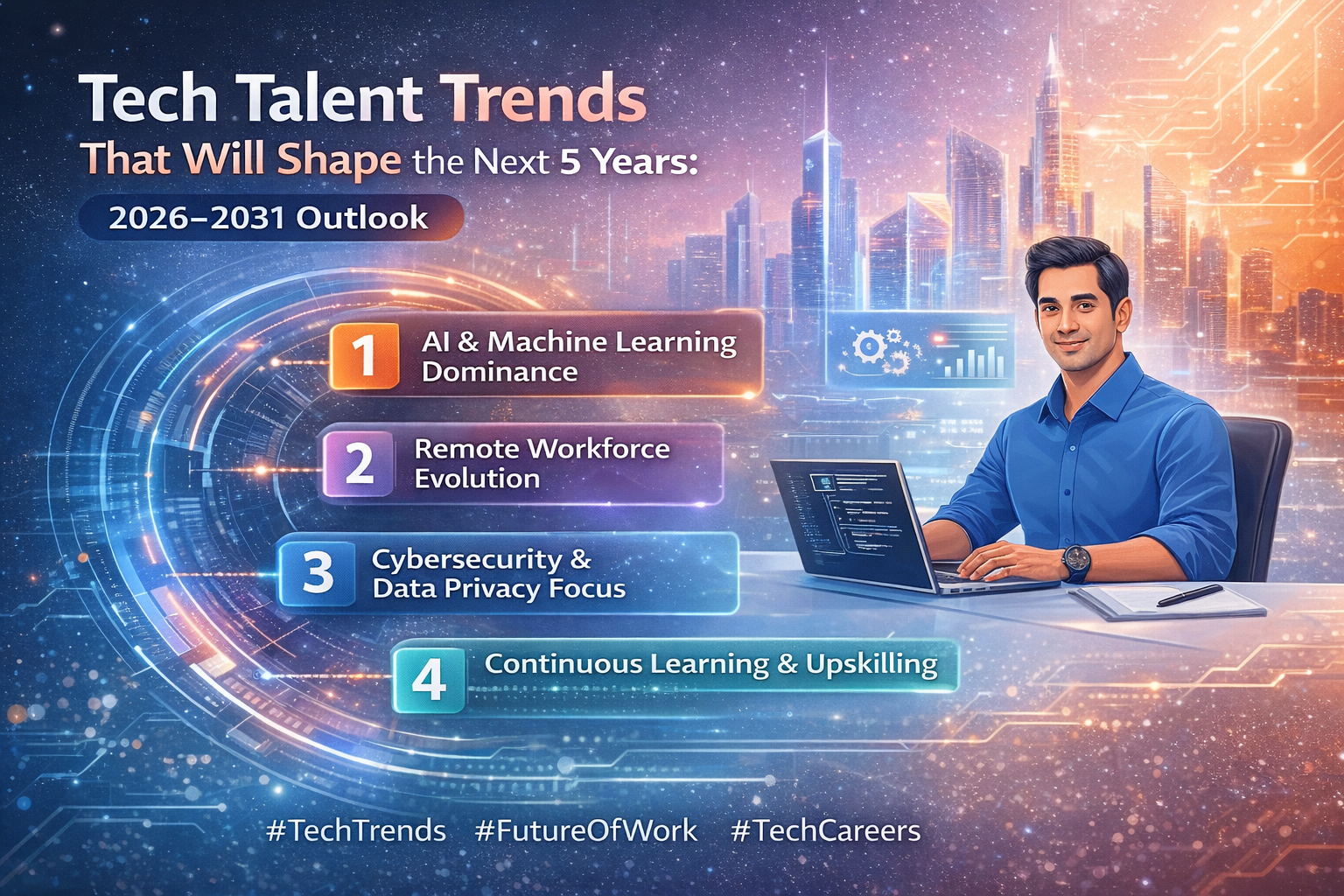
Tech Talent Trends That Will Shape the Next 5 Years: 2026–2031 Outlook
The technology industry is transforming rapidly, and talent strategies that worked in 2020 will not work in 2030. Because emerging trends in AI, remote work, skill requirements, and workforce preferences are reshaping how organizations hire, develop, and retain tech talent, understanding these trends is essential for staying competitive.
Tech Talent Trends That Will Shape the Next 5 Years
The Fundamental Shift in Tech Talent Dynamics
Because artificial intelligence, automation, and distributed work models have fundamentally altered how technology work gets done, the talent landscape is experiencing unprecedented transformation. Consequently, organizations that fail to recognize and adapt to these trends will find themselves unable to compete for talent or execute their technology strategies effectively.
Moreover, the shift is not gradual—it is accelerating. The last five years saw massive changes in remote work adoption, skills requirements, and professional expectations. Therefore, the next five years will likely bring even more dramatic transformation. Furthermore, organizations that anticipate trends will build competitive advantage, while those that react too late will struggle with talent shortages and execution delays.
Additionally, the talent market has fundamentally shifted in favor of professionals. Because skills are scarce and demand is intense, professionals have choices. Consequently, organizations must compete aggressively for talent through not just compensation, but culture, flexibility, and growth opportunities. Thus, understanding what professionals actually value is now essential for organizational survival.
Significantly, talent trends are not separate from business trends—they directly enable or constrain business execution. Thus, understanding tech talent trends is understanding your organization’s future capability.
Trend 1: AI Augmentation and Skills Convergence
Because artificial intelligence is becoming embedded in development workflows, testing processes, and infrastructure management, the nature of tech work is fundamentally changing. Consequently, professionals who can collaborate effectively with AI tools will be exponentially more productive than those who cannot.
Moreover, this is not about AI replacing developers. Instead, it is about developers becoming more capable through AI augmentation. For example, GitHub Copilot and similar tools are increasing developer productivity by 35–50% on routine coding tasks. Therefore, developers who embrace AI tooling become force multipliers.
Furthermore, skills are converging. Previously, frontend developers, backend developers, DevOps engineers, and data engineers were distinct disciplines with separate skill paths. However, AI coding assistants mean that full-stack knowledge becomes more achievable. Consequently, the market will shift toward professionals who can work across multiple domains—front-to-back, or across engineering and operations.
Additionally, this convergence creates both opportunity and risk. Opportunity: professionals who upskill across domains become dramatically more valuable. Risk: specialists in narrow domains might see their market value decline. Therefore, professionals who invest in breadth will thrive over the next five years.
Moreover, organizations will increasingly value professionals who can guide and quality-check AI output rather than produce code from scratch. Thus, skills shift from pure coding to architectural thinking, design, and code review.
Significantly, AI augmentation is not a distant future—it is happening now. Therefore, professionals and organizations that adapt immediately will gain 5-year advantages.
Trend 2: The Explosion of Remote Work and Global Talent Access
Because remote work has proven to be viable, productive, and preferred by many professionals, the geographic constraints on talent have dissolved. Consequently, organizations no longer need to recruit exclusively from local or even national talent pools—they can recruit globally.
Furthermore, this has profound implications for compensation and hiring. For example, a company in San Francisco can now recruit exceptional engineers from Eastern Europe or Latin America at lower total cost while gaining geographic diversity. Therefore, compensation structures will increasingly reflect global market dynamics rather than local labor costs.
Additionally, truly global teams create challenges: timezone coordination, cultural diversity management, and asynchronous communication become critical. Consequently, organizations that master distributed team management will have access to better talent at lower cost. Those that struggle will be at competitive disadvantage.
Moreover, remote work reshapes career expectations. Professionals increasingly expect flexibility: work from anywhere, flexible hours, sometimes in-office. Organizations that mandate office presence will struggle to attract top talent. Therefore, flexibility becomes table stakes.
Furthermore, remote work enables talent access during life transitions. For example, a parent caring for children, someone managing health challenges, or someone preferring lifestyle flexibility can remain productive and engaged with remote arrangements. Consequently, organizations that enable remote work access broader and more diverse talent pools.
Significantly, the shift to global talent markets will continue accelerating. Therefore, organizations should prepare now for fully distributed teams rather than clinging to office-based models.
Trend 3: Skills Shortages in Critical Areas Will Worsen
Because AI, cloud computing, cybersecurity, and data engineering require expertise that universities have not yet trained at scale, skills shortages in critical areas will intensify over the next five years. Consequently, competition for talent in these domains will become increasingly fierce.
Moreover, this shortage creates both opportunity and risk for professionals. Opportunity: professionals with expertise in scarce domains command premium compensation and abundant opportunities. Risk: organizations unable to attract this talent will fall behind.
Furthermore, the shortage drives three responses:
1. Premium Compensation: Salaries for cloud architects, AI engineers, and security specialists will continue rising faster than inflation. Consequently, budgets for these roles must increase substantially.
2. Automation and Abstraction: Organizations will invest in tools and platforms that abstract complexity, allowing less specialized professionals to do more. Therefore, managed services and low-code platforms will proliferate.
3. Upskilling and Internal Development: Organizations will invest heavily in training existing staff to fill gaps. Therefore, professional development budgets will increase.
Additionally, geographic arbitrage will intensify. Organizations will recruit globally to find talent in markets with better supply. Therefore, companies in high-cost markets will increasingly recruit from lower-cost regions.
Significantly, addressing skills shortages will be a major organizational challenge and cost driver. Thus, understanding which skills are most critical to your strategy is essential.
Trend 4: Hybrid and Augmented Talent Models Will Dominate
Because traditional full-time hiring is slow and inflexible, and pure outsourcing sacrifices control, hybrid models combining permanent core teams with augmented external talent will become the dominant staffing approach. Consequently, organizations that master hybrid team management will execute significantly faster than those using only traditional hiring.
Moreover, this trend is not about cost-cutting. Instead, it is about matching talent types to work types. For example: strategic leadership and core engineering should be permanent; temporary capacity spikes should be augmented; specialized expertise should be contracted. Therefore, hybrid approaches optimize organizational structure.
Furthermore, augmentation will evolve. Today, augmentation is often reactive (“we need someone now”). Over the next five years, it will become strategic (“here is our permanent core and our strategic augmentation plan”). Consequently, organizations will plan augmentation alongside permanent hiring.
Additionally, augmentation partners will increasingly offer knowledge transfer and upskilling alongside capacity. Therefore, augmentation becomes not just a staffing tool but a talent development tool.
Moreover, the professionalization of augmentation will continue. Standards will emerge around quality screening, integration practices, and knowledge transfer. Therefore, augmentation will mature from transaction-focused to partnership-focused.
Significantly, hybrid teams will become table stakes for competitive organizations. Thus, mastering this approach is no longer optional.
Trend 5: Developer Experience and Work Environment Matter More Than Ever
Because the best professionals have abundant options, organizations must compete on more than just salary. Consequently, work environment, developer experience, and culture have become decisive factors in talent attraction and retention.
Moreover, “developer experience” encompasses: meaningful work, growth opportunities, autonomy, sustainable workload, inclusive culture, and supportive leadership. Therefore, organizations that excel in these areas will attract and retain exponentially better talent.
Furthermore, remote work has changed expectations around work environment. For example, professionals no longer tolerate long commutes, toxic offices, or inflexible schedules—they have proven that quality work is possible elsewhere. Therefore, organizations offering flexibility, trust, and quality of life will win talent.
Additionally, diversity and inclusion have moved beyond compliance to competitive necessity. For example, diverse teams make better decisions and build better products. Therefore, organizations committed to genuine inclusion will build stronger teams.
Moreover, professional development budgets, mentorship, and career pathways are now hygiene factors—table stakes rather than differentiators. Therefore, investment in development is no longer optional.
Significantly, the “perks” game (free lunch, foosball tables) no longer works. Instead, professionals want: meaningful work, growth, flexibility, and respect. Thus, organizational culture and management quality are now primary talent attractors.
Trend 6: Continuous Learning Will Become Mandatory, Not Optional
Because technology evolves faster than ever, professionals who stop learning become outdated within 2–3 years. Consequently, organizations and professionals who commit to continuous learning will remain competitive; those that don’t will fall behind.
Moreover, continuous learning is not just individual responsibility—organizations must enable it. For example, learning budgets, time for training, mentorship, and conference attendance should be standard.
Furthermore, the forms of learning are evolving. Traditional certifications remain valuable, but bootcamps, online courses, communities of practice, and peer learning are increasingly important. Therefore, organizations should support multiple learning modalities.
Additionally, learning must be tied to business priorities. For example, if the organization is pursuing cloud transformation, cloud training becomes mandatory. If pursuing AI capabilities, AI training becomes critical. Therefore, learning plans should align with strategic goals.
Moreover, internal knowledge-sharing becomes critical. For example, teams that regularly share knowledge—through tech talks, code reviews, pair programming, and documentation—learn faster and build stronger capabilities. Therefore, investment in knowledge-sharing infrastructure is essential.
Significantly, organizations with strong learning cultures will attract and retain talent far more effectively than those without. Thus, learning culture is competitive advantage.
Trend 7: Specialization and T-Shaped Skills Will Define Career Trajectories
Because technology has become increasingly complex, professionals cannot be experts in everything. Consequently, the most valuable professionals are “T-shaped”: deep expertise in one area (vertical bar) combined with broad knowledge across multiple domains (horizontal bar).
Moreover, this shapes career development. For example, a professional might specialize deeply in Kubernetes (vertical) while maintaining competence in cloud architecture, networking, and security (horizontal). Therefore, T-shaped development creates more valuable professionals.
Furthermore, specialization reduces fungibility (replaceability). For example, a Kubernetes specialist with deep platform engineering expertise is irreplaceable; a generic “DevOps person” is easily replaced. Therefore, professionals who specialize become more secure and valuable.
Additionally, T-shaped skills enable team flexibility. For example, if a specialist is unavailable, broad knowledge allows others to step in. Therefore, T-shaped teams are more resilient.
Moreover, organizations should actively develop T-shaped professionals. For example, encouraging engineers to learn adjacent domains, rotate through different roles, and explore new technologies. Therefore, career development should intentionally build T-shape.
Significantly, T-shaped professionals are dramatically more valuable and will command premium compensation. Thus, developing T-shaped capabilities is strategic investment.
Trend 8: Soft Skills and Leadership Will Become More Valuable Than Pure Technical Skills
Because technology is increasingly commoditized (cloud abstracts infrastructure, AI assists coding, tools automate operations), the scarcest resource is not technical knowledge—it is judgment, communication, and leadership. Consequently, professionals who combine technical knowledge with strong soft skills will become exponentially more valuable.
Moreover, this shapes hiring priorities. For example, organizations should prioritize: ability to learn > specific technical knowledge, communication > pure coding ability, collaboration > individual contribution. Therefore, hiring criteria should shift.
Furthermore, technical leadership (architects, leads, principal engineers) will increasingly require soft skills. For example, ability to make tradeoffs, influence without authority, mentor others, and communicate across boundaries. Therefore, technical leaders need business acumen and communication skills.
Additionally, the “lone genius” archetype is becoming obsolete. Instead, organizational success depends on teams that communicate effectively, collaborate seamlessly, and resolve conflicts constructively. Therefore, soft skills are now critical.
Moreover, this creates opportunity for professionals willing to develop leadership skills. For example, engineers who develop communication, mentoring, and strategic thinking skills will advance faster than pure technologists. Therefore, professional development should emphasize soft skills.
Significantly, soft skills are increasingly the limiting factor for advancement. Thus, professionals and organizations should prioritize development.
Trend 9: Cybersecurity Talent Will Command Premium Value
Because cyber threats are intensifying and regulation is tightening, cybersecurity expertise will become increasingly valuable. Consequently, security professionals will have abundant opportunities and commanding compensation over the next five years.
Moreover, security skills are scarce: the talent gap exceeds other IT disciplines. Therefore, organizations serious about security must invest substantially in talent.
Furthermore, security will increasingly permeate all roles. For example, all developers should understand secure coding; all architects should consider security; all operations professionals should monitor security. Therefore, security awareness across all professionals becomes mandatory.
Additionally, security specialization will deepen. For example, cloud security, API security, AI security, and supply chain security will become distinct specializations. Therefore, security professionals who specialize will command premium value.
Moreover, security certifications (CISSP, CEH, CCSK) will become more valuable as organizations demand credentialed professionals. Therefore, investment in security certifications pays substantial dividends.
Significantly, cybersecurity talent shortages will worsen before improving. Thus, organizations should invest now in security capability.
Trend 10: Diversity and Inclusion Will Drive Competitive Advantage
Because diverse teams make better decisions, solve problems more creatively, and build products that serve broader markets, diversity and inclusion are competitive advantages—not compliance obligations. Consequently, organizations that prioritize genuine diversity will execute better and attract better talent.
Moreover, diversity extends beyond demographics. For example, cognitive diversity (different thinking styles), background diversity (different industries and experience), and geographic diversity (distributed teams) all strengthen organizations.
Furthermore, inclusion is as important as diversity. For example, having diverse teams is worthless if people feel excluded or unvalued. Therefore, creating psychologically safe, inclusive environments is critical.
Additionally, this shapes hiring practices. For example, blind resume review, diverse interview panels, structured evaluation criteria, and explicit diversity goals all improve outcomes. Therefore, intentional inclusion practices should be standard.
Moreover, retention of underrepresented professionals requires sustained investment. For example, affinity groups, mentorship programs, and inclusive career development enable retention. Therefore, ongoing commitment is necessary.
Significantly, diversity and inclusion are no longer “nice-to-have”—they are competitive imperatives. Thus, organizations should prioritize systematically.
What Organizations Should Do Now
Because these trends are developing now, organizations should begin adapting immediately.
1. Assess Current Talent Strategy
Evaluate: Are we optimized for hybrid teams? Do we invest in learning? Are we developing T-shaped professionals? Do we compete on developer experience? Therefore, honest assessment reveals gaps.
2. Plan Hybrid Talent Architecture
Design permanent core, augmented capacity, and learning strategy explicitly. Therefore, intentional planning enables execution.
3. Invest in Developer Experience
Evaluate culture, workload, growth opportunities, flexibility. Therefore, investment in experience differentiates organizations.
4. Develop Learning Culture
Establish budgets, time, mentorship, and communities. Therefore, organizations that enable learning retain talent.
5. Diversify and Deepen Skills
Develop T-shaped professionals with specialization and breadth. Therefore, skill development creates valuable professionals.
6. Prioritize Soft Skills
Invest in communication, leadership, and collaboration skills. Therefore, soft skills become career accelerators.
7. Build Security Capability
Invest in security talent and security awareness across all professionals. Therefore, security capability becomes competitive advantage.
Recent Posts
-
 March 5, 2026
Microservices Architecture: Benefits and Implementation Tips
-
 March 3, 2026
How Remote Work Has Changed the IT Industry and Tools You Need
-
 March 2, 2026
API Design and Management Best Practices for Developers
-
 February 27, 2026
The Impact of Internet of Things (IoT) on Modern Business
-
 February 26, 2026
Virtual and Augmented Reality: Where Tech is Headed Next | 2026 Guide
-
 February 25, 2026
Blockchain Beyond Cryptocurrency: Real-World Applications & Use Cases (2026 Guide)
-
 February 24, 2026
The Role of AI in Enhancing IT Development: A Deep Dive (2026 Guide)
-
 February 23, 2026
Maximizing Productivity: How Staff Augmentation Drives Innovation in IT Projects
-
 February 20, 2026
Staff Augmentation vs. Outsourcing: Which IT Model Wins in 2026?
-
 February 19, 2026
The Rise of Hybrid Teams: How to Leverage Staff Augmentation for Business Success
-
 February 18, 2026
How Staff Augmentation is Transforming the Future of IT Workforce (2026)
-
 February 17, 2026
5 Reasons Why Staff Augmentation is Key for Tech Skill Shortages: staff augmentation for tech skill shortages
-
 February 16, 2026
How Staff Augmentation Helps Scale Your Business Without Overheads in 2026
-
 February 13, 2026
The Power of Diverse Teams: How Staff Augmentation Drives Inclusion (2026)
-
 February 12, 2026
The Role of 5G Technology in Shaping IT Development and Augmentation in 2026
-
 February 11, 2026
The Future of Blockchain: Revolutionizing IT Services in 2026
-
 February 10, 2026
Building an Authentic Employer Brand Through Staff Augmentation in 2026
-
 February 9, 2026
Supporting Augmented Professionals During Projects: Best Practices for Success
-
 February 6, 2026
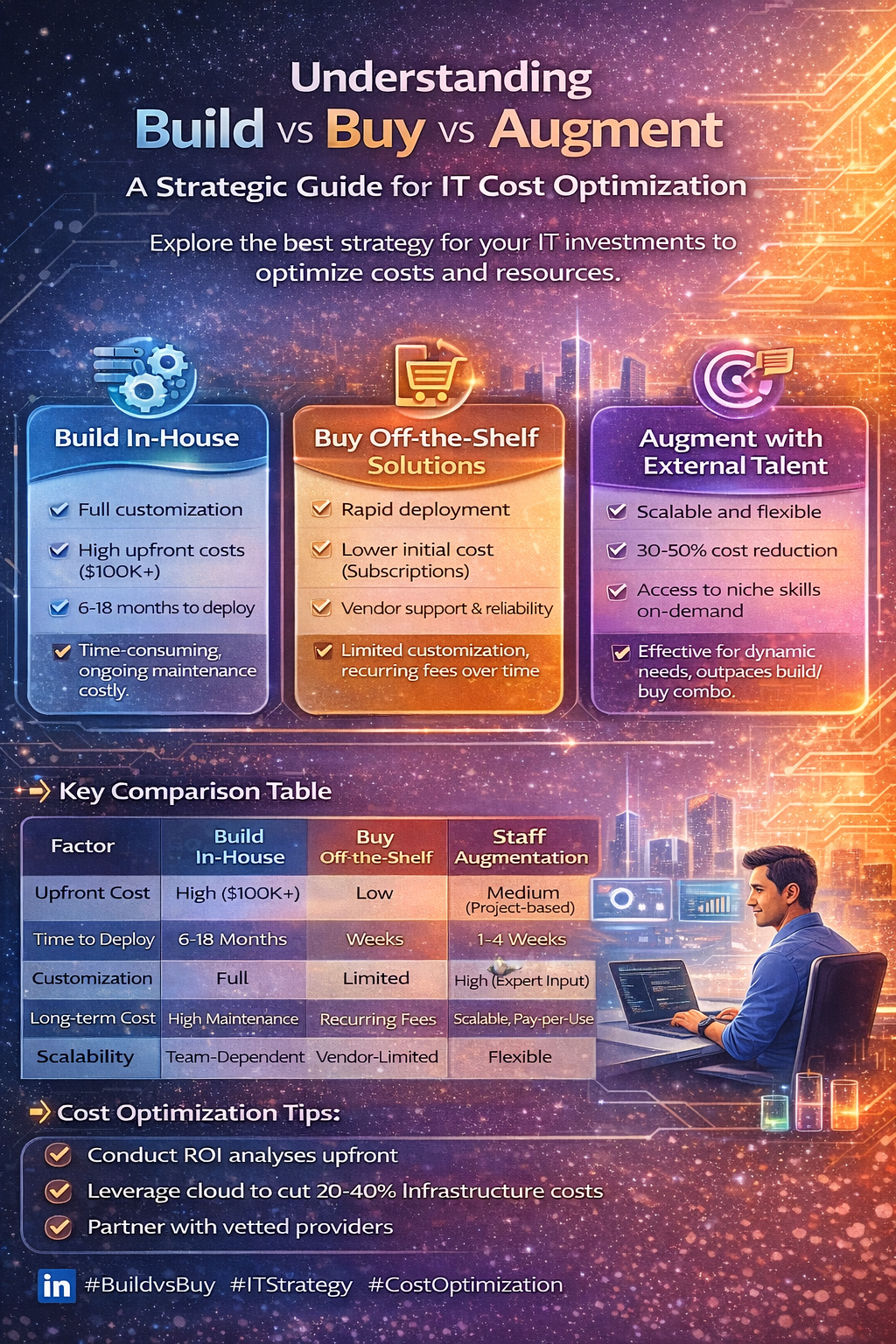
Cost Optimization in IT: Build vs Buy vs Staff Augmentation (2026 Guide)
-
 February 5, 2026
The Role of DevOps in High-Performance Engineering Teams: Best Practices Guide
-
 February 4, 2026
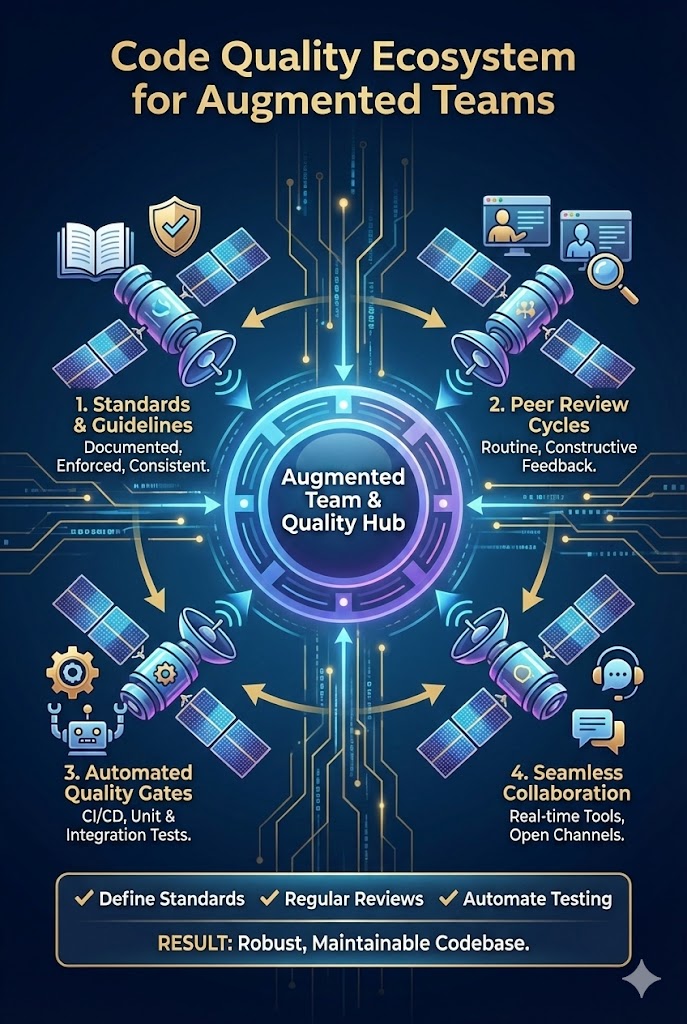
How to Ensure Code Quality When Working with Augmented Teams: Best Practices Guide
-
February 3, 2026
Tech Talent Trends That Will Shape the Next 5 Years: 2026–2031 Outlook
-
 February 2, 2026
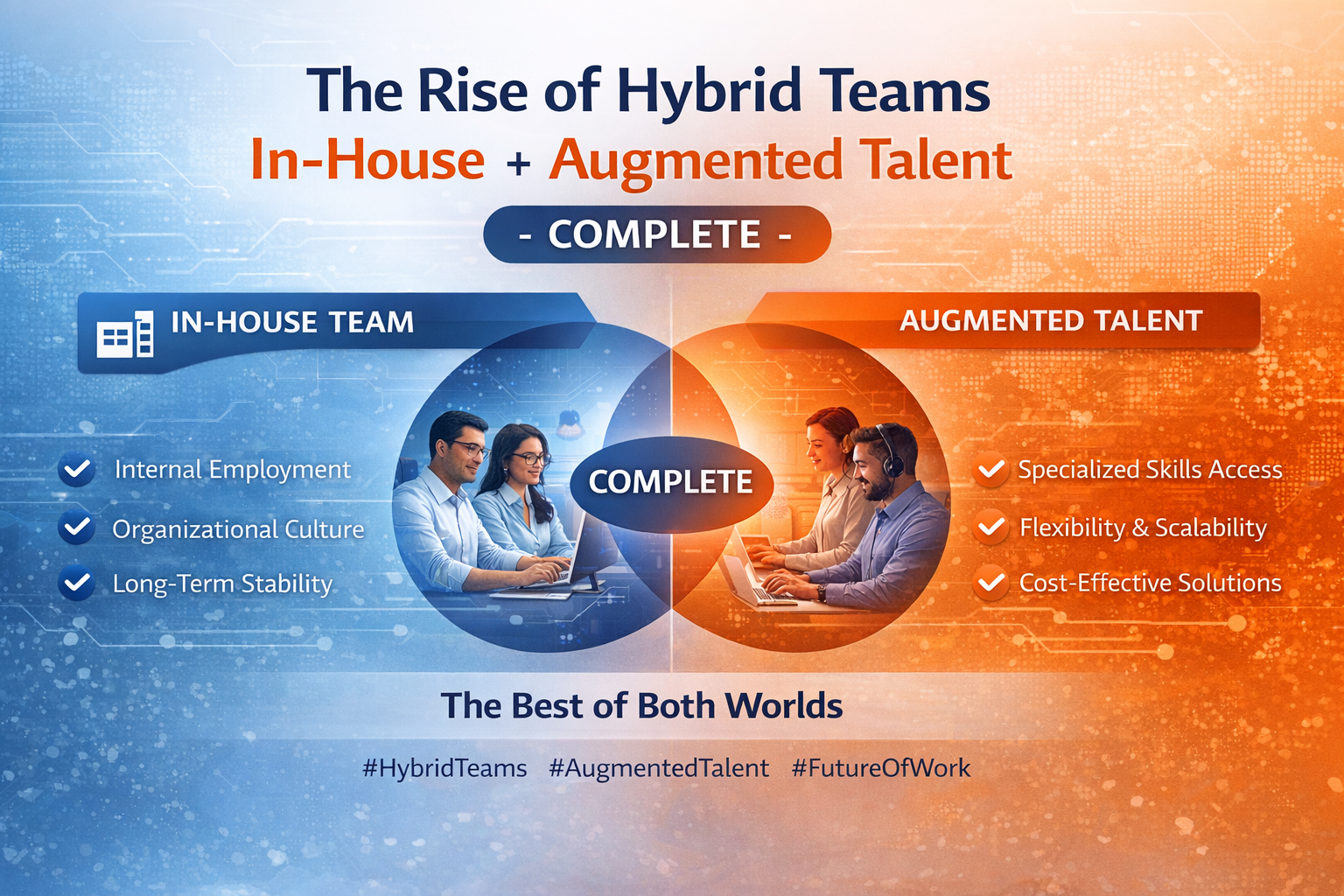
The Rise of Hybrid Teams: In-House + Augmented Talent - The Complete Guide
-
 January 30, 2026
How We Support and Retain High-Performing Tech Professionals
-
 January 29, 2026
Aligning Technology Strategy with Business Growth Goals: A Complete Framework
-
 January 28, 2026
What Top Developers Look for in a Staff Augmentation Partner: A Developer's Perspective
-
 January 27, 2026
The Human Side of IT Services: Why People Matter More Than Code
-
 January 23, 2026
Why Culture Fit Matters in Staff Augmentation Models | Witqualis
-
 January 22, 2026
Building Long-Term Relationships with Augmented Talent: A Strategic Approach
-
 January 21, 2026
Cybersecurity Skills in Demand: What Companies Need Now in 2026
-
 January 20, 2026
Why Flexible Hiring Models Drive Better Business Outcomes
-
 January 19, 2026
Reducing Time-to-Market with On-Demand Tech Talent
-
 January 15, 2026
How Dedicated Development Teams Accelerate Product Delivery
-
 January 14, 2026
Scaling Tech Teams Quickly Without Compromising Quality
-
January 12, 2026
Common Mistakes Companies Make When Outsourcing IT Projects (And How to Avoid Them)
-
January 9, 2026
Key Workforce Trends Every CTO Should Watch This Year
-
 January 8, 2026
How AI Is Transforming IT Staffing and Talent Matching
-
 January 7, 2026
How IT Staff Augmentation Helps Startups Scale Faster
-
 January 6, 2026
Choosing the Right Tech Stack for Scalable Digital Products
-
 January 5, 2026
How Remote Talent Is Reshaping Global IT Teams
-
 December 29, 2025
Staff Augmentation vs Traditional Hiring 2025
-
 December 24, 2025
Why Staff Augmentation Is the Future of Agile Hiring
-
 December 22, 2025
Why Hiring Faster Doesn’t Mean Compromising Quality — It Means Finding the Right Partner
-
 December 19, 2025
The Role of Staff Augmentation in Accelerating Digital Transformation
-
 December 18, 2025
5 Tech Hiring Trends Every CTO Should Watch in 2025
-
December 17, 2025
Why Soft Skills Are the Hidden Superpower in Tech Teams
-
 December 15, 2025
How WitQualis Connects Global Talent with Local Opportunities
-
 December 10, 2025
Why Businesses Need Agile, Scalable, and Skilled Tech Teams—Now More Than Ever
-
 December 5, 2025
The Human Side of Technology: Why People Matter as Much as Code
-
 December 4, 2025
The Rise of Contract-Based Developers in the Global IT Market
-
 December 3, 2025
Talent Has No Boundaries: Why the Best Teams Are Built Across Borders
-
 December 2, 2025
From Startups to Enterprises: How Staff Augmentation Supports Every Stage of Growth
-
 December 1, 2025
Great Ideas Need Great Execution – How WitQualis Teams Turn Vision into Reality
-
 November 28, 2025
Scaling Your Tech Team Shouldn’t Slow Your Business – It Should Power It
-
 November 27, 2025
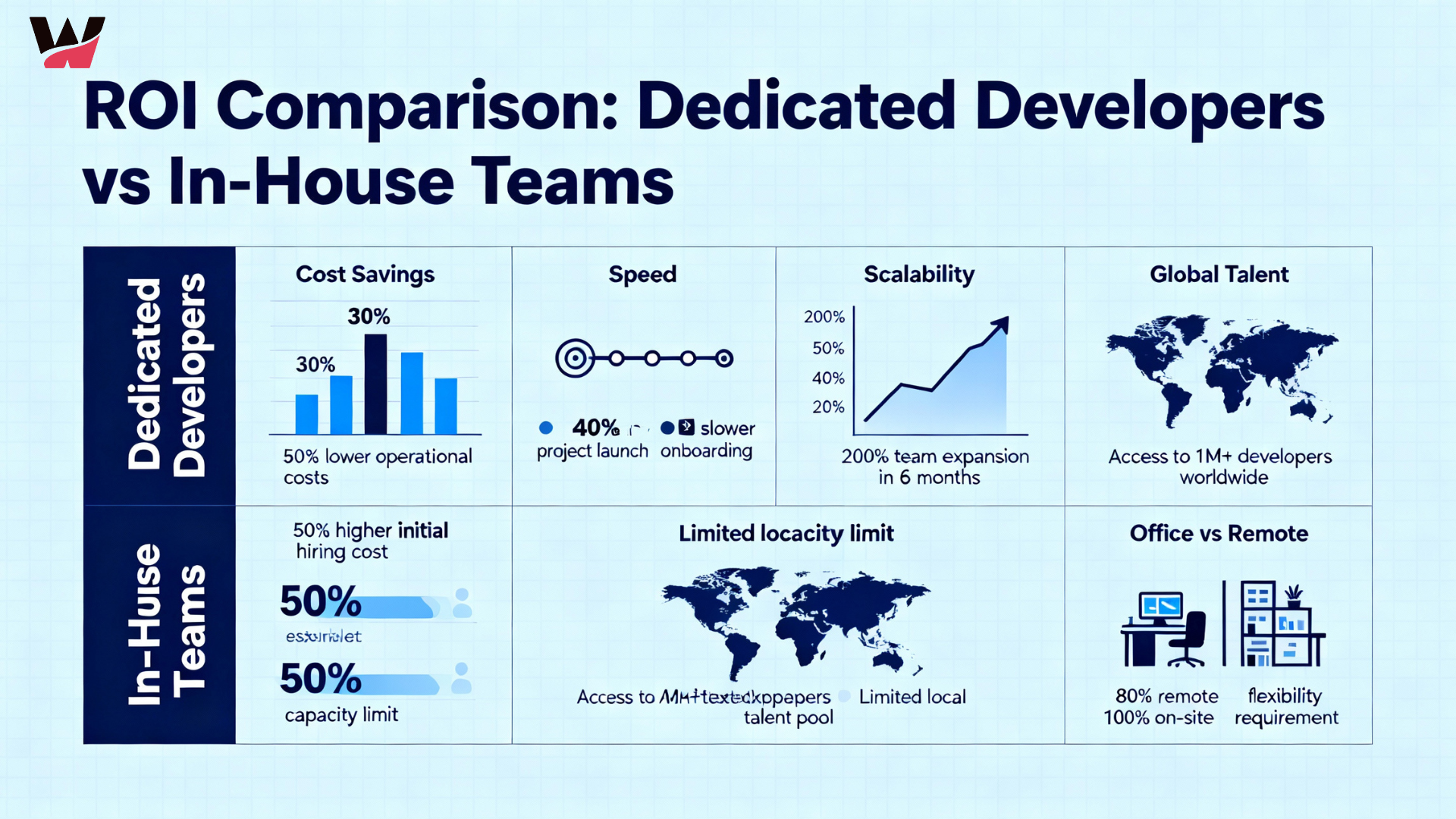
The ROI of Hiring Dedicated Developers vs In-House Teams
-
 November 26, 2025
Why Hybrid Team Models Are the Future of IT Project Delivery
-
 November 24, 2025
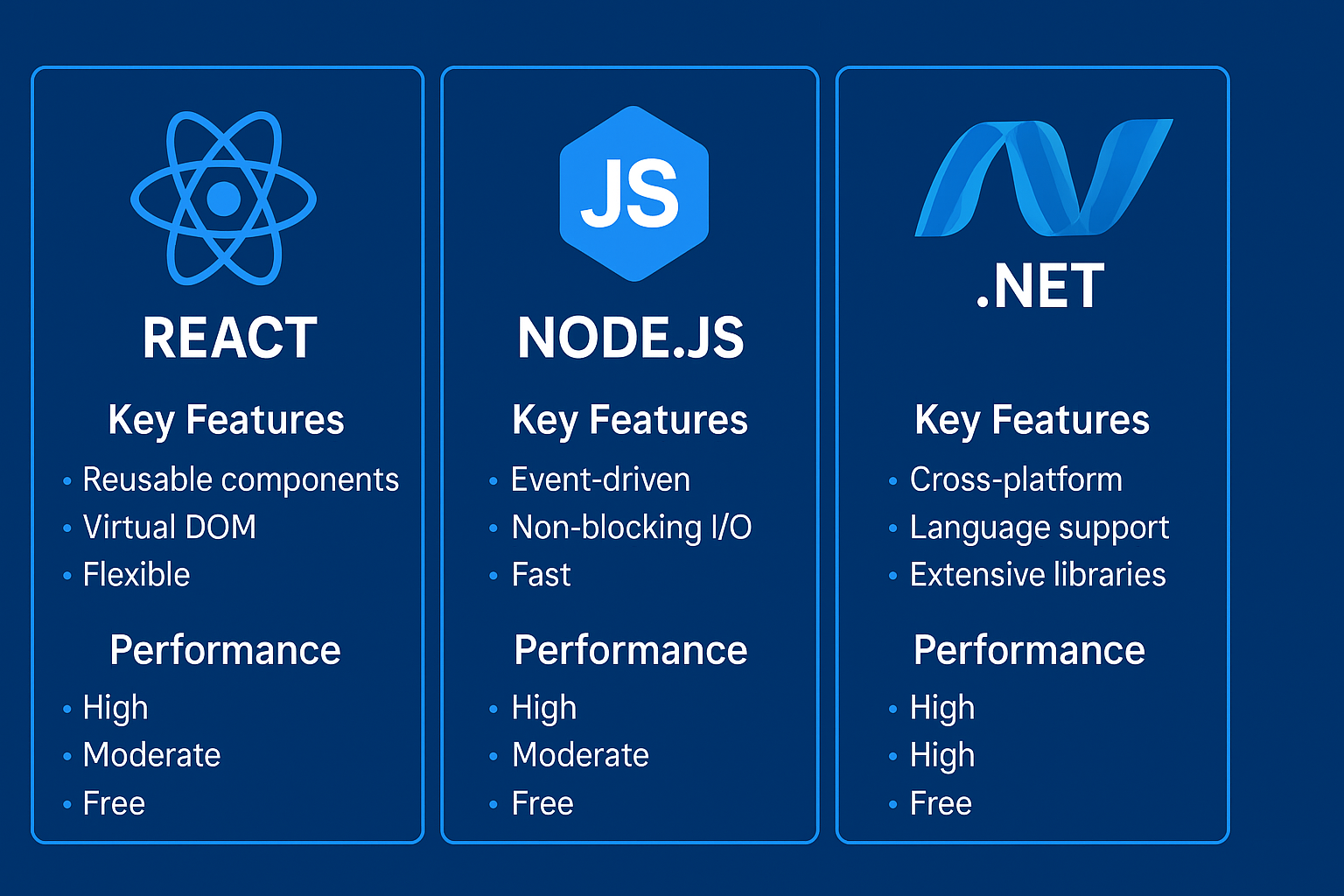
React, Node.js, or .NET? Choosing the Right Tech Stack for Your Next Project
-
 November 21, 2025
Why Hiring Remote Developers Is the Smartest Move for Startups
-
 November 20, 2025
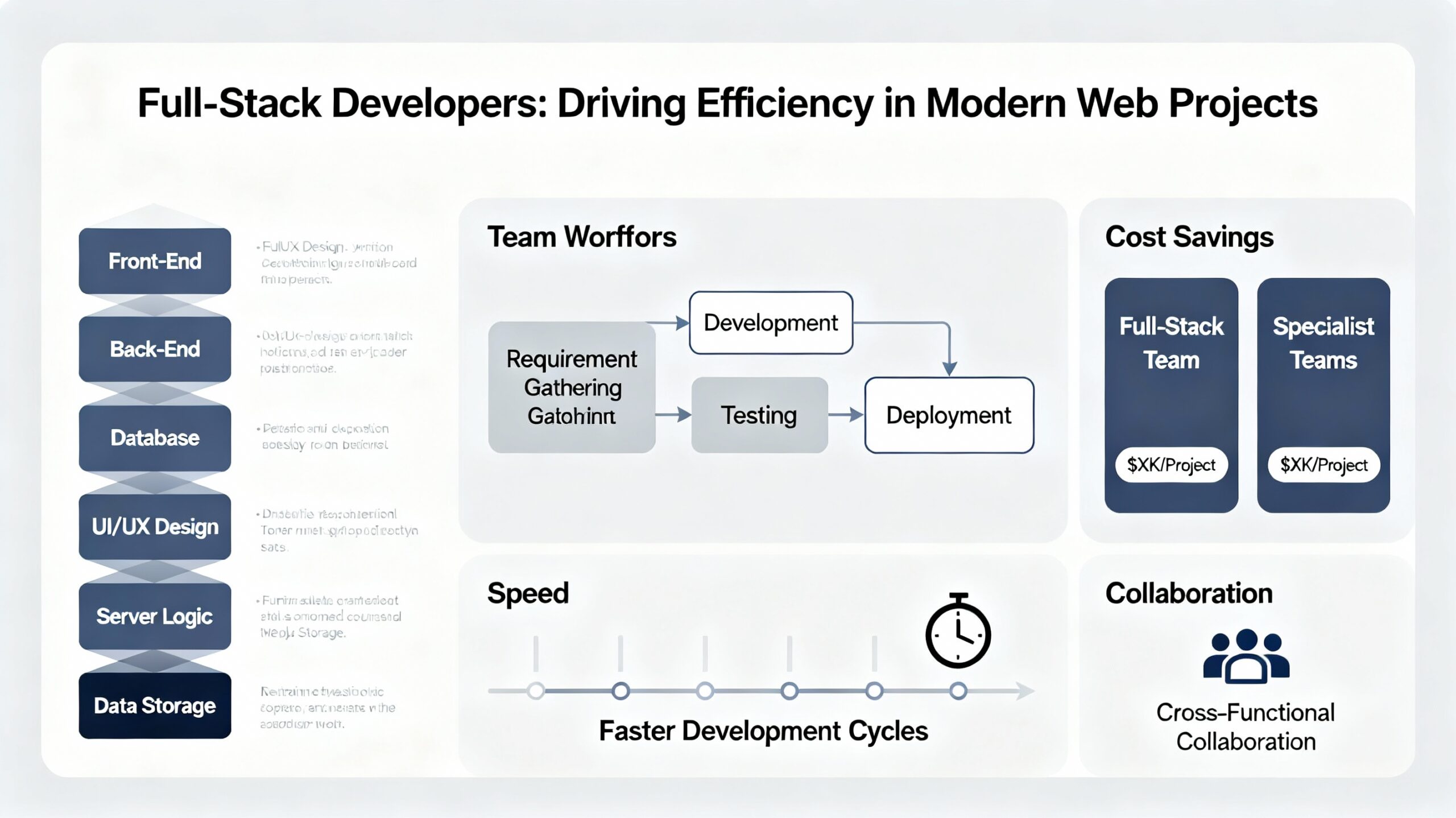
How Full-Stack Developers Drive Efficiency in Modern Web Projects
-
 November 19, 2025
Bridging the Skill Gap: How Augmented Teams Empower Digital Transformation
-
 November 18, 2025
New Technologies for 2025: What Businesses Need to Grow
-
 November 14, 2025
IT Staff Augmentation Reduces Project Costs Quality
-
 November 13, 2025
Empowering Global Collaboration: How WitQualis Builds Seamless Remote Teams
-
 November 12, 2025
Why Global Businesses Are Turning to India for Skilled IT Talent
-
 November 11, 2025
Staff Augmentation Helps You Scale Your Tech Team
-
 November 10, 2025
Staff Augmentation vs Outsourcing in 2025: Which Is Best for Modern Enterprises?
-
 November 7, 2025
How AI, IoT, and Cloud Are Redefining Software Development in 2025
-
 November 6, 2025
Scaling Smarter: How Augmented Teams Help Deliver Projects Faster in 2025
-
 November 5, 2025
How AI and Automation Are Transforming Software Development Teams in 2025
-
 November 3, 2025
The Future of IT Staffing: Why Businesses Are Choose Staff Augmentation in 2025
-
 October 31, 2025
Why Technology is Essential for Business Growth (2025): Top Reasons & Winning Strategies
-
 October 30, 2025
How the Internet of Things (IoT) Is Revolutionizing Modern Business
-
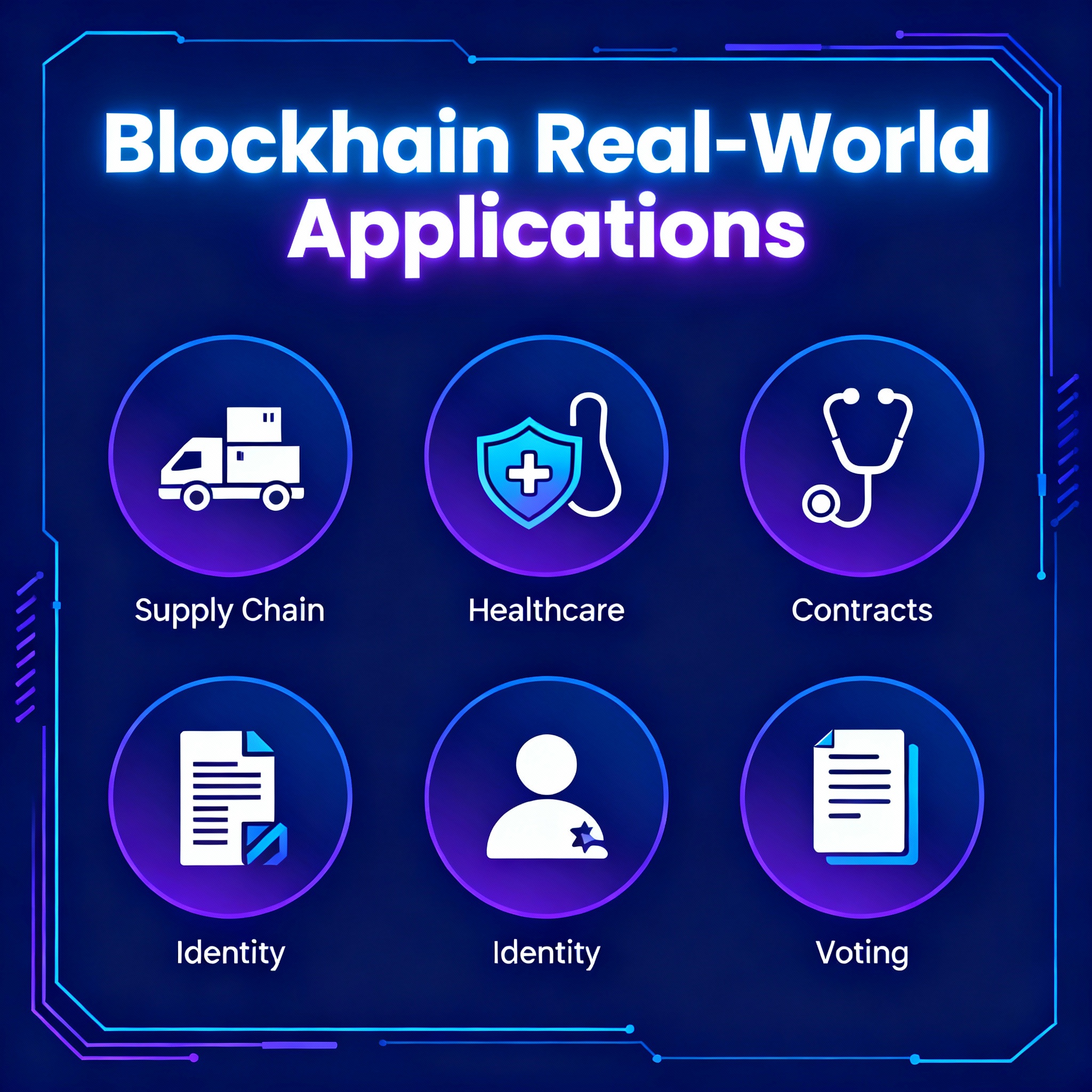 October 29, 2025
Blockchain Cryptocurrency: Real-World Applications | WitQualis
-
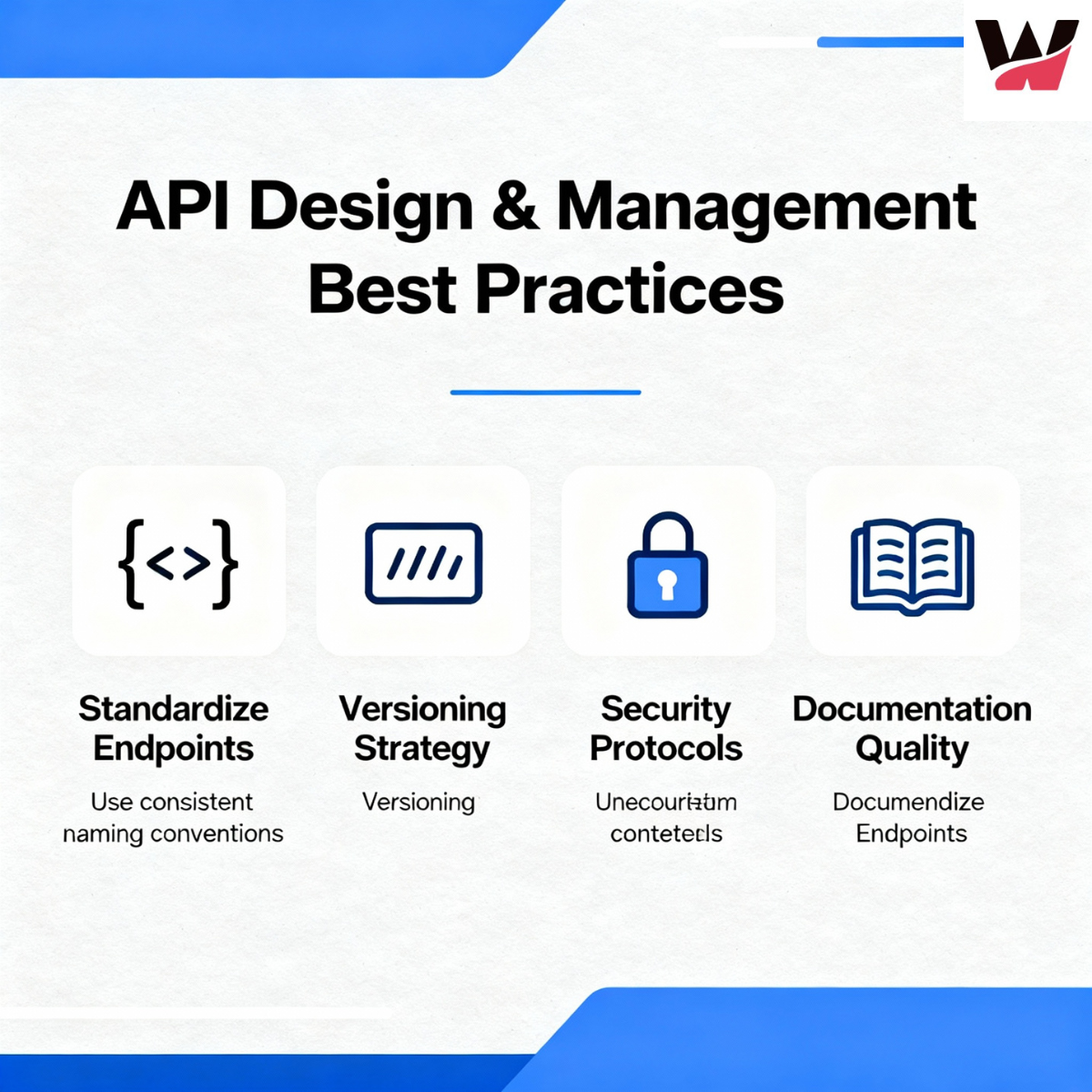 October 28, 2025
API Design and Management Best Practices for Developers
-
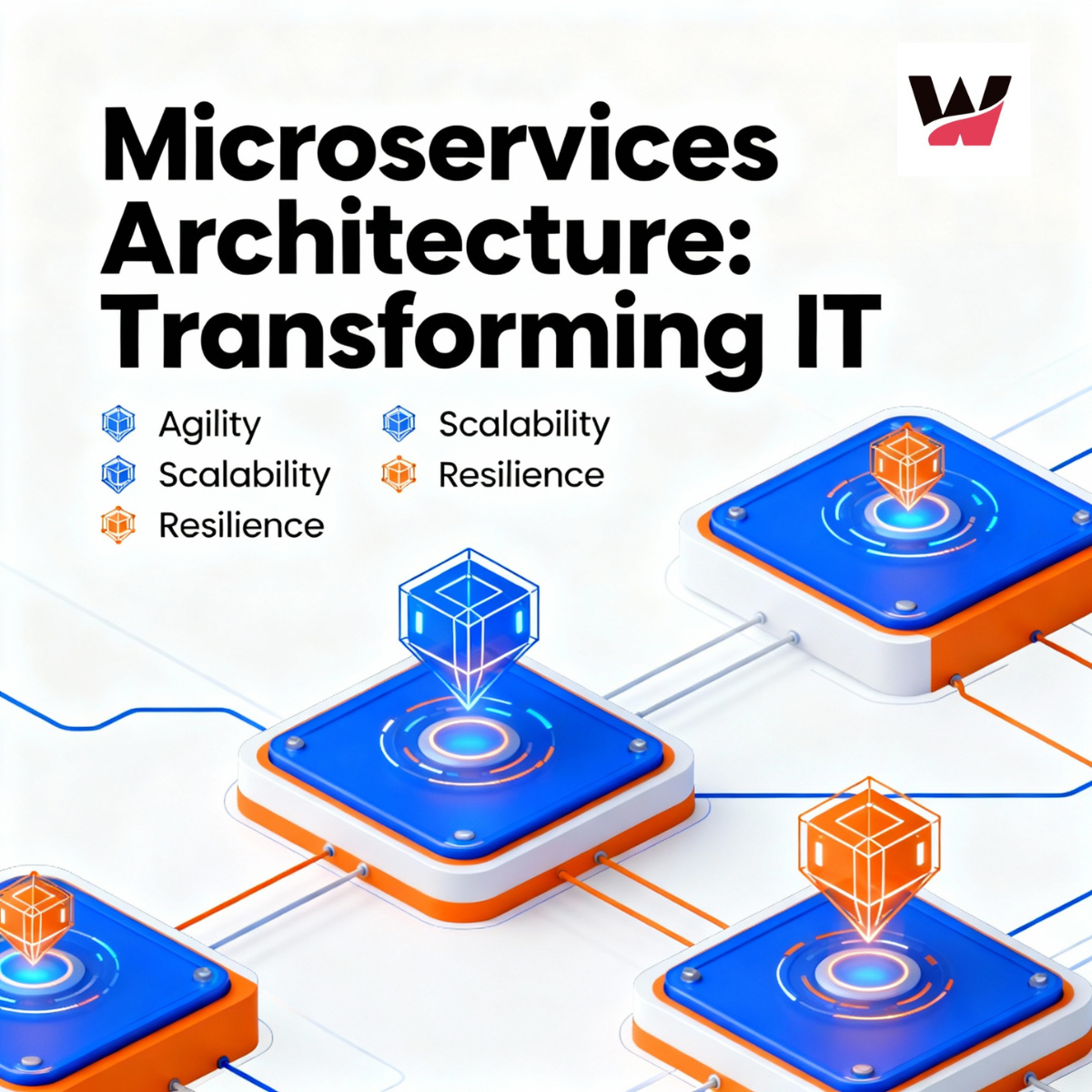 October 27, 2025
Microservices Architecture: Benefits, Implementation Tips & Real-World Examples
-
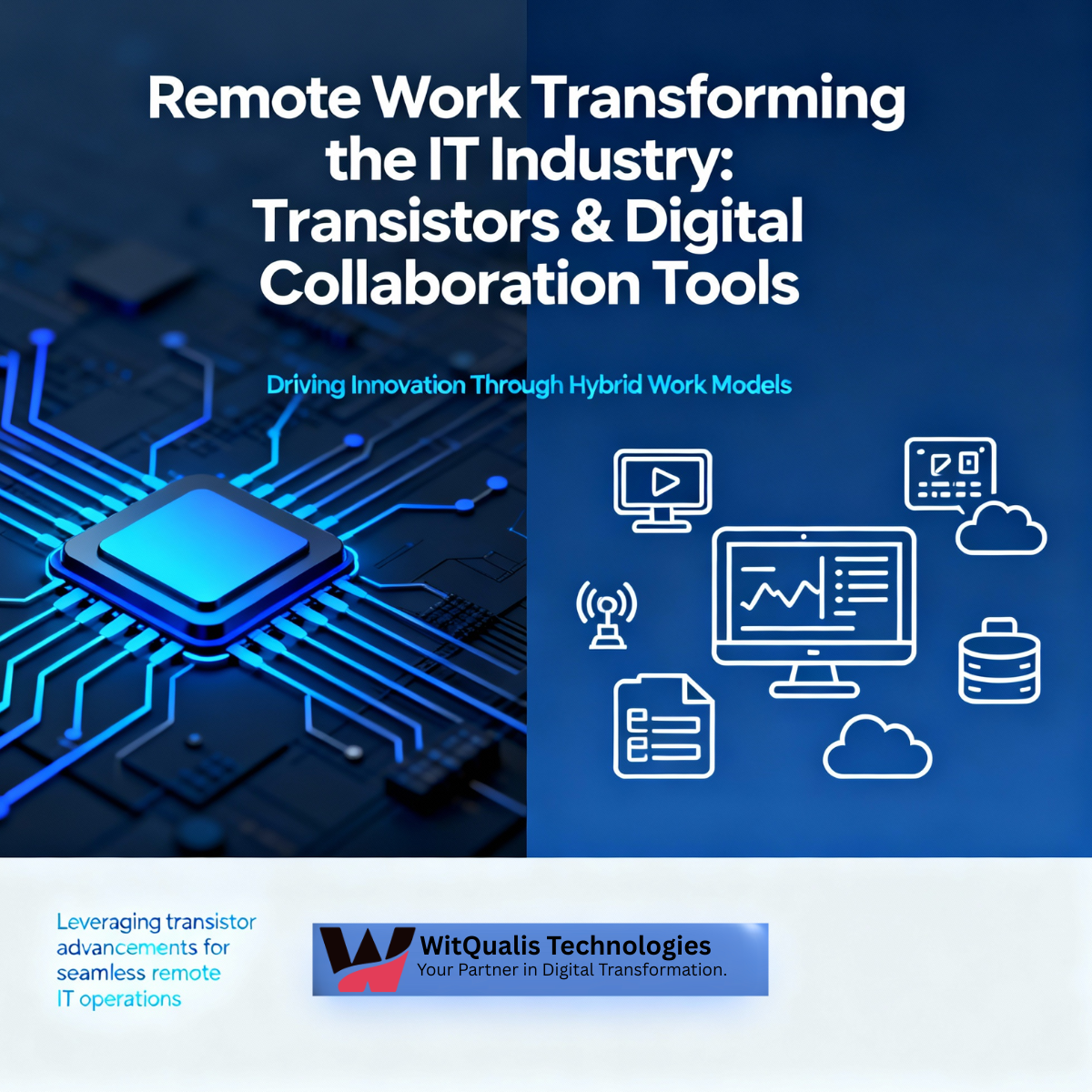 October 24, 2025
How Remote Work Has Transformed the IT Industry Tools in 2025
-
 October 23, 2025
Virtual and Augmented Reality: The Tech Revolution | WitQualis
-
 October 22, 2025
How AI is Revolutionizing Business Decision-Making in 2025 | In-Depth Analysis & Trends
-
 October 16, 2025
Blockchain Beyond Crypto: Building Trust in Business Operations
-
 October 15, 2025
How Custom Software Solutions Drive Business Efficiency | Expert Guide
-
 October 13, 2025
How Automation Reduces Costs & Boosts Productivity in 2025
-
 October 10, 2025
Staff Augmentation: The Key to Building Agile & Scalable Teams
-
 October 9, 2025
The Role of Cloud Computing in Scaling Modern Businesses
-
 October 8, 2025
Why Every Company Needs a Data-Driven Growth Strategy
-
 October 7, 2025
API Design Best Practices for Developers in 2025 |API versioning strategies
-
 October 6, 2025
virtual reality vs augmented reality vs mixed reality
-
 October 3, 2025
The Impact of Internet of Things (IoT) on Modern Business
-
 October 1, 2025
Blockchain Beyond Cryptocurrency: Real-World Applications in 2025
-
 September 30, 2025
The Future of Artificial Intelligence: Trends and Opportunities
-
 September 26, 2025
Microservices Architecture: Benefits and Implementation Tips
-
 September 25, 2025
Why Staff Augmentation Is a Smart Move for IT Projects in 2025
-
 September 24, 2025
Cloud Computing Explained: Benefits and Best Practices (AWS, Azure, Google Cloud)
-
 September 23, 2025
How Staff Augmentation Can Help Scale Your IT Team Efficiently
-
 January 6, 2025
Choosing the Right Front-End Web Development Service in the UK
-
 January 4, 2025
Why Choose Staff Augmentation Services in India for Your IT Projects?
-
 December 21, 2024
Boost Your Business ROI with Power BI Development Services in the Maldives and Iceland
-
 December 20, 2024
Get a Free Consultation: Is Your E-Commerce Business in the UAE Ready for Digital Transformation?
-
 July 6, 2023
The Future of Small Business and Know-How to Climb up the Ladder


Leave a Reply