Offshore Software Development Teams: A Practical Guide to Hiring, Collaboration, and Delivery Quick answer Offshore software development teams are distributed engineering teams located outside the client’s primary country or hiring market. They may support a complete product build, extend an internal engineering



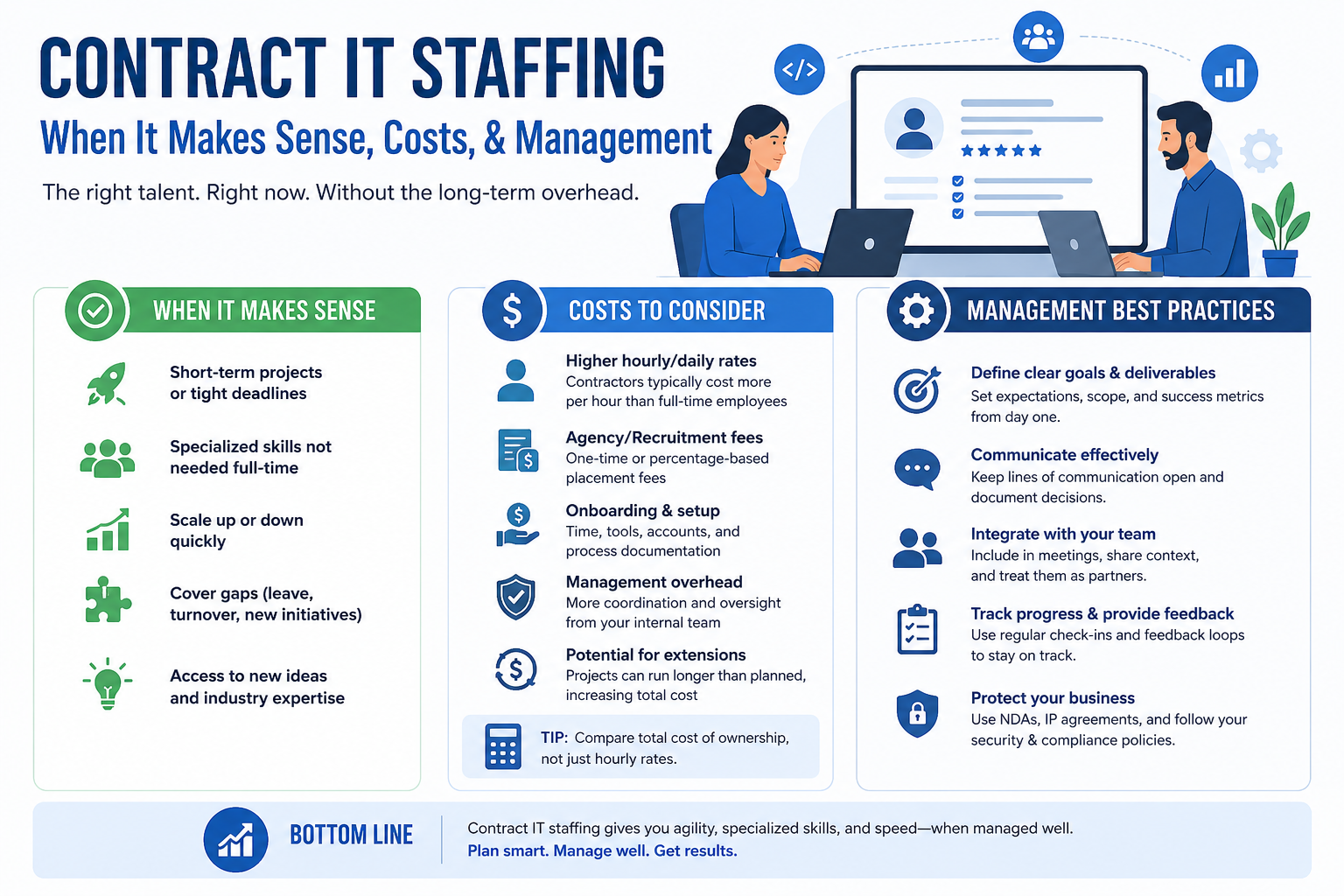
Contract IT Staffing: When It Makes Sense, What It Costs, and How to Manage It Technology projects rarely follow a predictable hiring plan. A product launch, cloud migration, specialist skills gap, or unexpected departure can create an urgent need for additional technical

August 21, 2026
IT Staff Augmentation Services: How to Scale Your Engineering Team Without Slowing Delivery
IT Staff Augmentation Services: How to Scale Your Engineering Team Without Slowing Delivery Engineering leaders are often asked to deliver more without adding unnecessary complexity. A product launch may be approaching, a cloud migration may need specialist support, or an internal team

August 20, 2026
IT Staff Augmentation Services: How to Scale Your Engineering Team Without Slowing Delivery
IT Staff Augmentation Services: How to Scale Your Engineering Team Without Slowing Delivery Engineering leaders are often asked to deliver more without adding unnecessary complexity. A product launch may be approaching, a cloud migration may need specialist support, or an internal team may be

August 13, 2026
AI Workflow Automation for Operations: A Practical Guide
AI Workflow Automation for Operations: A Practical Guide Operations leaders face a common pressure—improving throughput without simply asking teams to work faster. The real problem is usually structural: requests arrive through different channels, information gets copied between systems, approvals get stuck in inboxes, and


