SaaS Development Services: From Product Discovery to a Scalable Multi-Tenant Platform Suggested image caption: Product, engineering, and operations teams aligning on a SaaS platform roadmap. SaaS Development Services: From Product Discovery to a Scalable Multi-Tenant Platform Choosing SaaS development services is not


September 3, 2026
UI/UX Design and Development: From Research to Better Software
UI/UX Design and Development: How Product Teams Turn User Research Into Better Software Good software does not begin with attractive screens. Instead, UI/UX design and development begins by understanding what people need to accomplish, where they struggle, and what the business must

September 1, 2026
Cybersecurity Recruitment: Hiring Framework for Security Teams
Cybersecurity Recruitment: A Hiring Framework for Security-Critical Technology Teams At a glance: The strongest cybersecurity hiring processes start with the security problem, not the job title. Define the environment and outcomes, map the role to specific security work, assess practical judgment, and

Cloud Engineer Staffing: How to Find the Right Talent for Migration, DevOps, and Scale Quick Answer Cloud engineer staffing is the strategic process of identifying and hiring specialized technical talent to design, implement, and manage cloud-based infrastructures. To be successful, organizations must
August 27, 2026
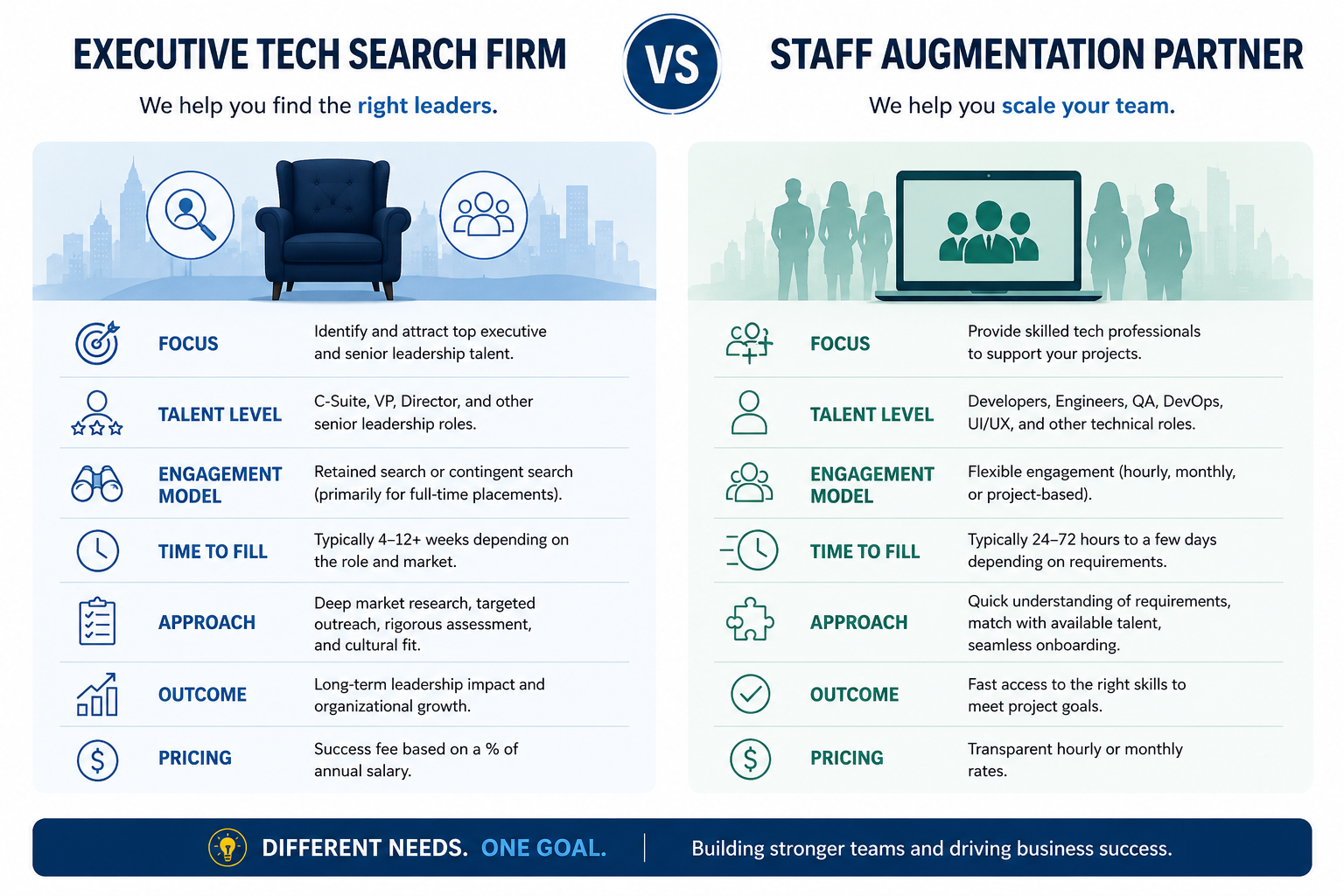
Executive Tech Search Firm vs Staff Augmentation Partner
Executive Tech Search Firm or Staff Augmentation Partner? Which Model Fits Your Hiring Need? Businesses often reach the same hiring question from very different starting points. A company may need a CTO to define its technology direction, a VP of Engineering to


