

The Impact of Internet of Things (IoT) on Modern Business
Undeniably, the global business landscape is currently undergoing a radical transformation driven by connectivity. For many years, the “Internet of Things” (IoT) was viewed as a futuristic concept reserved for science fiction. However, as we move through 2026, IoT has matured into the digital nervous system of the modern enterprise. Consequently, businesses that fail to integrate these smart technologies are finding themselves at a significant competitive disadvantage.
In this extensive deep dive, we will analyze the multi-faceted impact of IoT on business operations. Furthermore, we will explore how companies like Witqualis are empowering organizations to navigate this complex technological shift. Specifically, we will look at how IoT drives efficiency, enhances customer experiences, and opens new revenue streams.
1. Defining the IoT Revolution in 2026
To understand the impact, we must first define what IoT looks like today. In essence, IoT refers to a vast network of physical devices—ranging from industrial sensors to wearable tech—that collect and exchange data over the internet. Subsequenty, this data is analyzed to automate processes and provide actionable insights.
Moreover, in 2026, IoT is no longer a standalone technology. Instead, it is deeply integrated with Artificial Intelligence (AI) and Edge Computing. As a result, devices are no longer just “connected”; they are “intelligent.” This synergy allows businesses to process data at the source, reducing latency and increasing the speed of decision-making.
2. Boosting Operational Efficiency and Automation
The most immediate impact of IoT is felt in the realm of operational efficiency. Traditionally, businesses relied on manual monitoring and reactive maintenance. In contrast, IoT enables a proactive, automated approach that saves billions in overhead costs.
A. Predictive Maintenance
In manufacturing and logistics, machine downtime can be catastrophic. However, by using IoT sensors to monitor vibrations, temperature, and wear-and-tear in real-time, companies can predict failures before they happen. Consequently, maintenance is performed only when necessary, extending the lifespan of expensive machinery.
B. Supply Chain Optimization
Furthermore, IoT provides unprecedented visibility into the supply chain. Specifically, GPS and RFID sensors allow managers to track shipments in real-time, monitoring not just location, but also environmental conditions like humidity and light exposure. As a result, waste is minimized, especially in industries like pharmaceuticals and food services.
3. Revolutionizing Data-Driven Decision Making
Data is often called the “new oil,” but raw data is useless without context. Therefore, the true power of IoT lies in its ability to generate high-quality, granular data that was previously impossible to capture.
Specifically, IoT devices provide a continuous stream of information about how products are used and how processes are performing. Subsequenty, business leaders can move away from “gut feelings” and base their strategies on cold, hard facts. For instance, a retail manager can use IoT heatmaps to see which aisles customers frequent most, allowing for a more strategic store layout.
Moreover, when businesses partner with Witqualis, they gain access to specialized developers who can build custom dashboards to visualize this data. By doing so, complex IoT data is turned into clear, actionable business intelligence.
4. Enhancing Customer Experience and Personalization
In 2026, the modern consumer expects a hyper-personalized experience. Notably, IoT allows businesses to meet this demand by bridging the gap between the digital and physical worlds.
A. Smart Retail
In the retail sector, IoT-enabled beacons can send personalized offers to a customer’s smartphone the moment they walk into a store. In addition, smart mirrors in fitting rooms can suggest matching accessories, creating a seamless “Phygital” shopping experience.
B. Connected Products
Furthermore, companies are now selling “products-as-a-service.” For example, a coffee machine manufacturer can use IoT to track usage and automatically ship new coffee pods when the user is running low. Consequently, the relationship with the customer continues long after the initial sale, driving long-term loyalty and recurring revenue.
5. IoT Impact Across Key Industries
The influence of IoT is not limited to tech companies. On the contrary, every major industry is feeling the ripple effects of this connectivity.
Manufacturing (Industry 4.0)
In manufacturing, the “Smart Factory” is now a reality. Specifically, robots and human workers collaborate in a synchronized environment monitored by thousands of IoT sensors. As a result, production speed increases while the margin for error drops to near zero.
Healthcare (IoMT)
The Internet of Medical Things (IoMT) is saving lives daily. Subsequenty, wearable devices track patient vitals and transmit them directly to doctors. Therefore, chronic conditions can be managed remotely, reducing the burden on hospital infrastructure.
Smart Cities and Logistics
Similarly, IoT is the backbone of the smart city movement. From intelligent traffic management systems that reduce congestion to smart waste bins that signal when they are full, IoT is making urban living more sustainable. For logistics providers, this means faster routes and lower fuel consumption.
6. The Synergy: IoT, AI, and 5G/6G
The impact of IoT has been exponentially increased by the rollout of 5G and early-stage 6G networks. Notably, these high-speed networks allow for “Massive IoT,” where millions of devices can connect in a small area without interference.
Furthermore, the integration of AI allows for “Autonomous IoT.” In essence, devices can now make micro-decisions on their own. For instance, a smart grid can automatically reroute electricity during a peak surge without human intervention. Consequently, the grid becomes more resilient and efficient.
7. Navigating the Security and Privacy Landscape
While the benefits are vast, we must acknowledge the challenges. Specifically, every connected device is a potential entry point for cyberattacks. Therefore, security is no longer an afterthought; it is a prerequisite for IoT success.
Nevertheless, by implementing “Security by Design” and utilizing blockchain for device identity verification, businesses can mitigate these risks. Moreover, working with an expert team like Witqualis ensures that your IoT architecture is built with the highest encryption standards, protecting both your corporate data and your customers’ privacy.
8. Why Staff Augmentation is the Key to IoT Success
Implementing a large-scale IoT project requires a highly specialized skill set. You need experts in firmware, cloud architecture, data science, and cybersecurity. However, finding these experts in a competitive market is a massive hurdle.
This is where Witqualis’s staff augmentation services provide a strategic edge. Instead of spending months on recruitment, you can instantly scale your team with IoT-ready professionals. By doing so, you can accelerate your time-to-market and ensure your project stays on the cutting edge of innovation. Specifically, their custom software solutions are tailored to help businesses integrate IoT without the typical growing pains.
9. The Economic Impact: New Revenue Models
IoT is not just about saving money; it is about making it. Subsequenty, we are seeing a shift toward “Outcome-Based” business models.
For example, instead of selling an expensive industrial air conditioner, a company might sell “Cooling-as-a-Service.” The customer pays for the temperature maintained, while the manufacturer uses IoT to ensure the machine runs at peak efficiency. As a result, the manufacturer is incentivized to build a more durable product, and the customer avoids a large upfront capital expenditure.
10. The Future: Toward a Fully Connected World
Looking ahead to the end of the decade, the “Impact of IoT” will only deepen. Undeniably, we are moving toward a world of “Ambient Intelligence,” where the environment around us anticipates our needs before we even express them.
Ultimately, the businesses that thrive will be those that view IoT not as a “tech project,” but as a fundamental business strategy. Therefore, the time to invest in sensor technology, data analytics, and the right talent is now.
Conclusion
In summary, the impact of the Internet of Things on modern business is nothing short of revolutionary. From boosting operational efficiency to creating hyper-personalized customer journeys, IoT is the engine of the 2026 economy. Consequently, the divide between the “connected” and the “unconnected” will define the winners and losers of the next decade.
Furthermore, successful integration requires more than just hardware; it requires a vision and the right partners. Whether you are looking for comprehensive IT services or the specialized talent to drive your IoT roadmap, Witqualis is your partner in this journey.
Recent Posts
-
 March 5, 2026
Microservices Architecture: Benefits and Implementation Tips
-
 March 3, 2026
How Remote Work Has Changed the IT Industry and Tools You Need
-
 March 2, 2026
API Design and Management Best Practices for Developers
-
February 27, 2026
The Impact of Internet of Things (IoT) on Modern Business
-
 February 26, 2026
Virtual and Augmented Reality: Where Tech is Headed Next | 2026 Guide
-
 February 25, 2026
Blockchain Beyond Cryptocurrency: Real-World Applications & Use Cases (2026 Guide)
-
 February 24, 2026
The Role of AI in Enhancing IT Development: A Deep Dive (2026 Guide)
-
 February 23, 2026
Maximizing Productivity: How Staff Augmentation Drives Innovation in IT Projects
-
 February 20, 2026
Staff Augmentation vs. Outsourcing: Which IT Model Wins in 2026?
-
 February 19, 2026
The Rise of Hybrid Teams: How to Leverage Staff Augmentation for Business Success
-
 February 18, 2026
How Staff Augmentation is Transforming the Future of IT Workforce (2026)
-
 February 17, 2026
5 Reasons Why Staff Augmentation is Key for Tech Skill Shortages: staff augmentation for tech skill shortages
-
 February 16, 2026
How Staff Augmentation Helps Scale Your Business Without Overheads in 2026
-
 February 13, 2026
The Power of Diverse Teams: How Staff Augmentation Drives Inclusion (2026)
-
 February 12, 2026
The Role of 5G Technology in Shaping IT Development and Augmentation in 2026
-
 February 11, 2026
The Future of Blockchain: Revolutionizing IT Services in 2026
-
 February 10, 2026
Building an Authentic Employer Brand Through Staff Augmentation in 2026
-
 February 9, 2026
Supporting Augmented Professionals During Projects: Best Practices for Success
-
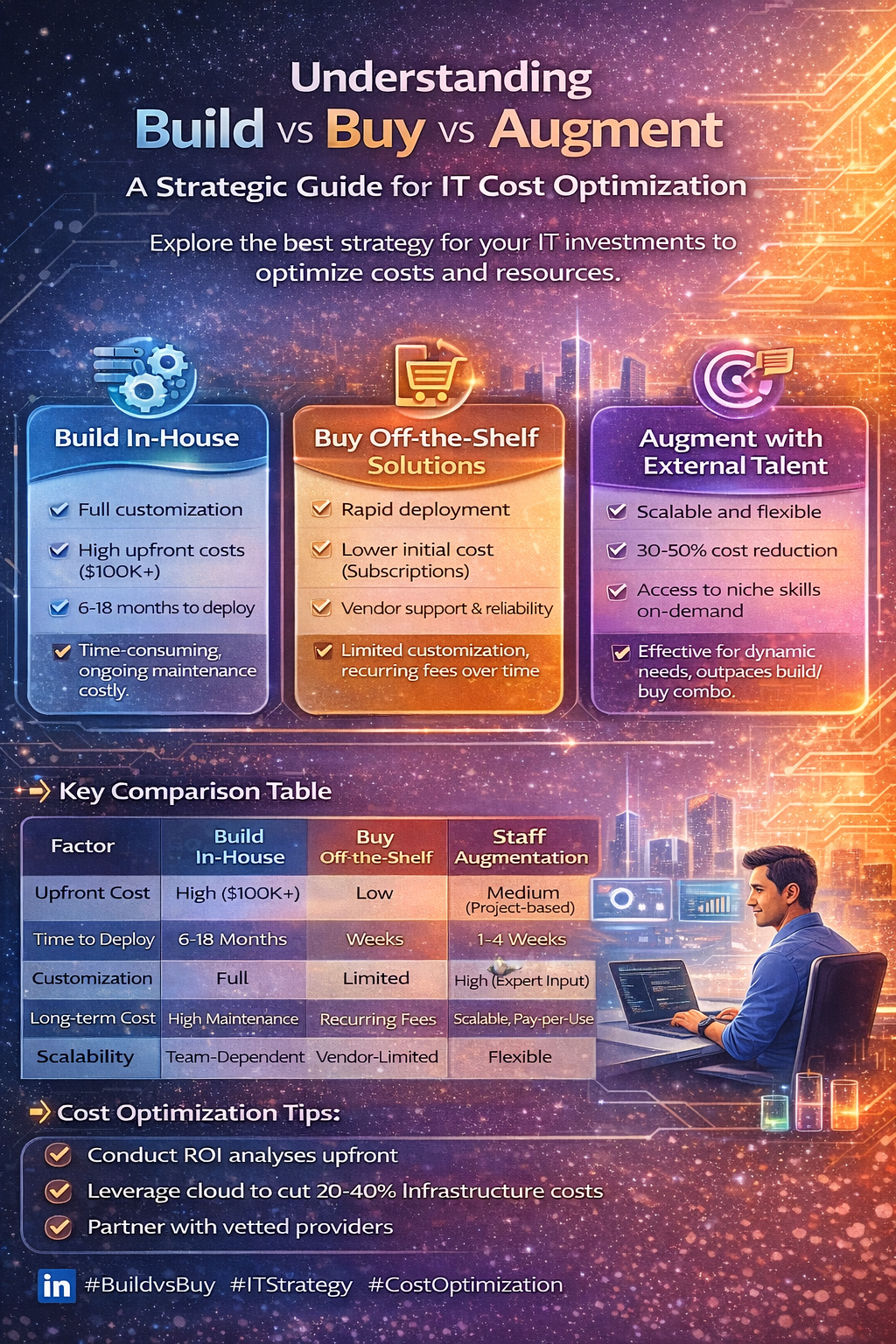 February 6, 2026
Cost Optimization in IT: Build vs Buy vs Staff Augmentation (2026 Guide)
-
 February 5, 2026
The Role of DevOps in High-Performance Engineering Teams: Best Practices Guide
-
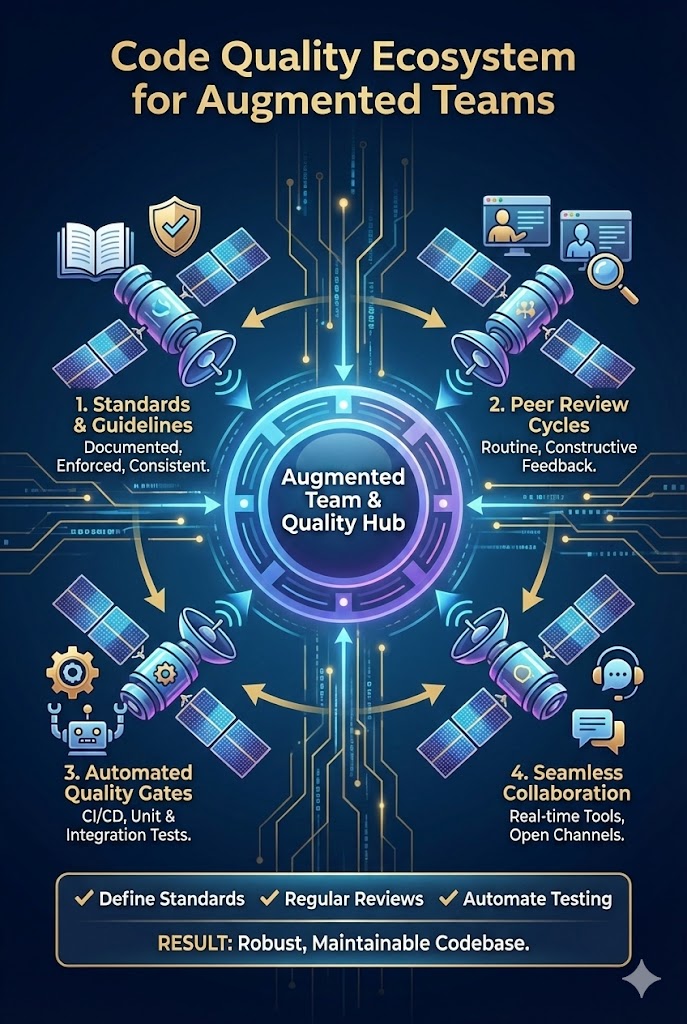 February 4, 2026
How to Ensure Code Quality When Working with Augmented Teams: Best Practices Guide
-
 February 3, 2026
Tech Talent Trends That Will Shape the Next 5 Years: 2026–2031 Outlook
-
 February 2, 2026
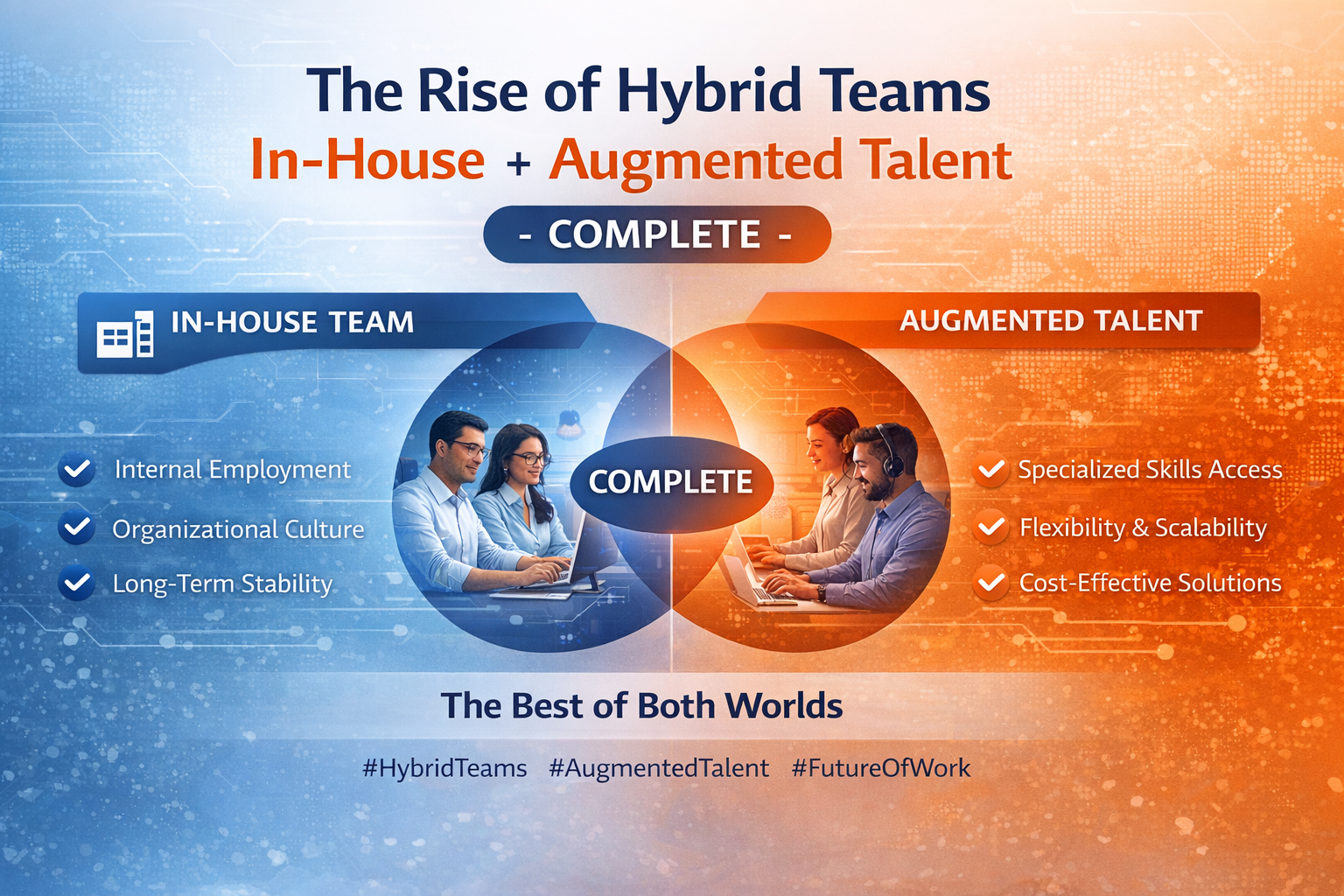
The Rise of Hybrid Teams: In-House + Augmented Talent - The Complete Guide
-
 January 30, 2026
How We Support and Retain High-Performing Tech Professionals
-
 January 29, 2026
Aligning Technology Strategy with Business Growth Goals: A Complete Framework
-
 January 28, 2026
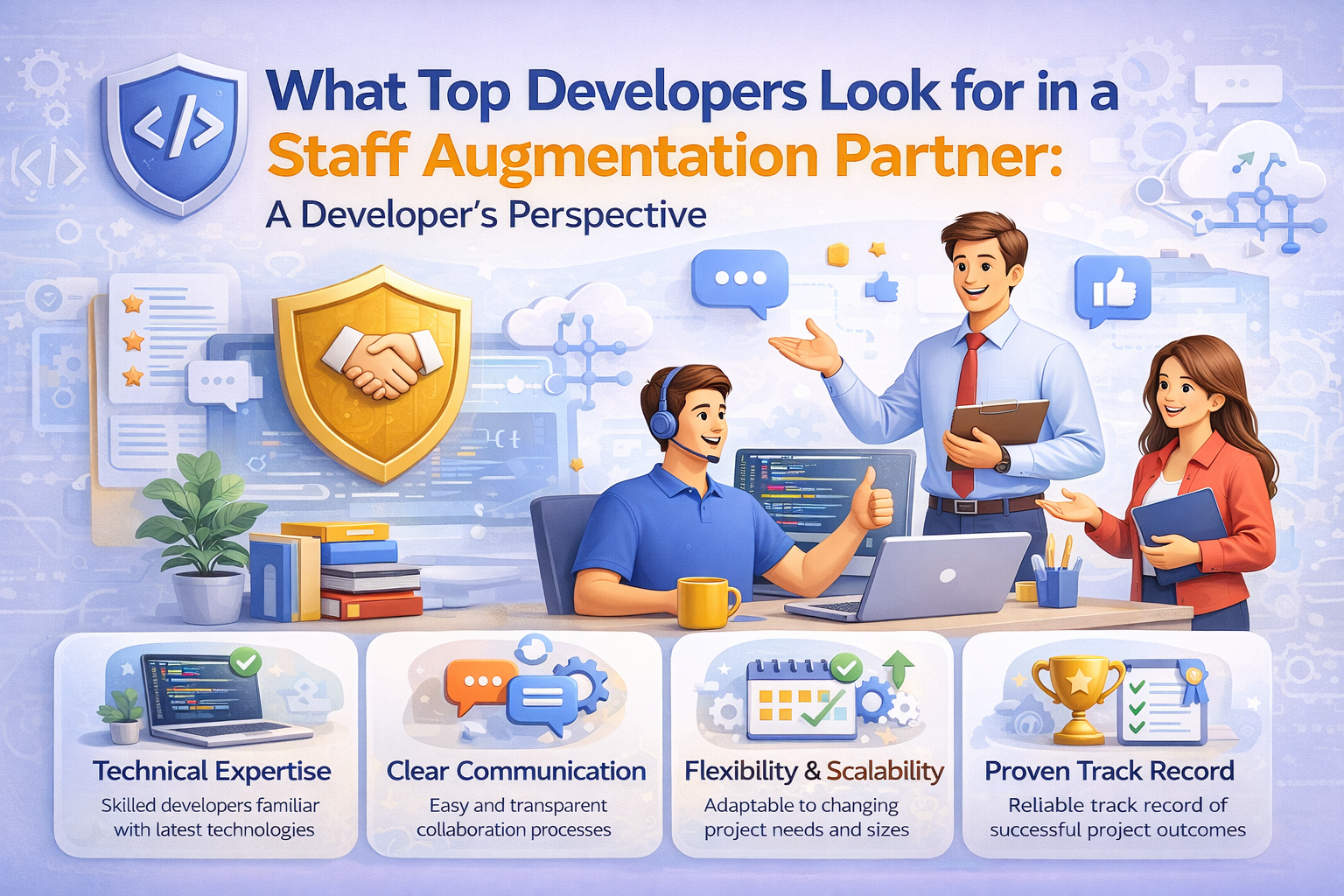
What Top Developers Look for in a Staff Augmentation Partner: A Developer's Perspective
-
 January 27, 2026
The Human Side of IT Services: Why People Matter More Than Code
-
 January 23, 2026
Why Culture Fit Matters in Staff Augmentation Models | Witqualis
-
 January 22, 2026
Building Long-Term Relationships with Augmented Talent: A Strategic Approach
-
 January 21, 2026
Cybersecurity Skills in Demand: What Companies Need Now in 2026
-
 January 20, 2026
Why Flexible Hiring Models Drive Better Business Outcomes
-
 January 19, 2026
Reducing Time-to-Market with On-Demand Tech Talent
-
 January 15, 2026
How Dedicated Development Teams Accelerate Product Delivery
-
 January 14, 2026
Scaling Tech Teams Quickly Without Compromising Quality
-
January 12, 2026
Common Mistakes Companies Make When Outsourcing IT Projects (And How to Avoid Them)
-
January 9, 2026
Key Workforce Trends Every CTO Should Watch This Year
-
 January 8, 2026
How AI Is Transforming IT Staffing and Talent Matching
-
 January 7, 2026
How IT Staff Augmentation Helps Startups Scale Faster
-
 January 6, 2026
Choosing the Right Tech Stack for Scalable Digital Products
-
 January 5, 2026
How Remote Talent Is Reshaping Global IT Teams
-
 December 29, 2025
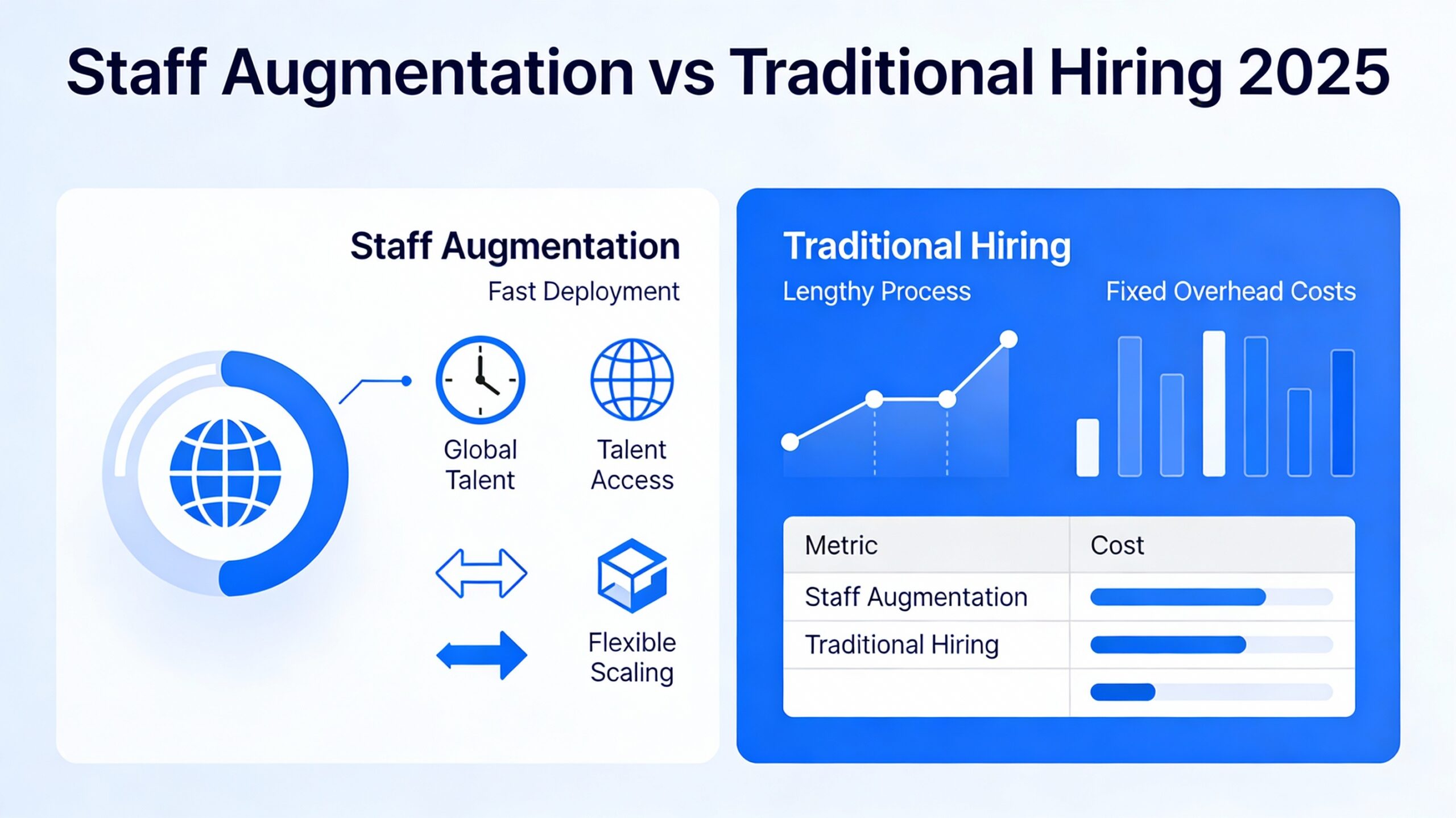
Staff Augmentation vs Traditional Hiring 2025
-
 December 24, 2025
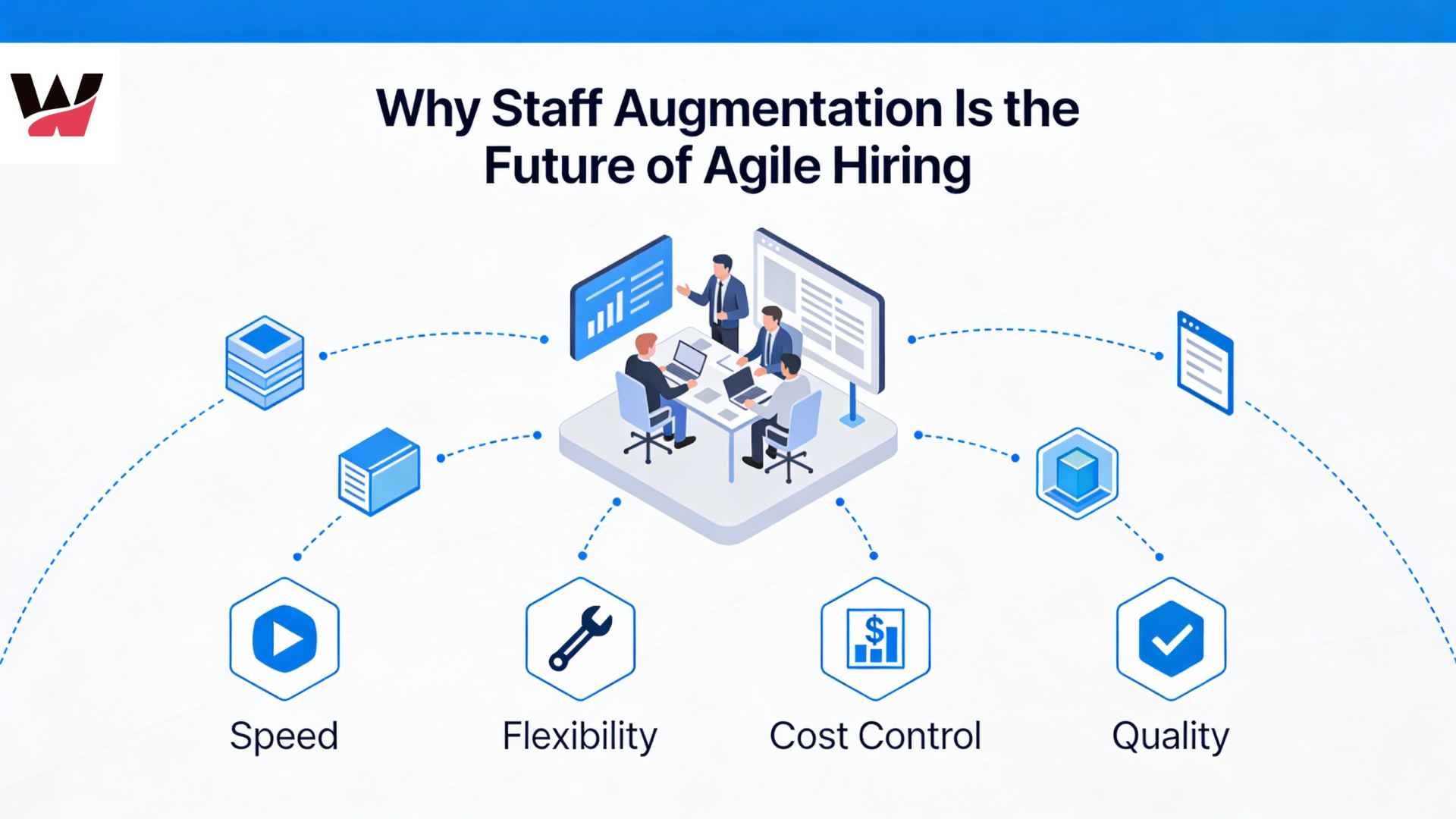
Why Staff Augmentation Is the Future of Agile Hiring
-
 December 22, 2025
Why Hiring Faster Doesn’t Mean Compromising Quality — It Means Finding the Right Partner
-
 December 19, 2025
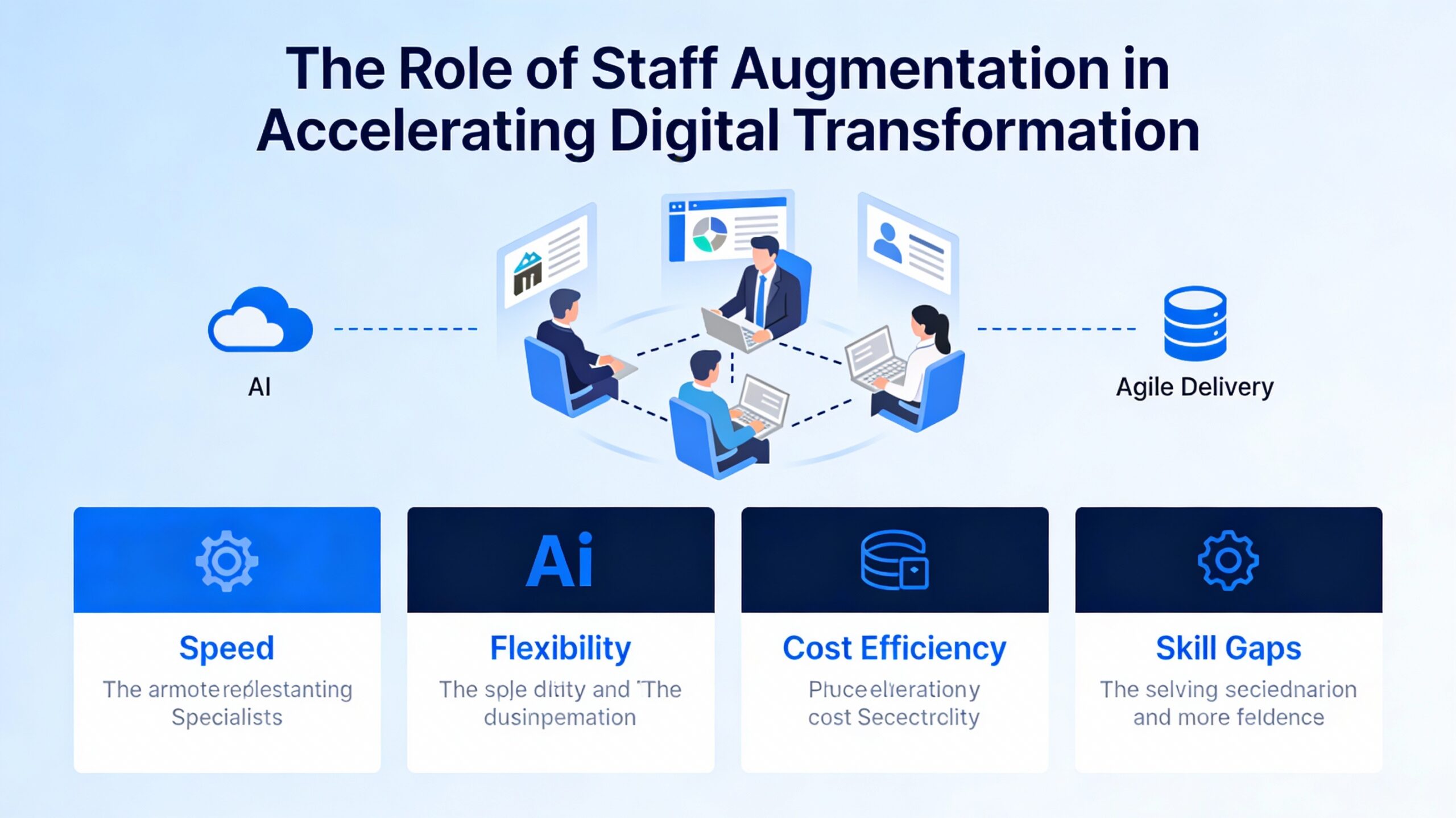
The Role of Staff Augmentation in Accelerating Digital Transformation
-
 December 18, 2025
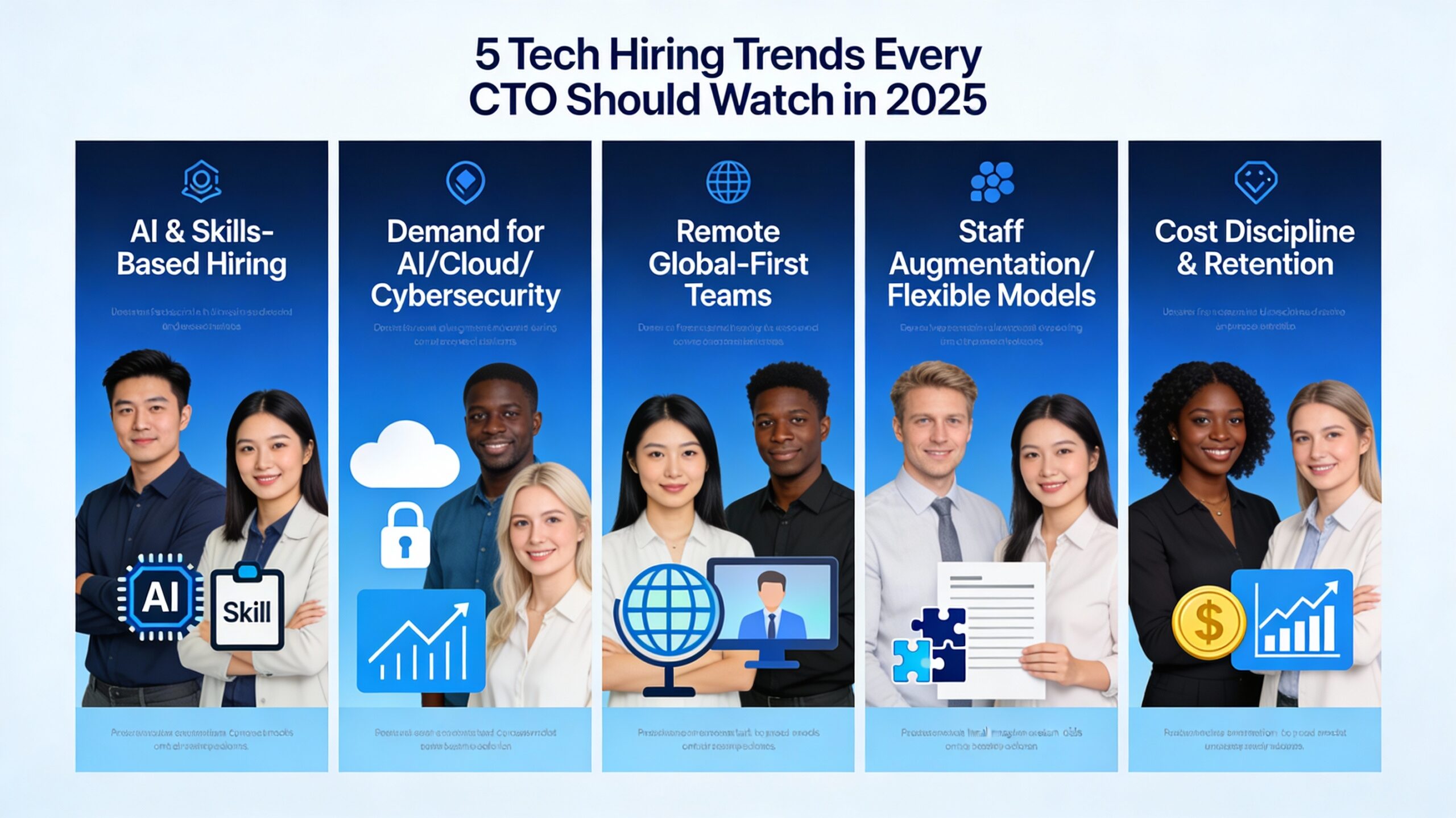
5 Tech Hiring Trends Every CTO Should Watch in 2025
-
December 17, 2025
Why Soft Skills Are the Hidden Superpower in Tech Teams
-
 December 15, 2025
How WitQualis Connects Global Talent with Local Opportunities
-
 December 10, 2025
Why Businesses Need Agile, Scalable, and Skilled Tech Teams—Now More Than Ever
-
 December 5, 2025
The Human Side of Technology: Why People Matter as Much as Code
-
 December 4, 2025
The Rise of Contract-Based Developers in the Global IT Market
-
 December 3, 2025
Talent Has No Boundaries: Why the Best Teams Are Built Across Borders
-
 December 2, 2025
From Startups to Enterprises: How Staff Augmentation Supports Every Stage of Growth
-
 December 1, 2025
Great Ideas Need Great Execution – How WitQualis Teams Turn Vision into Reality
-
 November 28, 2025
Scaling Your Tech Team Shouldn’t Slow Your Business – It Should Power It
-
 November 27, 2025
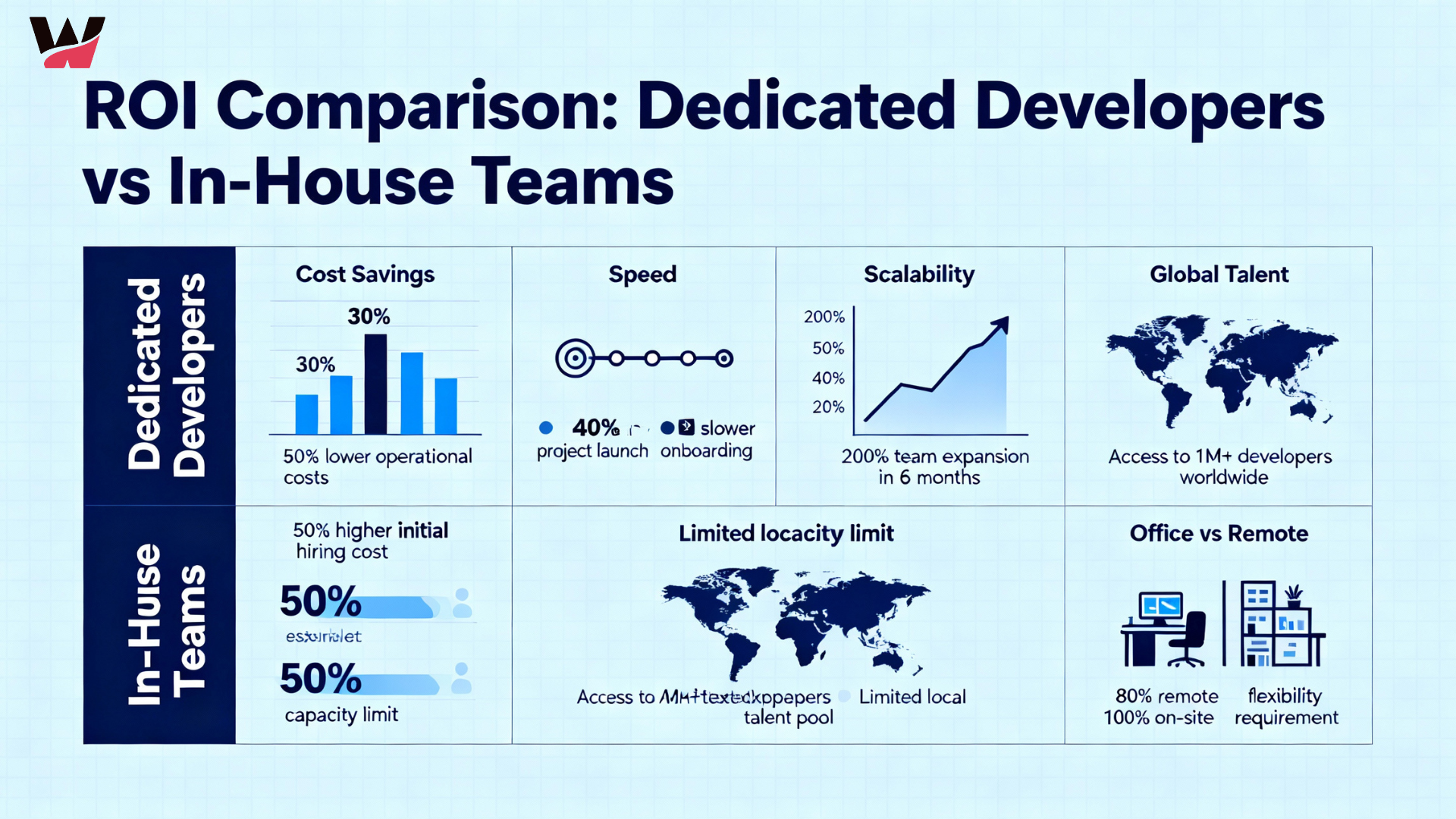
The ROI of Hiring Dedicated Developers vs In-House Teams
-
 November 26, 2025
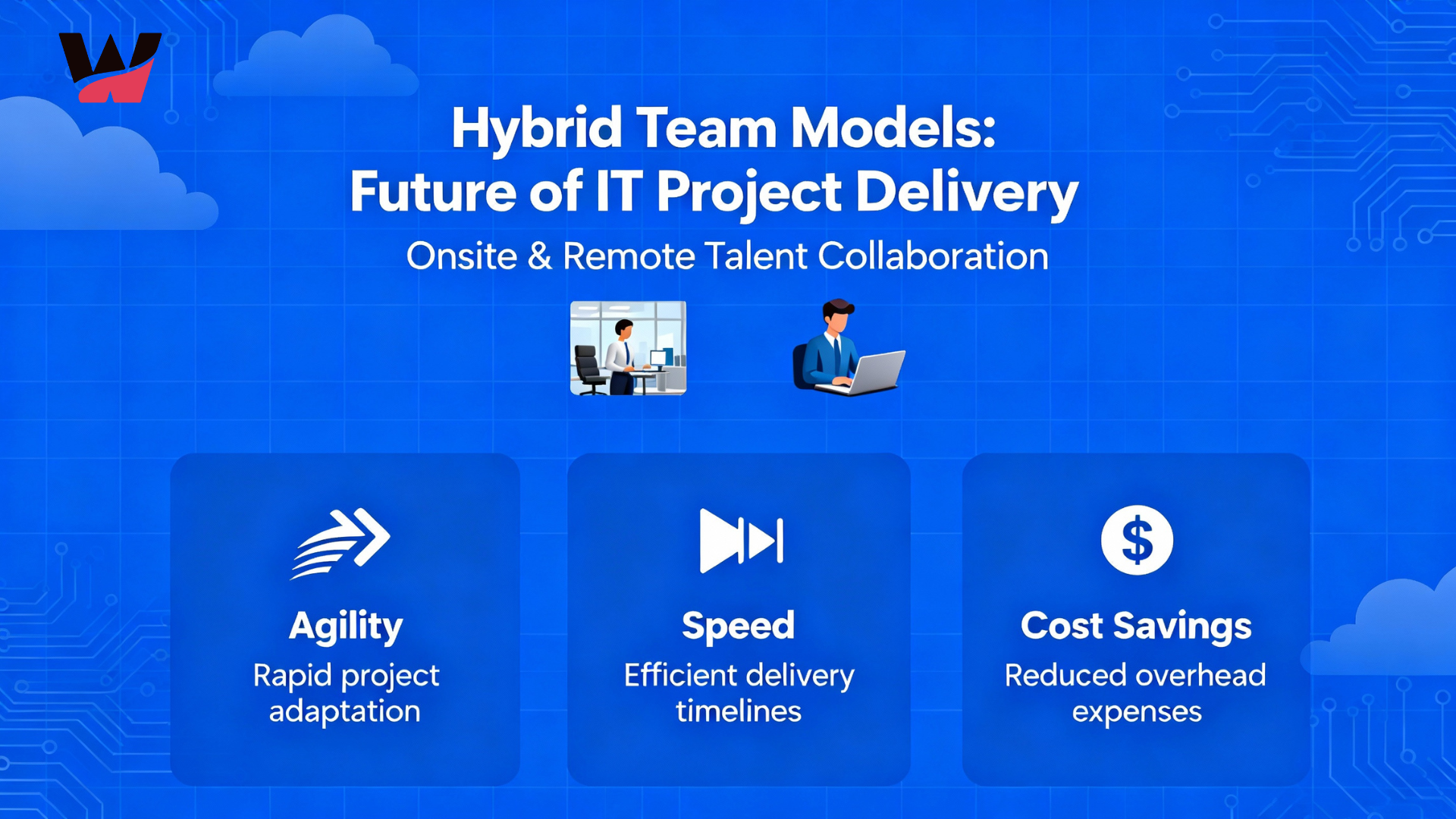
Why Hybrid Team Models Are the Future of IT Project Delivery
-
 November 24, 2025
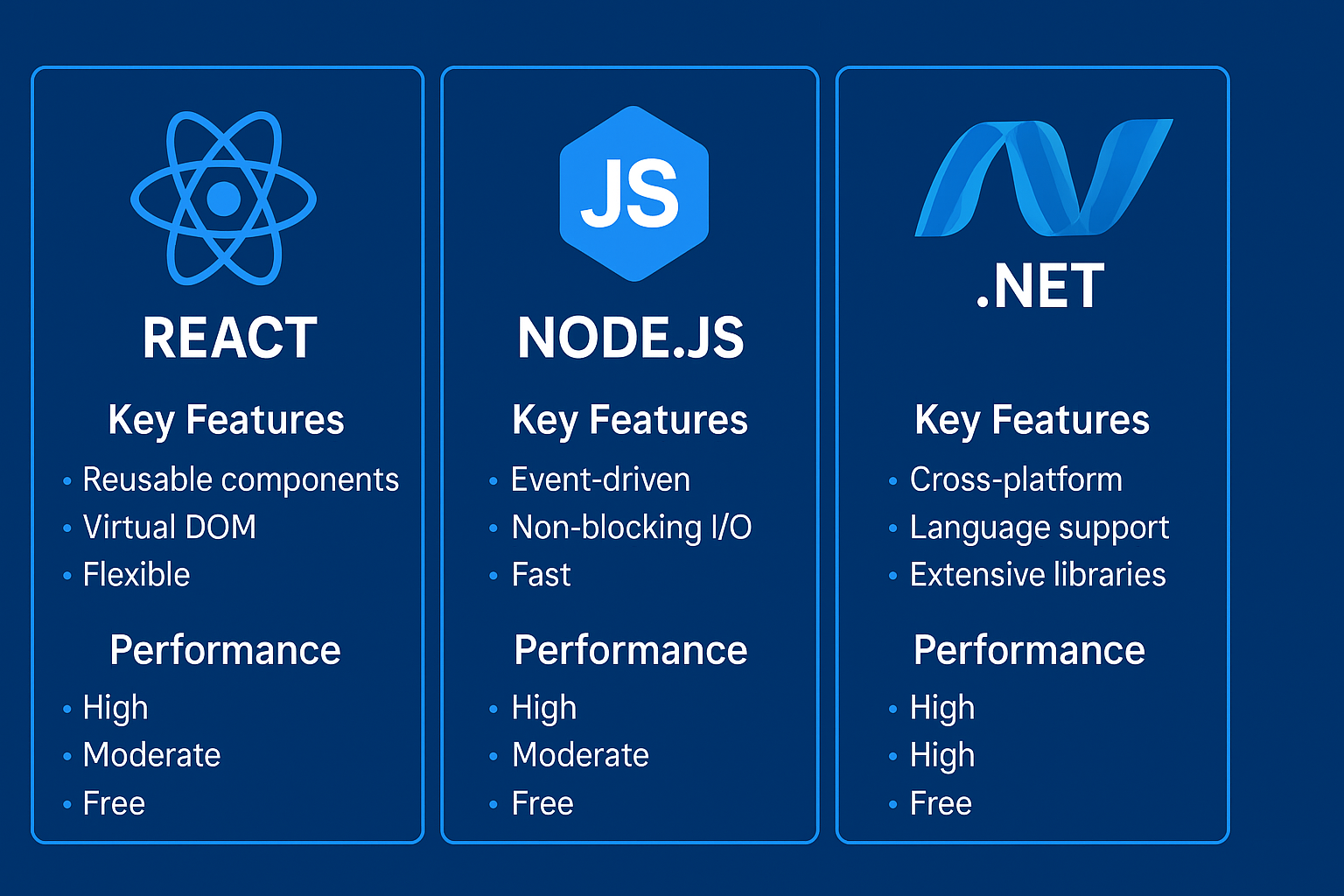
React, Node.js, or .NET? Choosing the Right Tech Stack for Your Next Project
-
 November 21, 2025
Why Hiring Remote Developers Is the Smartest Move for Startups
-
 November 20, 2025
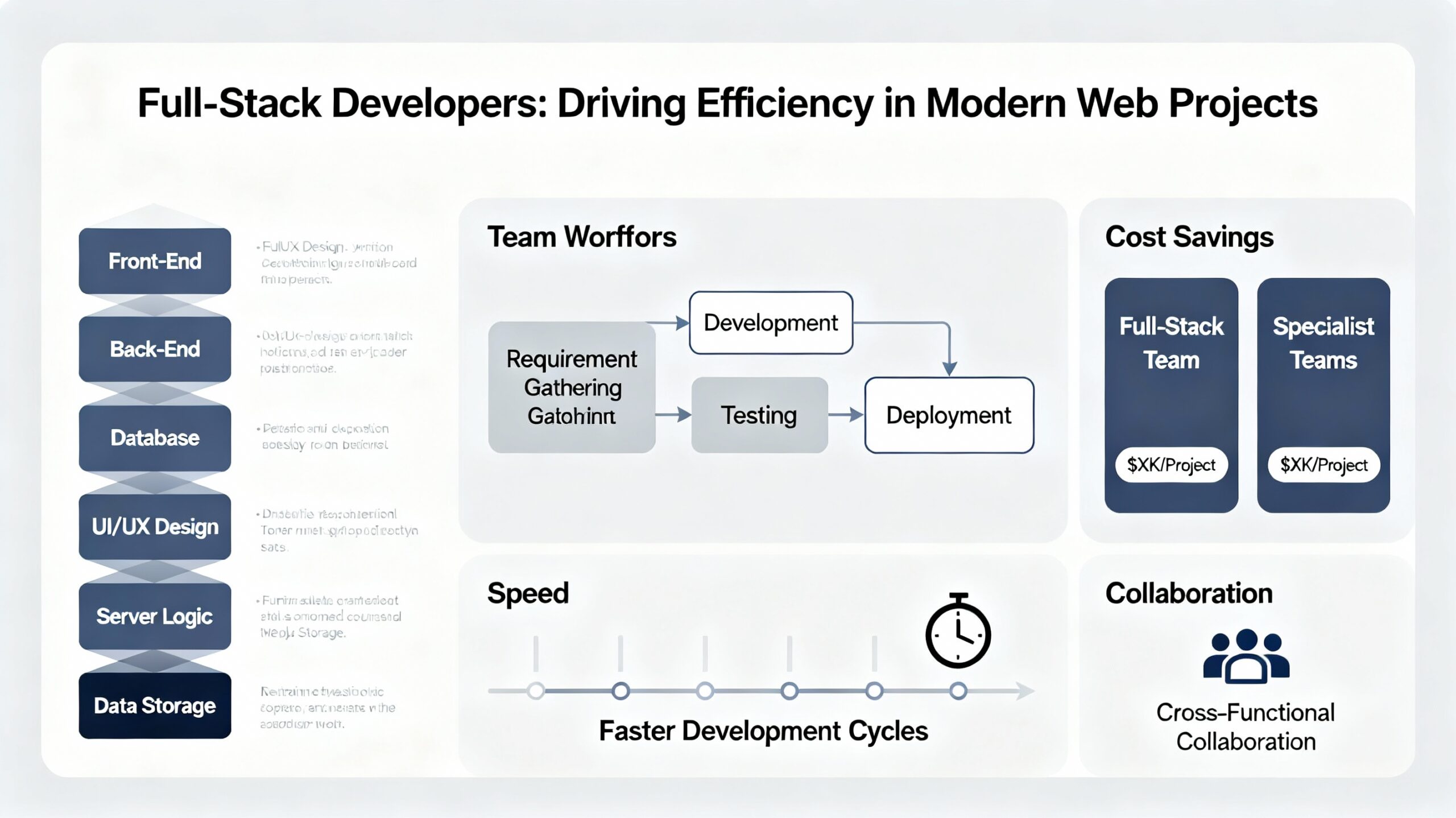
How Full-Stack Developers Drive Efficiency in Modern Web Projects
-
 November 19, 2025
Bridging the Skill Gap: How Augmented Teams Empower Digital Transformation
-
 November 18, 2025
New Technologies for 2025: What Businesses Need to Grow
-
 November 14, 2025
IT Staff Augmentation Reduces Project Costs Quality
-
 November 13, 2025
Empowering Global Collaboration: How WitQualis Builds Seamless Remote Teams
-
 November 12, 2025
Why Global Businesses Are Turning to India for Skilled IT Talent
-
 November 11, 2025
Staff Augmentation Helps You Scale Your Tech Team
-
 November 10, 2025
Staff Augmentation vs Outsourcing in 2025: Which Is Best for Modern Enterprises?
-
 November 7, 2025
How AI, IoT, and Cloud Are Redefining Software Development in 2025
-
 November 6, 2025
Scaling Smarter: How Augmented Teams Help Deliver Projects Faster in 2025
-
 November 5, 2025
How AI and Automation Are Transforming Software Development Teams in 2025
-
 November 3, 2025
The Future of IT Staffing: Why Businesses Are Choose Staff Augmentation in 2025
-
 October 31, 2025
Why Technology is Essential for Business Growth (2025): Top Reasons & Winning Strategies
-
 October 30, 2025
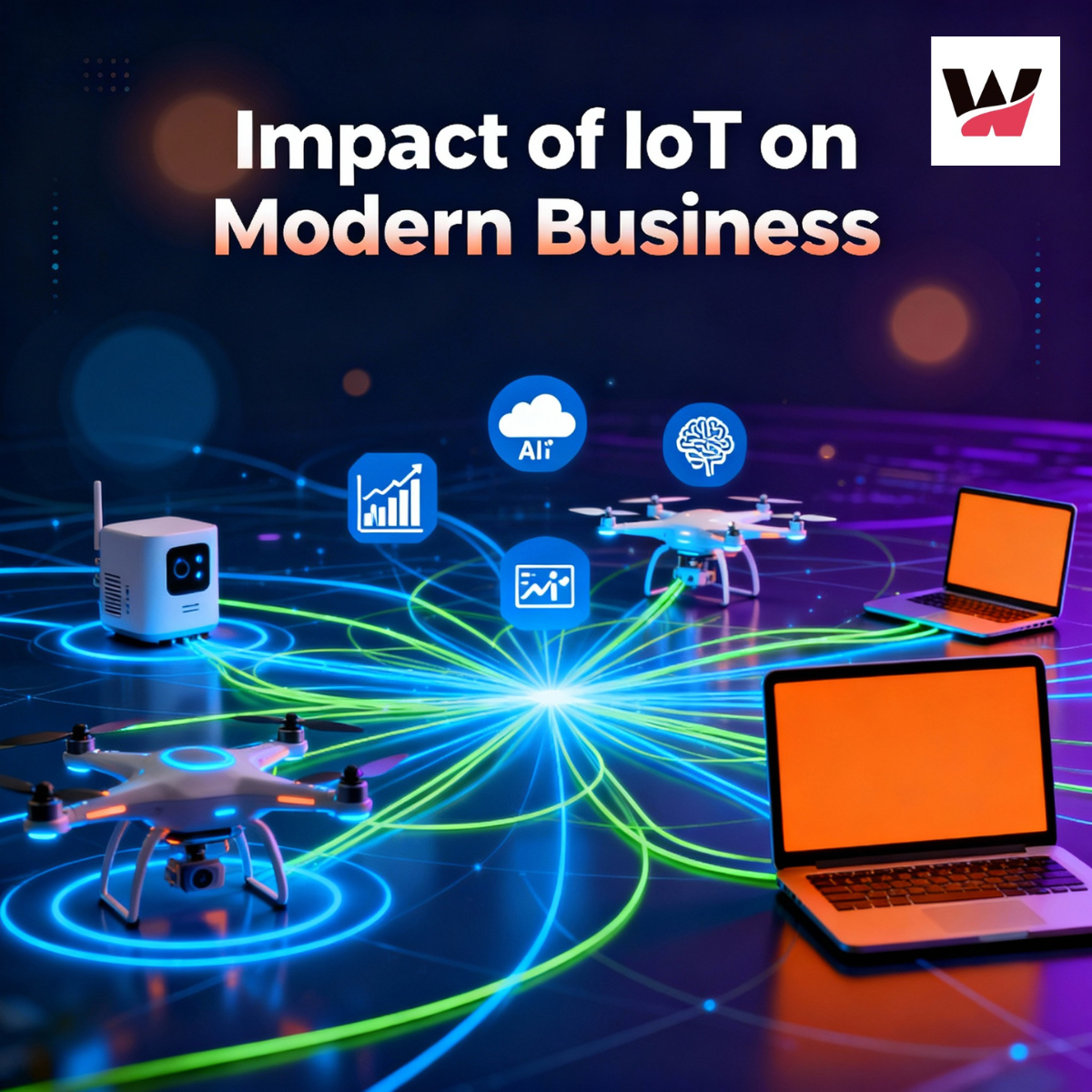
How the Internet of Things (IoT) Is Revolutionizing Modern Business
-
 October 29, 2025
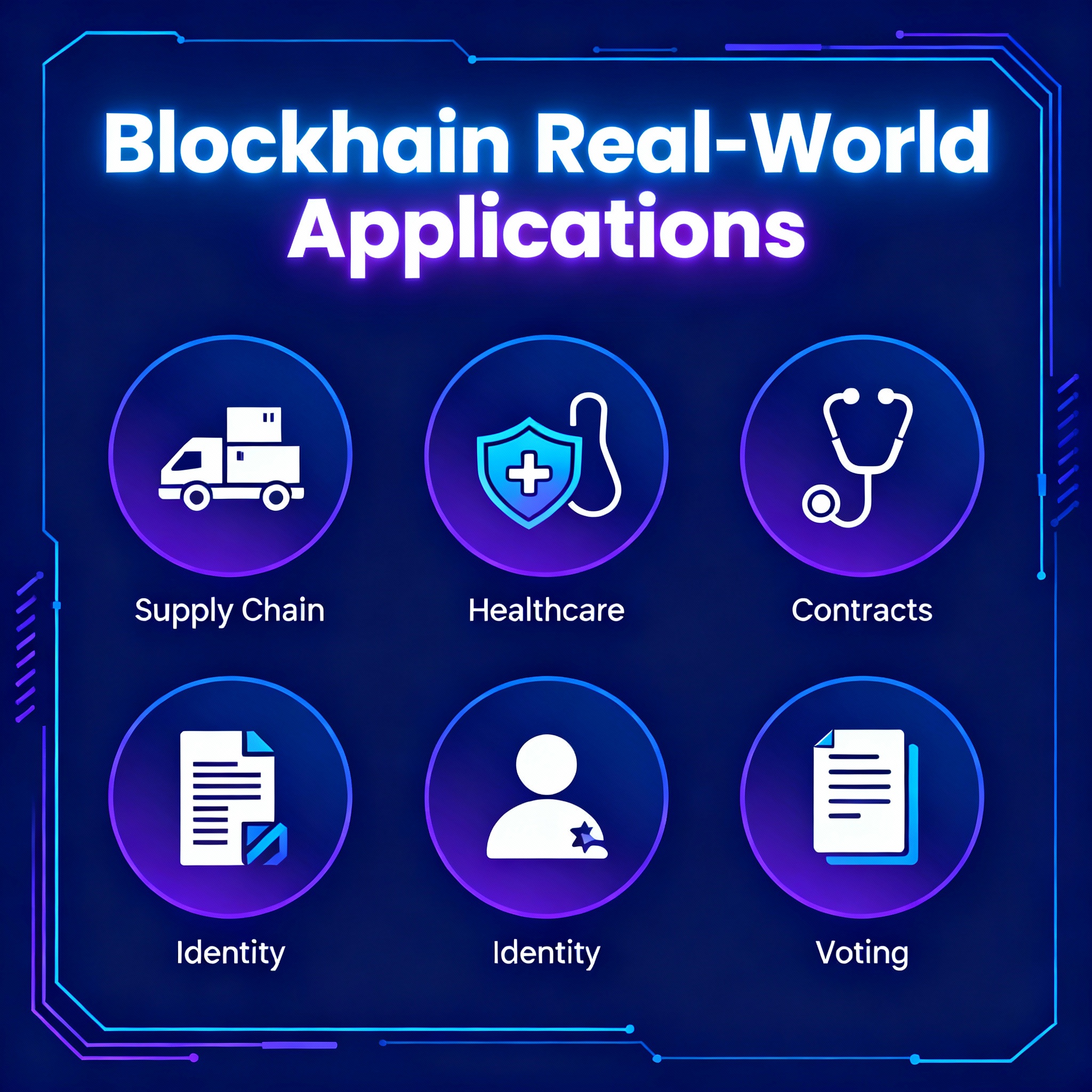
Blockchain Cryptocurrency: Real-World Applications | WitQualis
-
 October 28, 2025
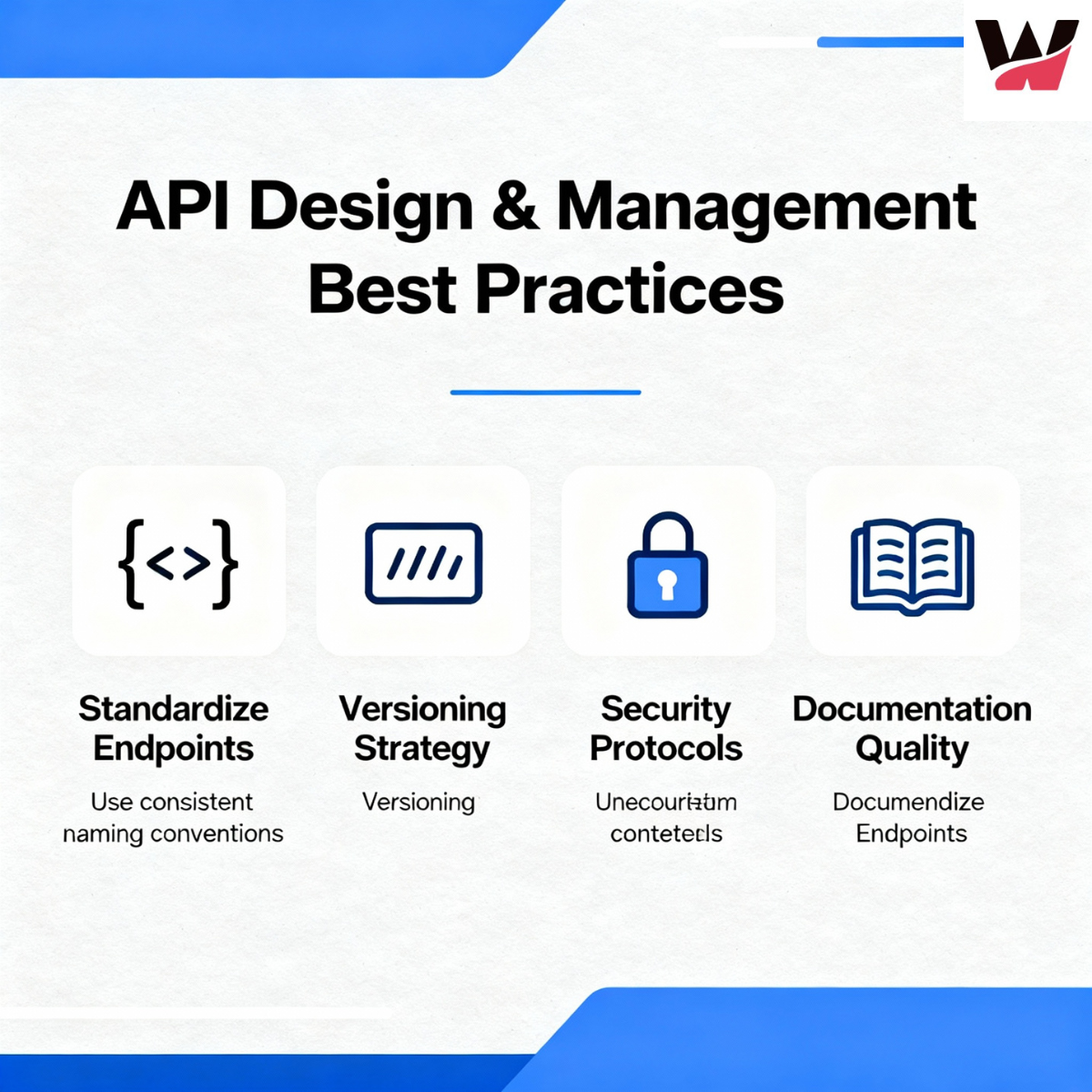
API Design and Management Best Practices for Developers
-
 October 27, 2025
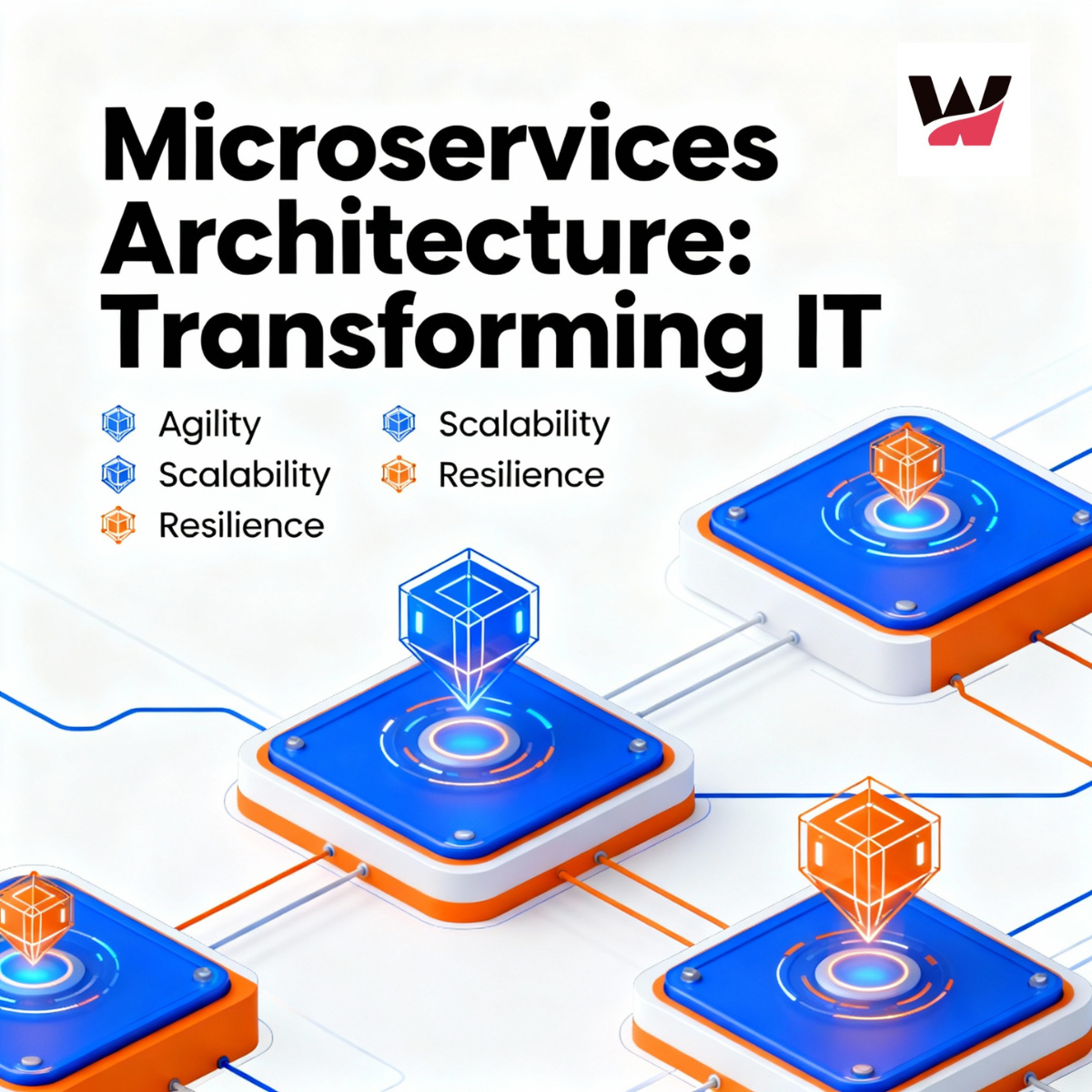
Microservices Architecture: Benefits, Implementation Tips & Real-World Examples
-
 October 24, 2025
How Remote Work Has Transformed the IT Industry Tools in 2025
-
 October 23, 2025
Virtual and Augmented Reality: The Tech Revolution | WitQualis
-
 October 22, 2025
How AI is Revolutionizing Business Decision-Making in 2025 | In-Depth Analysis & Trends
-
 October 16, 2025
Blockchain Beyond Crypto: Building Trust in Business Operations
-
 October 15, 2025
How Custom Software Solutions Drive Business Efficiency | Expert Guide
-
 October 13, 2025
How Automation Reduces Costs & Boosts Productivity in 2025
-
 October 10, 2025
Staff Augmentation: The Key to Building Agile & Scalable Teams
-
 October 9, 2025
The Role of Cloud Computing in Scaling Modern Businesses
-
 October 8, 2025
Why Every Company Needs a Data-Driven Growth Strategy
-
 October 7, 2025
API Design Best Practices for Developers in 2025 |API versioning strategies
-
 October 6, 2025
virtual reality vs augmented reality vs mixed reality
-
 October 3, 2025
The Impact of Internet of Things (IoT) on Modern Business
-
 October 1, 2025
Blockchain Beyond Cryptocurrency: Real-World Applications in 2025
-
 September 30, 2025
The Future of Artificial Intelligence: Trends and Opportunities
-
 September 26, 2025
Microservices Architecture: Benefits and Implementation Tips
-
 September 25, 2025
Why Staff Augmentation Is a Smart Move for IT Projects in 2025
-
 September 24, 2025
Cloud Computing Explained: Benefits and Best Practices (AWS, Azure, Google Cloud)
-
 September 23, 2025
How Staff Augmentation Can Help Scale Your IT Team Efficiently
-
 January 6, 2025
Choosing the Right Front-End Web Development Service in the UK
-
 January 4, 2025
Why Choose Staff Augmentation Services in India for Your IT Projects?
-
 December 21, 2024
Boost Your Business ROI with Power BI Development Services in the Maldives and Iceland
-
 December 20, 2024
Get a Free Consultation: Is Your E-Commerce Business in the UAE Ready for Digital Transformation?
-
 July 6, 2023
The Future of Small Business and Know-How to Climb up the Ladder


Leave a Reply