

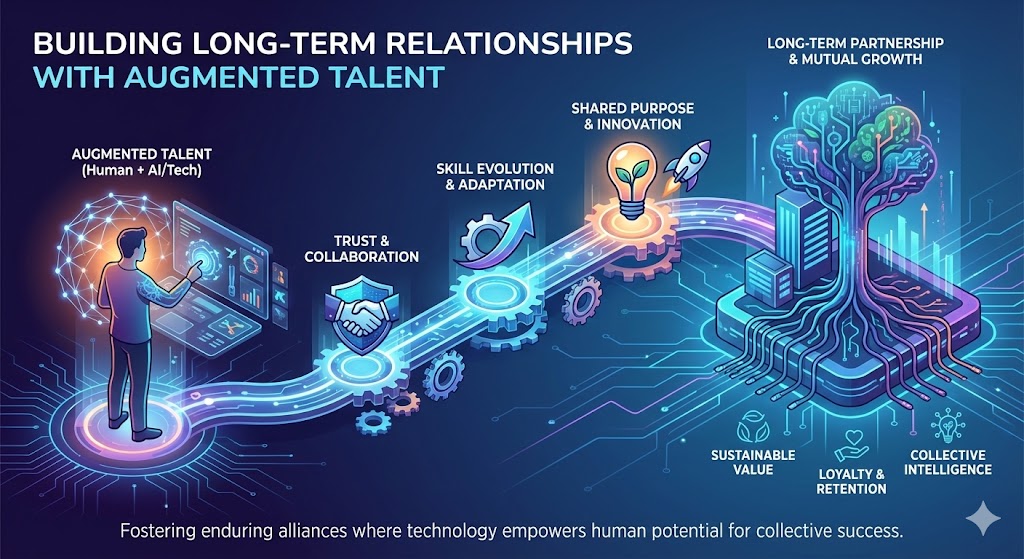
Building Long-Term Relationships with Augmented Talent: A Strategic Approach
Staff augmentation works best when it’s treated as a partnership, not a transactional vendor relationship. Companies that build long-term relationships with augmented talent report higher productivity, better retention, and stronger outcomes.
Building Long-Term Relationships with Augmented Talent
Why Short-Term Thinking Fails With Augmented Teams
Because many organizations treat staff augmentation as a quick fix—hire talent for a sprint, then discard when the project ends—they miss significant opportunities to extract value and build institutional knowledge. Consequently, they experience costly ramp-ups, repeated onboarding, and constant context-switching that undermines both quality and velocity.
However, companies that shift their mindset from “hiring resources” to “building partnerships” unlock a fundamentally different experience. Therefore, the difference between treating augmented talent transactionally versus strategically often determines whether augmentation accelerates your business or becomes another source of frustration.
Moreover, the best augmented talent—experienced engineers, architects, and specialists—have choices. They will naturally migrate toward organizations that treat them as valued team members rather than interchangeable contractors. Thus, building genuine relationships directly improves both the quality of talent you attract and your ability to retain top performers across multiple engagements.
The Business Case for Long-Term Augmented Relationships
Because building relationships requires investment, it’s worth understanding the tangible returns.
Higher Productivity From Day One
When augmented talent has worked with your team before, they skip the initial ramp-up phase. Consequently, they contribute meaningfully from week one instead of requiring two weeks of onboarding, codebase navigation, and context-building. This accelerated productivity directly translates to faster project delivery and better ROI on augmentation spend.
Additionally, returning talent already understands your architecture, coding standards, product roadmap, and team dynamics. Therefore, they make better technical decisions because they’re not constantly asking “why does it work this way?”
Institutional Knowledge That Compounds
Because augmented talent builds deeper understanding of your systems and business over time, they become increasingly valuable. Consequently, on their second or third engagement, they can spot inefficiencies, suggest improvements, and mentor newer team members in ways that newcomers simply cannot.
Furthermore, this compounding knowledge means each subsequent engagement delivers more value than the last—the opposite of typical contractor relationships where every new person starts from zero.
Better Long-Term Cost Management
Because recruiting and onboarding new augmented talent is expensive and time-consuming, retaining relationships with proven performers reduces total cost of engagement. Moreover, repeat engagements often involve lower rates (due to reduced ramp time and administrative overhead) and shorter sales cycles.
Thus, what appears to be a one-time expense becomes a strategic investment that pays dividends across multiple projects.
Stronger Team Cohesion and Culture
Because long-term augmented team members integrate deeply into your culture, they become extensions of your permanent team rather than outsiders. Consequently, collaboration improves, knowledge sharing accelerates, and team morale strengthens—benefits that transcend the individual project.
Additionally, seeing consistent faces across projects builds trust and psychological safety, which are foundational to high-performing teams.
How to Build Genuine Relationships With Augmented Talent
Building these relationships requires intentional practices and a mindset shift.
1. Hire for Relationship, Not Just Immediate Need
Because the first engagement sets the tone for everything that follows, treat it as an audition—for both sides. Consequently, when selecting augmented talent, evaluate not just technical skills but also communication style, willingness to learn your systems, and cultural fit.
Moreover, during the first engagement, explicitly discuss the potential for future work. Be honest about your roadmap and ask whether the person would be interested in returning for subsequent projects. This transparency builds trust and signals that you see them as more than a one-time hire.
Additionally, create structured feedback loops during the first project so both sides understand what’s working and what needs adjustment. Thus, you’ll identify potential issues early while the relationship is still forming.
2. Treat Augmented Talent as Team Members, Not Vendors
Because “us versus them” mentality breeds distance and reduces collaboration, integrate augmented talent fully into team meetings, planning sessions, and decision-making discussions. Consequently, they feel ownership of outcomes instead of just executing assigned tasks.
Furthermore, invite augmented team members to retrospectives, sprint planning, and architectural discussions. Their external perspective often surfaces blind spots and generates better solutions than internal-only conversations. Therefore, their participation directly improves outcomes while also strengthening their connection to the team.
Additionally, ensure augmented talent has access to the same tools, documentation, and communication channels as permanent staff. This seemingly small act signals that they’re valued team members rather than second-class contributors.
3. Invest in Their Growth and Skill Development
Because talented professionals seek opportunities to learn and advance, companies that invest in their growth attract and retain top performers. Consequently, allocate time and resources for augmented team members to upskill, explore new technologies, or work on stretch projects.
Moreover, offer mentorship opportunities. Pairing senior augmented talent with junior engineers benefits both sides: juniors gain from experienced guidance, while seniors deepen their teaching and leadership skills. Thus, investing in growth multiplies value.
Additionally, when augmented professionals develop new skills while working with you, they become even more valuable for future engagements. Therefore, this investment compounds.
4. Maintain Relationships Between Engagements
Because out-of-sight-out-of-mind is the enemy of long-term relationships, maintain periodic contact with high-performing augmented team members even when they’re not actively on projects. Consequently, they feel remembered and valued rather than discarded after each project ends.
Furthermore, include them in company updates, invite them to virtual team events, or ask for their input on architectural decisions you’re making. These touchpoints require minimal effort but signal strong ongoing commitment.
Additionally, when you have gaps between projects, consider offering part-time advisory roles or smaller engagements. This keeps the relationship warm and ensures that when you need them for your next major initiative, they’re available and eager to return.
5. Create Predictability and Clear Career Paths
Because uncertainty undermines relationships, provide clarity about future work. If your roadmap suggests you’ll need augmented backend engineers for the next 12 months, communicate that. Consequently, they can plan their careers and may even turn down conflicting opportunities to stay available for you.
Moreover, be transparent about compensation. If you consistently work with the same augmented talent, consider establishing a preferred rate or retainer arrangement rather than negotiating each engagement from scratch. This signals long-term commitment and reduces friction.
Additionally, discuss potential for expanded roles. If an augmented team member demonstrates exceptional value, explore whether they could eventually transition to a part-time or full-time permanent role. This pathway gives them career aspiration and increases their investment in your success.
6. Communicate Genuine Appreciation
Because augmented professionals often feel invisible (they’re not on the org chart, they don’t attend company celebrations), actively and consistently communicate appreciation. Consequently, they feel valued and recognized.
Furthermore, publicly acknowledge their contributions in team meetings, retrospectives, and project wrap-ups. Celebrate wins they contributed to. Write thank-you notes when projects conclude successfully. These gestures require minimal effort but create disproportionate emotional impact.
Additionally, if augmented talent goes above and beyond, reward it—with bonuses, extended time off, or preferential project assignments. Thus, you signal that exceptional effort is noticed and valued.
Common Mistakes That Destroy Long-Term Augmented Relationships
Understanding what breaks relationships helps prevent damage.
Treating Augmented Talent as Disposable
Because some organizations view augmented staff as temporary placeholders, they fail to invest in relationships or provide meaningful work. Consequently, good performers leave and never return. Moreover, word spreads in tight-knit professional communities, damaging your reputation as an employer.
Overloading Without Support
Because augmented professionals are sometimes perceived as “extra capacity,” they’re burdened with unbalanced workloads, unclear expectations, or minimal support. Consequently, they become frustrated and seek better opportunities. Thus, you lose talent that took months to integrate.
Inconsistent or Unclear Communication
Because vague project scopes, shifting priorities, and poor feedback create frustration, augmented talent never feels secure or valued. Consequently, they disengage and deliver lower-quality work. Moreover, they’re unlikely to return for future projects.
Failing to Onboard Properly
Because some teams treat augmented talent as immediately productive without proper onboarding, they struggle and feel unsupported. Consequently, their first experience is negative, and they won’t return despite initial good intentions. Therefore, investing in thorough onboarding is essential.
Not Addressing Performance Issues Promptly
Because ignoring problems signals that you don’t care about the relationship, poor performers stay and poison team dynamics. Consequently, high performers leave to find better teams. Thus, addressing issues directly and respectfully is crucial to maintaining healthy relationships.
How WitQualis Supports Long-Term Augmented Relationships
Because building these relationships requires more than just hiring individuals, partnership-oriented augmentation firms play a critical role.
WitQualis operates with a philosophy that augmented talent should integrate seamlessly into your team, not remain disconnected contractors. Therefore, WitQualis:
-
Pre-screens for cultural fit – Technical skills matter, but communication style, learning orientation, and collaboration mindset are equally important.
-
Facilitates smooth onboarding – WitQualis ensures augmented professionals come prepared with documentation, context, and clear expectations so they ramp quickly.
-
Maintains continuity – When you request the same professional for multiple projects, WitQualis prioritizes that for you, supporting long-term relationships.
-
Provides ongoing support – If issues arise, WitQualis acts as a partner to resolve them rather than simply replacing talent.
-
Why staff augmentation partners matter: Building teams, not just filling roles – WitQualis
Thus, working with a relationship-focused augmentation firm dramatically increases the likelihood that you’ll build lasting partnerships with augmented talent.
Measuring the Success of Long-Term Augmented Relationships
Because demonstrating value helps justify continued investment, track key metrics.
Repeat Engagement Rate
Because returning talent signals satisfaction on both sides, track what percentage of augmented professionals work with you multiple times. Higher rates indicate strong relationships and better cultural fit.
Time-to-Productivity
Because experienced augmented professionals ramp faster on subsequent projects, measure how quickly they reach full productivity. If their first engagement took 3 weeks to ramp but their second took 1 week, that’s evidence of compounding value.
Quality Metrics
Because longer relationships should correlate with better work, track code quality, defect rates, and project delivery against baseline. Experienced augmented team members often outperform newcomers on these metrics.
Stability and Retention
Because losing key augmented team members mid-project is costly, track how many complete their engagements versus dropping out. High completion rates indicate strong relationships.
Internal Feedback Scores
Because team feedback reflects how well augmented professionals integrate, gather regular 360-degree feedback from their managers and teammates. Over time, integration should improve.
Building the Foundation for Long-Term Success
Because relationships compound over time, starting strong is critical.
First engagement: Focus on cultural fit, clear communication, and genuine integration into the team.
Second engagement: Deepen the relationship by including them in strategic discussions and showing appreciation for their expertise.
Subsequent engagements: Treat them as trusted extensions of your leadership team, actively seeking their input and developing their capabilities.
This progression transforms augmented talent from temporary contractors into strategic partners who deeply understand your business and are invested in your success.
Last Blog
WitQualis Blog|- Cybersecurity
WitQualis Blog |- Flexible Hiring
5 responses to “Building Long-Term Relationships with Augmented Talent: A Strategic Approach”
Leave a Reply
Recent Posts
-
 March 5, 2026
Microservices Architecture: Benefits and Implementation Tips
-
 March 3, 2026
How Remote Work Has Changed the IT Industry and Tools You Need
-
 March 2, 2026
API Design and Management Best Practices for Developers
-
 February 27, 2026
The Impact of Internet of Things (IoT) on Modern Business
-
 February 26, 2026
Virtual and Augmented Reality: Where Tech is Headed Next | 2026 Guide
-
 February 25, 2026
Blockchain Beyond Cryptocurrency: Real-World Applications & Use Cases (2026 Guide)
-
 February 24, 2026
The Role of AI in Enhancing IT Development: A Deep Dive (2026 Guide)
-
 February 23, 2026
Maximizing Productivity: How Staff Augmentation Drives Innovation in IT Projects
-
 February 20, 2026
Staff Augmentation vs. Outsourcing: Which IT Model Wins in 2026?
-
 February 19, 2026
The Rise of Hybrid Teams: How to Leverage Staff Augmentation for Business Success
-
 February 18, 2026
How Staff Augmentation is Transforming the Future of IT Workforce (2026)
-
 February 17, 2026
5 Reasons Why Staff Augmentation is Key for Tech Skill Shortages: staff augmentation for tech skill shortages
-
 February 16, 2026
How Staff Augmentation Helps Scale Your Business Without Overheads in 2026
-
 February 13, 2026
The Power of Diverse Teams: How Staff Augmentation Drives Inclusion (2026)
-
 February 12, 2026
The Role of 5G Technology in Shaping IT Development and Augmentation in 2026
-
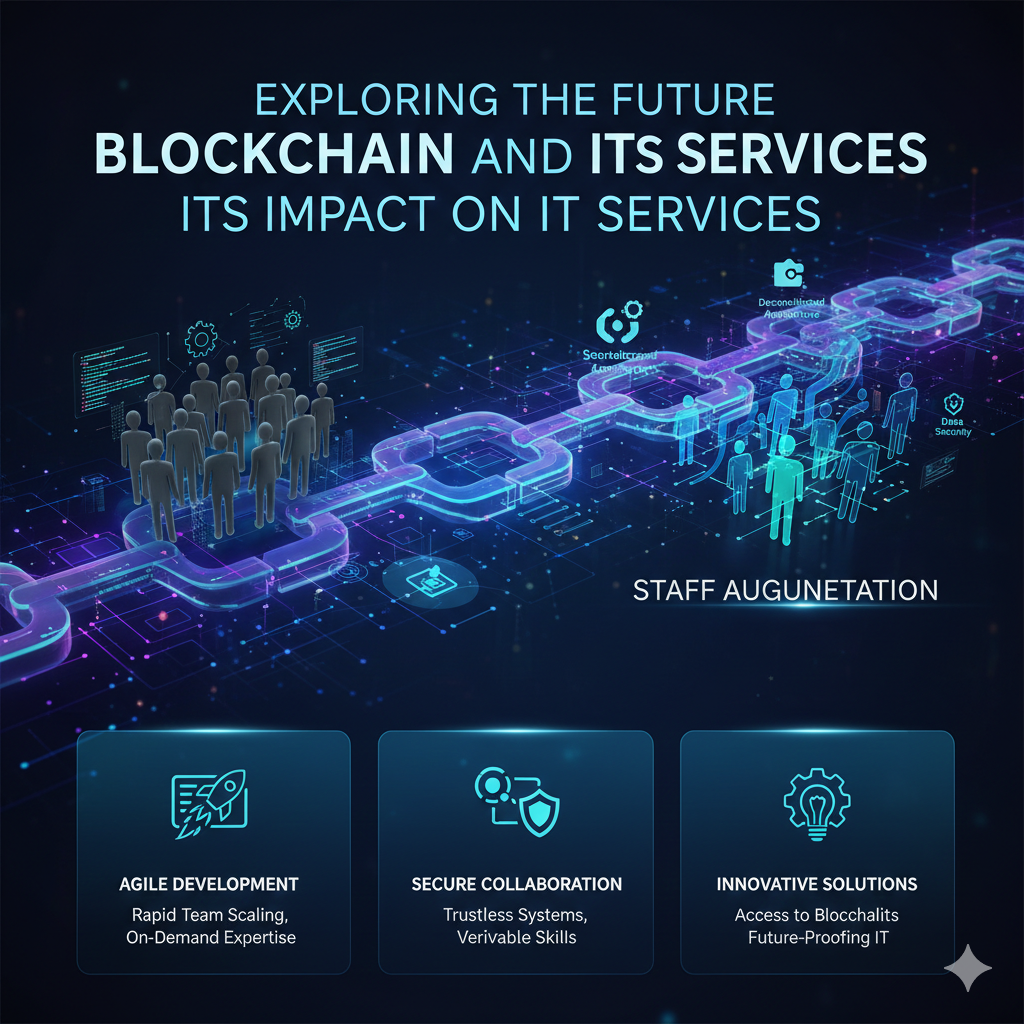 February 11, 2026
The Future of Blockchain: Revolutionizing IT Services in 2026
-
 February 10, 2026
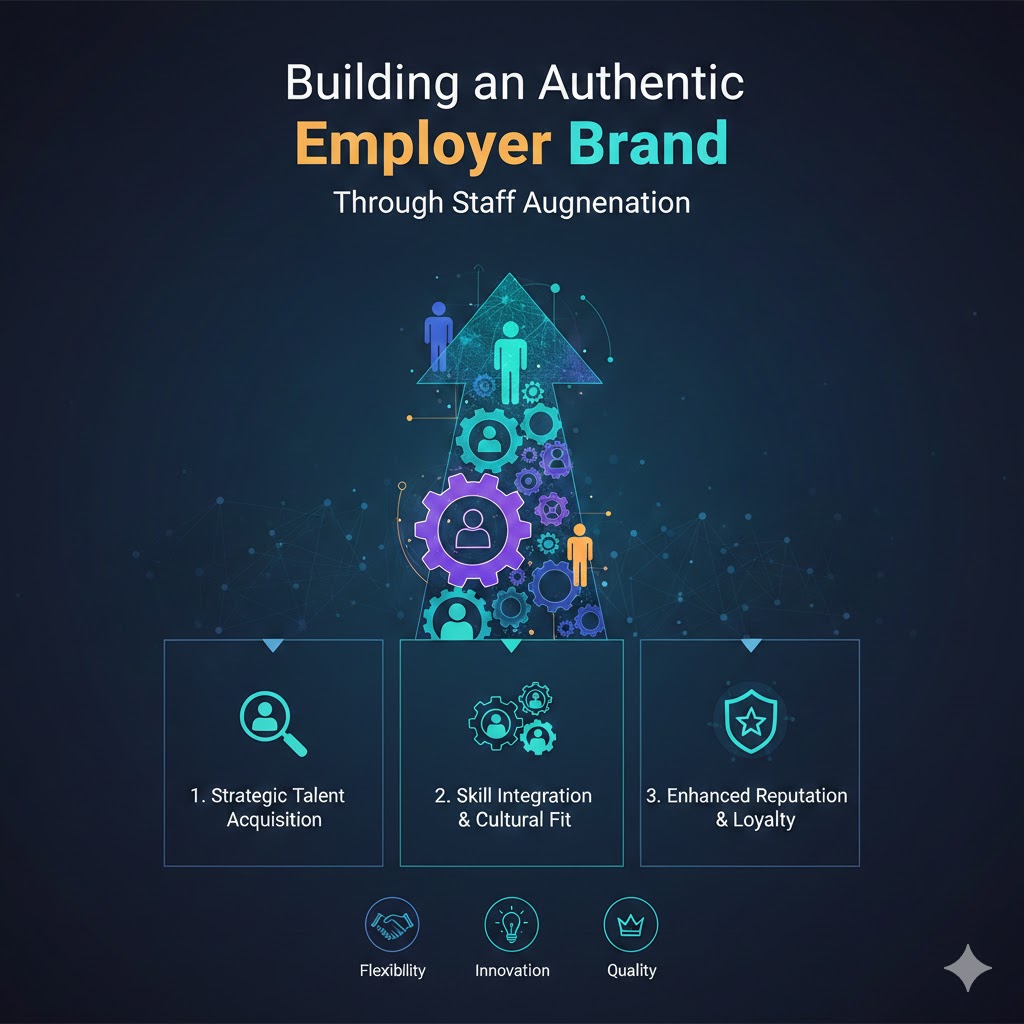
Building an Authentic Employer Brand Through Staff Augmentation in 2026
-
 February 9, 2026
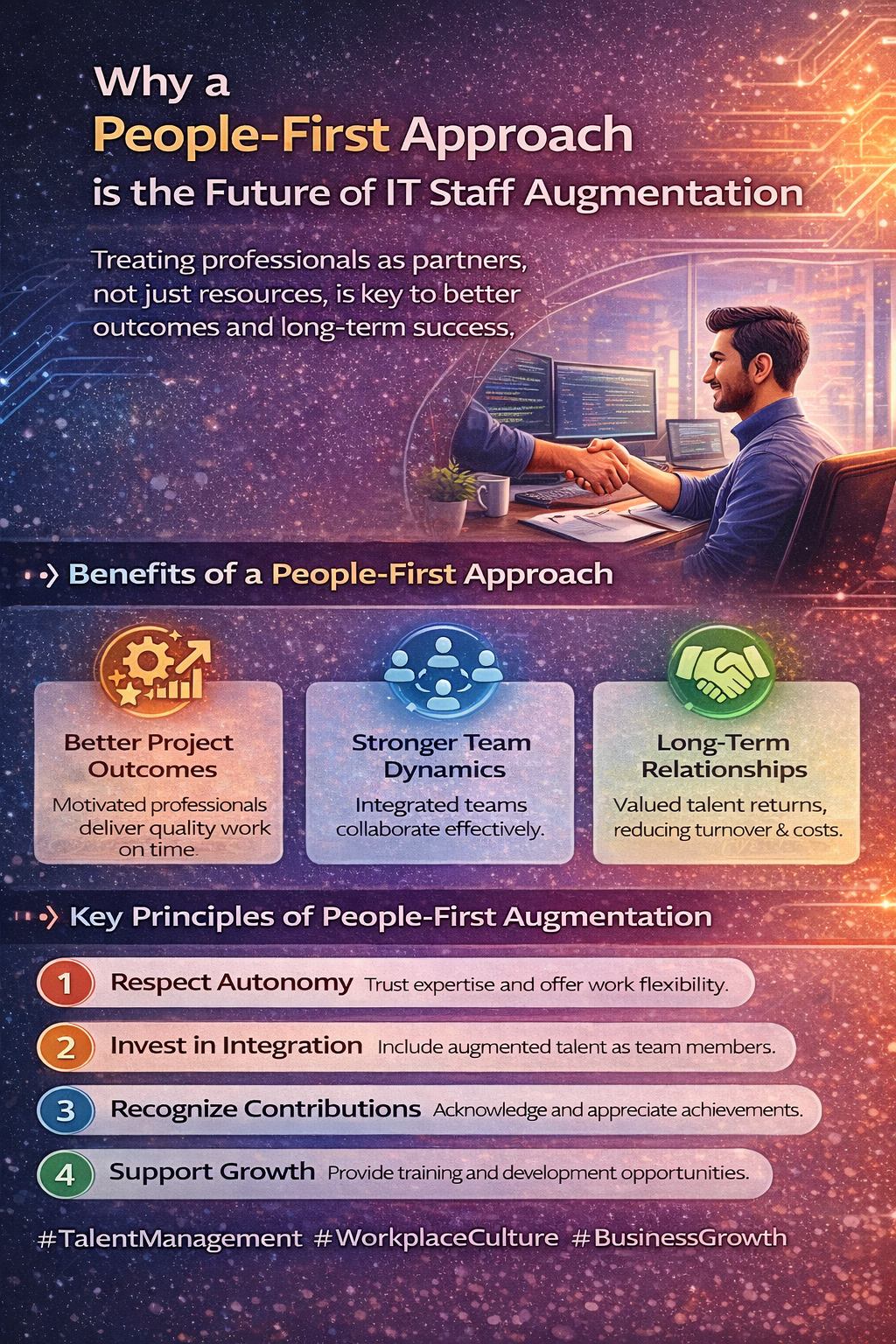
Supporting Augmented Professionals During Projects: Best Practices for Success
-
 February 6, 2026
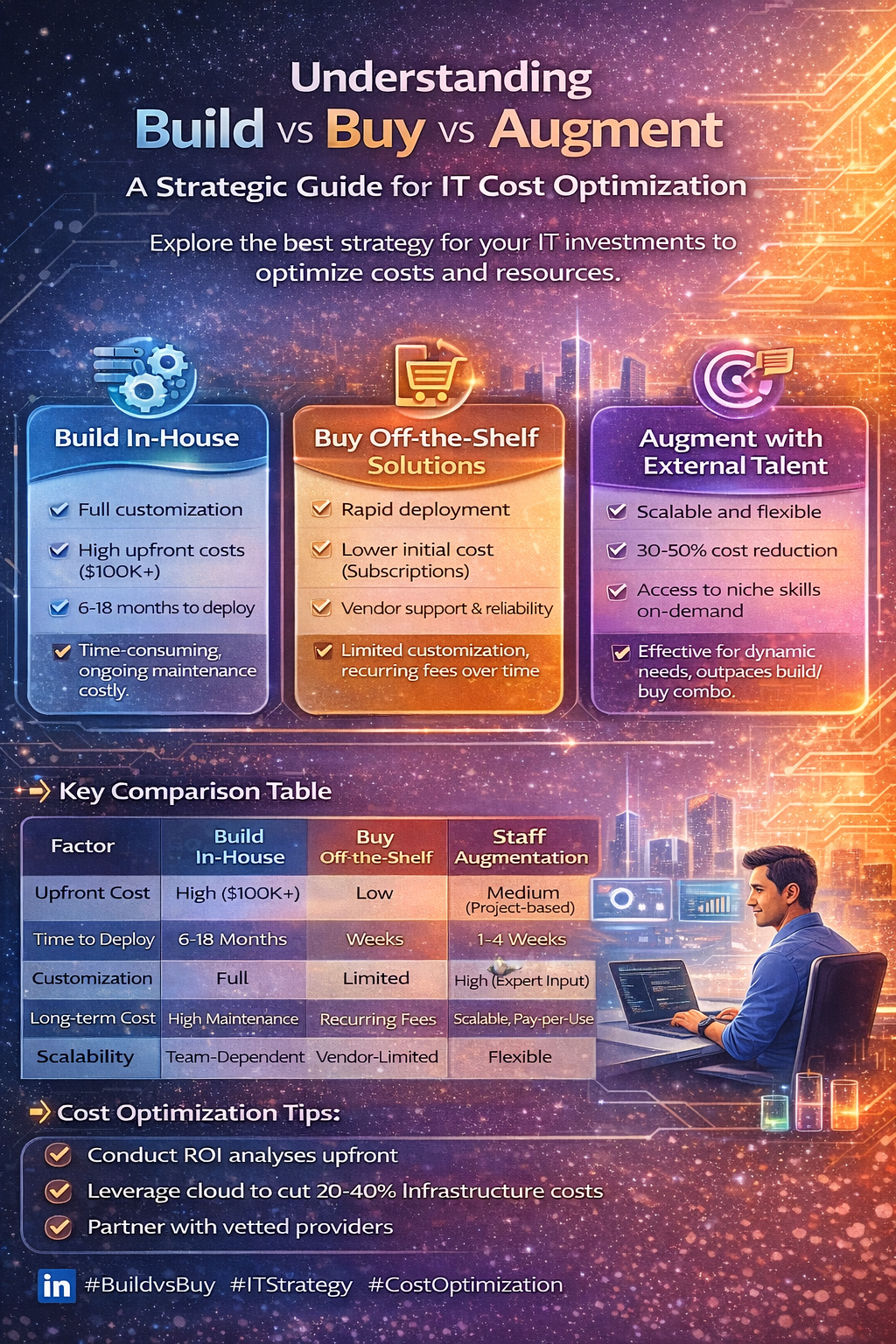
Cost Optimization in IT: Build vs Buy vs Staff Augmentation (2026 Guide)
-
 February 5, 2026
The Role of DevOps in High-Performance Engineering Teams: Best Practices Guide
-
 February 4, 2026
How to Ensure Code Quality When Working with Augmented Teams: Best Practices Guide
-
 February 3, 2026
Tech Talent Trends That Will Shape the Next 5 Years: 2026–2031 Outlook
-
 February 2, 2026
The Rise of Hybrid Teams: In-House + Augmented Talent - The Complete Guide
-
 January 30, 2026
How We Support and Retain High-Performing Tech Professionals
-
 January 29, 2026
Aligning Technology Strategy with Business Growth Goals: A Complete Framework
-
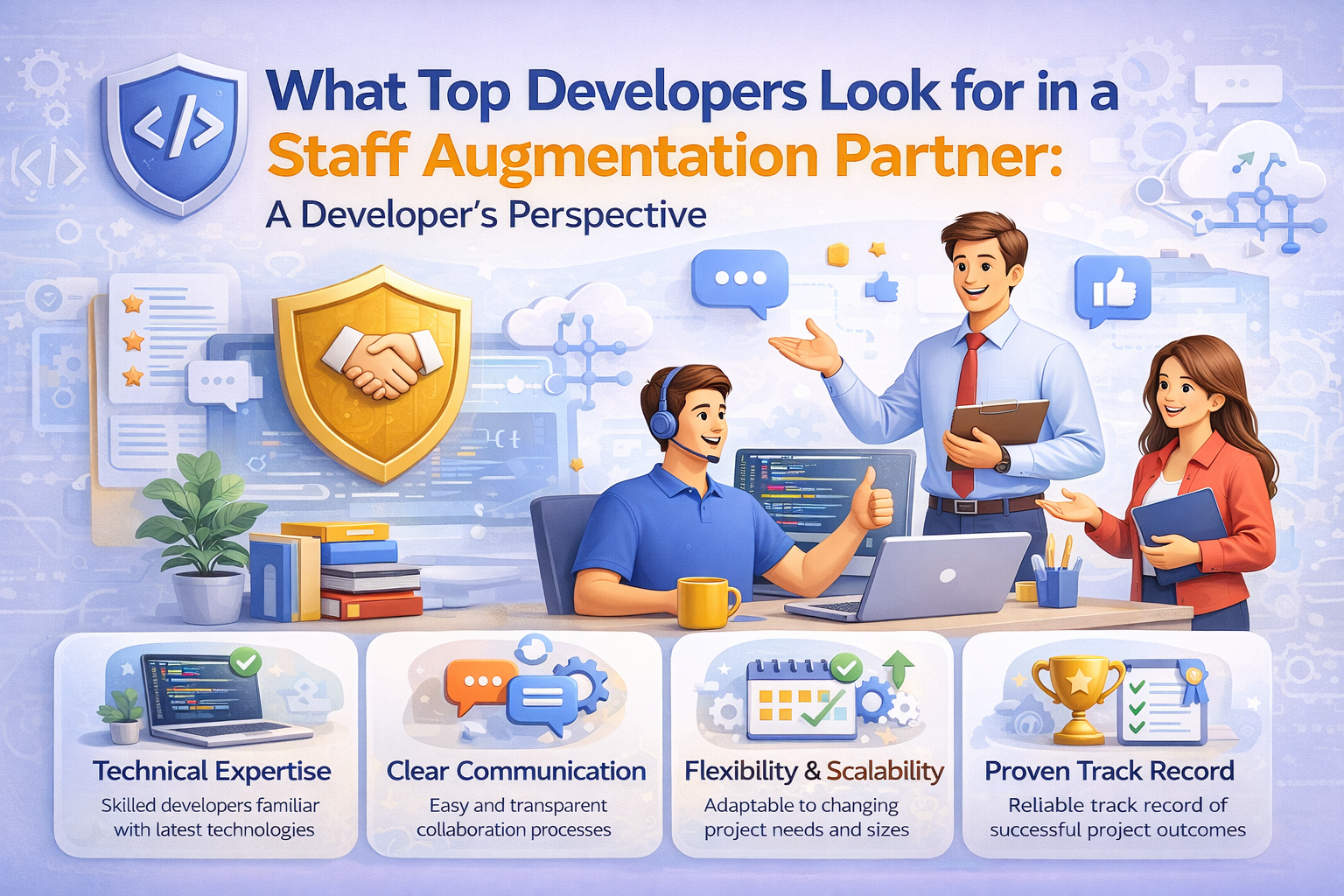 January 28, 2026
What Top Developers Look for in a Staff Augmentation Partner: A Developer's Perspective
-
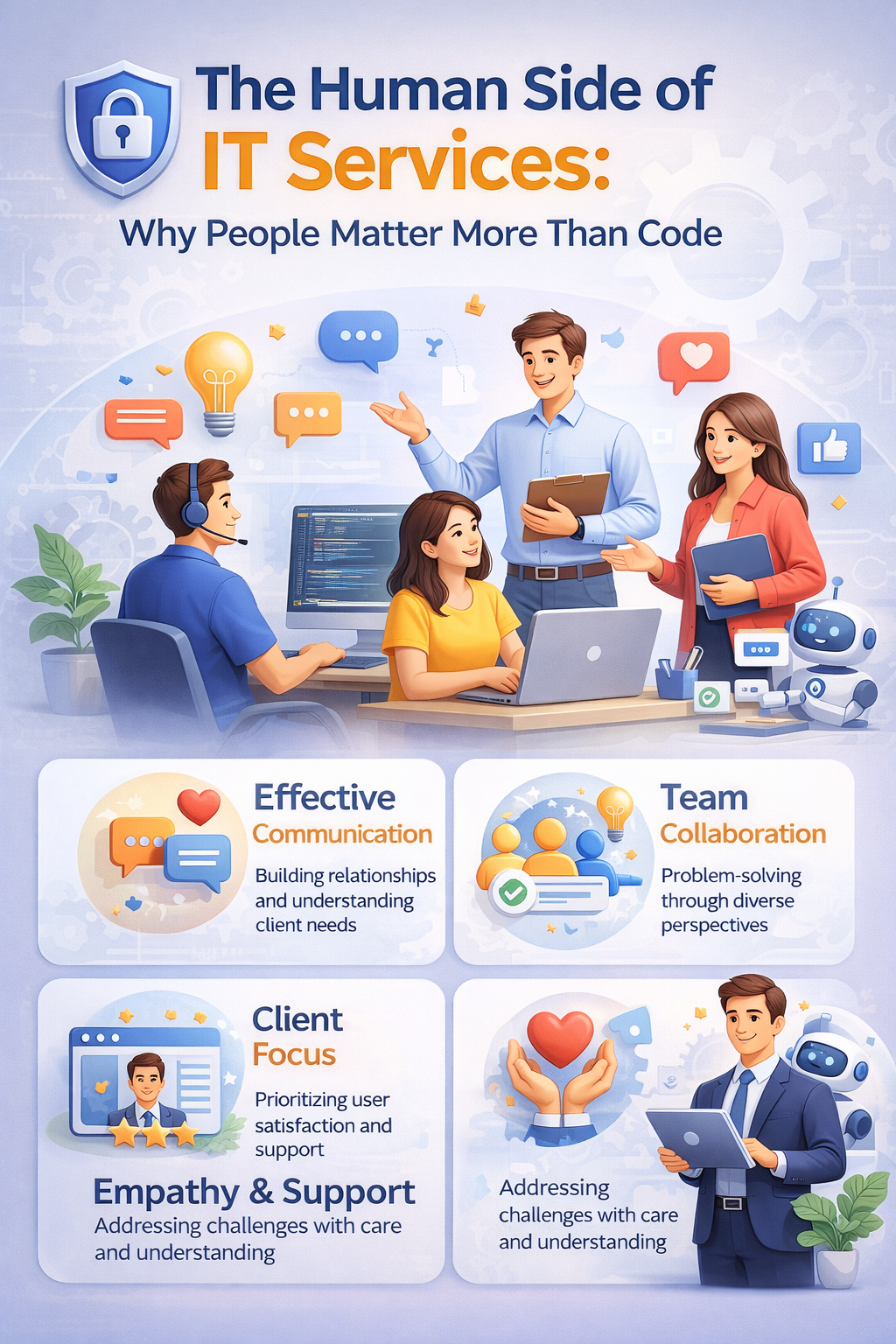 January 27, 2026
The Human Side of IT Services: Why People Matter More Than Code
-
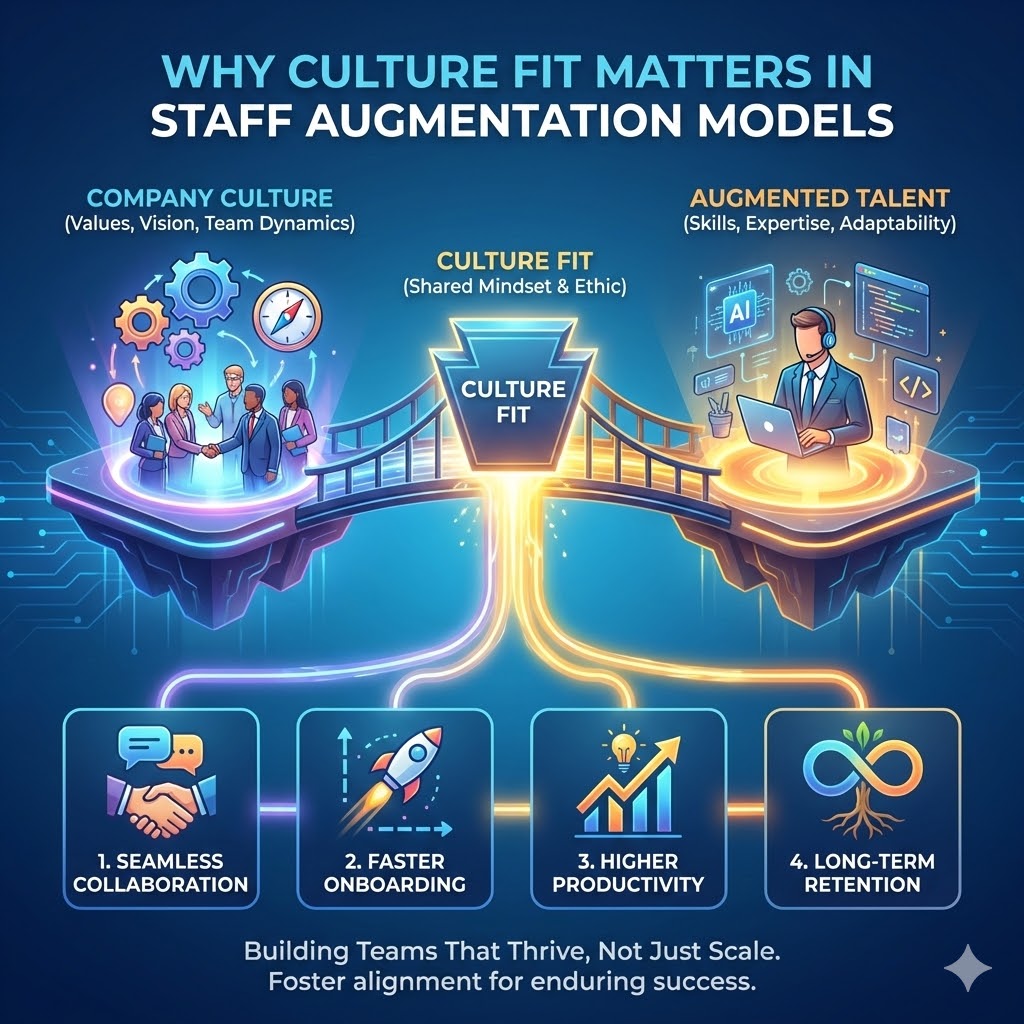 January 23, 2026
Why Culture Fit Matters in Staff Augmentation Models | Witqualis
-
January 22, 2026
Building Long-Term Relationships with Augmented Talent: A Strategic Approach
-
 January 21, 2026
Cybersecurity Skills in Demand: What Companies Need Now in 2026
-
 January 20, 2026
Why Flexible Hiring Models Drive Better Business Outcomes
-
 January 19, 2026
Reducing Time-to-Market with On-Demand Tech Talent
-
 January 15, 2026
How Dedicated Development Teams Accelerate Product Delivery
-
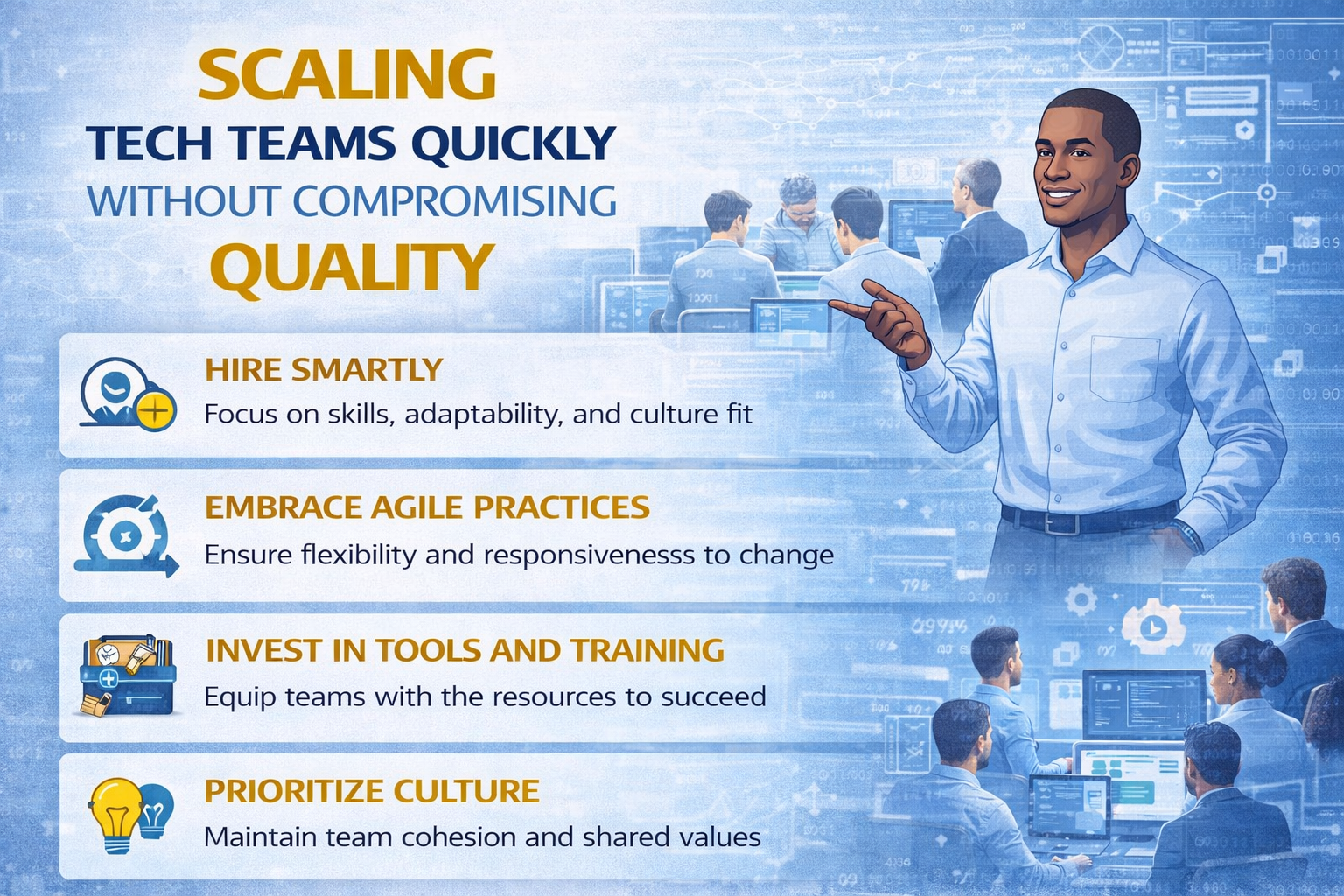 January 14, 2026
Scaling Tech Teams Quickly Without Compromising Quality
-
January 12, 2026
Common Mistakes Companies Make When Outsourcing IT Projects (And How to Avoid Them)
-
January 9, 2026
Key Workforce Trends Every CTO Should Watch This Year
-
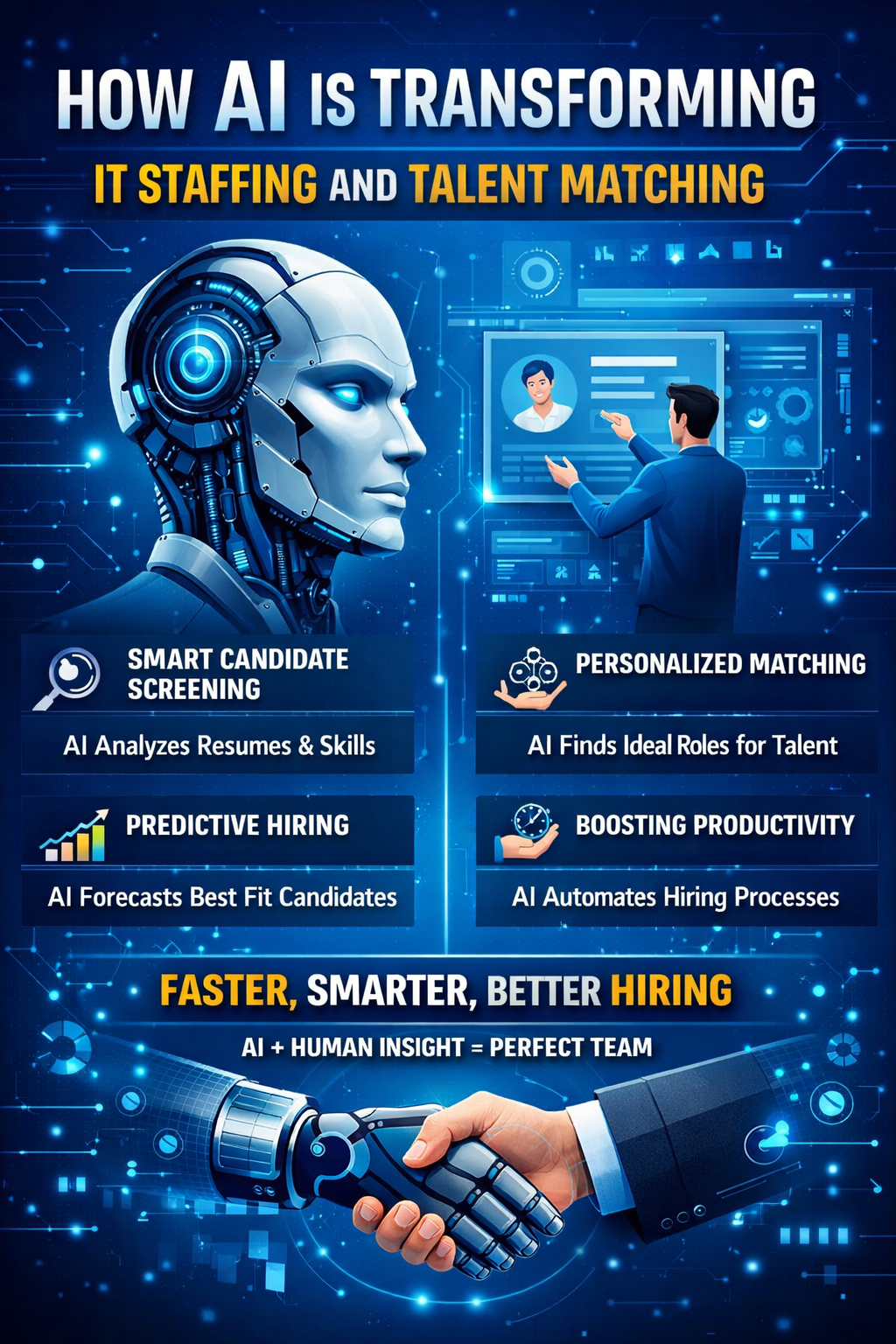 January 8, 2026
How AI Is Transforming IT Staffing and Talent Matching
-
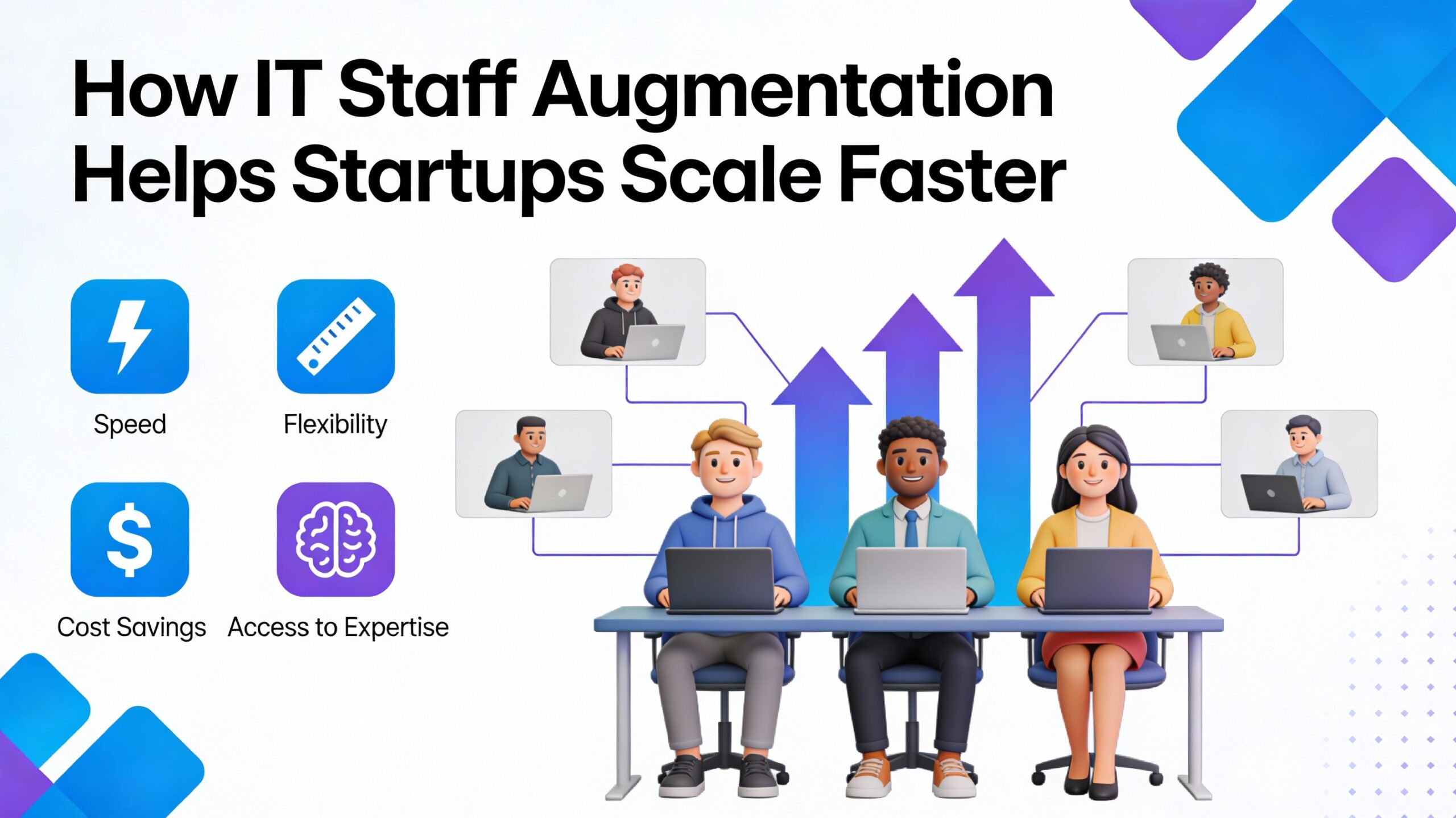 January 7, 2026
How IT Staff Augmentation Helps Startups Scale Faster
-
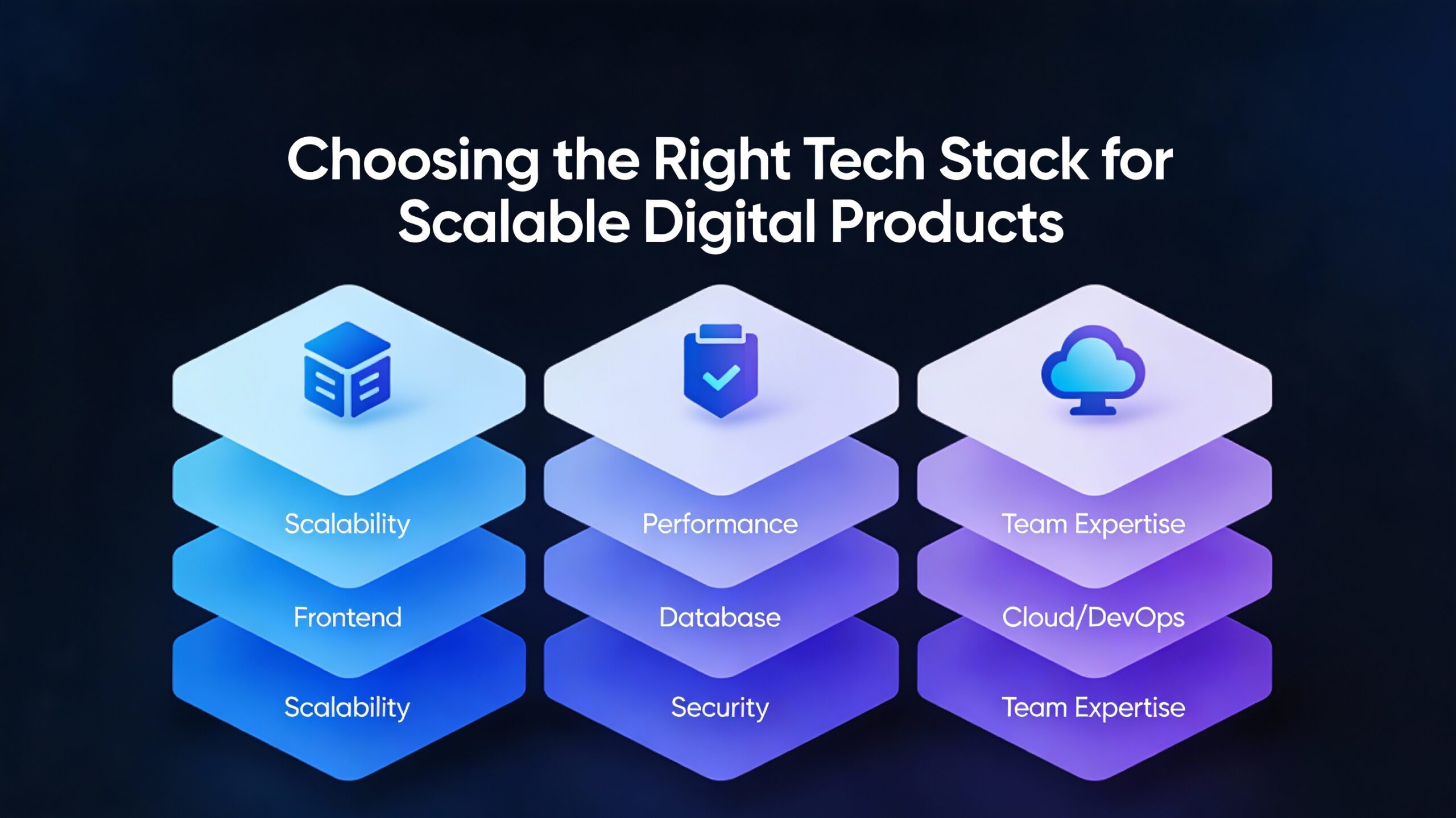 January 6, 2026
Choosing the Right Tech Stack for Scalable Digital Products
-
 January 5, 2026
How Remote Talent Is Reshaping Global IT Teams
-
 December 29, 2025
Staff Augmentation vs Traditional Hiring 2025
-
 December 24, 2025
Why Staff Augmentation Is the Future of Agile Hiring
-
 December 22, 2025
Why Hiring Faster Doesn’t Mean Compromising Quality — It Means Finding the Right Partner
-
 December 19, 2025
The Role of Staff Augmentation in Accelerating Digital Transformation
-
 December 18, 2025
5 Tech Hiring Trends Every CTO Should Watch in 2025
-
December 17, 2025
Why Soft Skills Are the Hidden Superpower in Tech Teams
-
 December 15, 2025
How WitQualis Connects Global Talent with Local Opportunities
-
 December 10, 2025
Why Businesses Need Agile, Scalable, and Skilled Tech Teams—Now More Than Ever
-
 December 5, 2025
The Human Side of Technology: Why People Matter as Much as Code
-
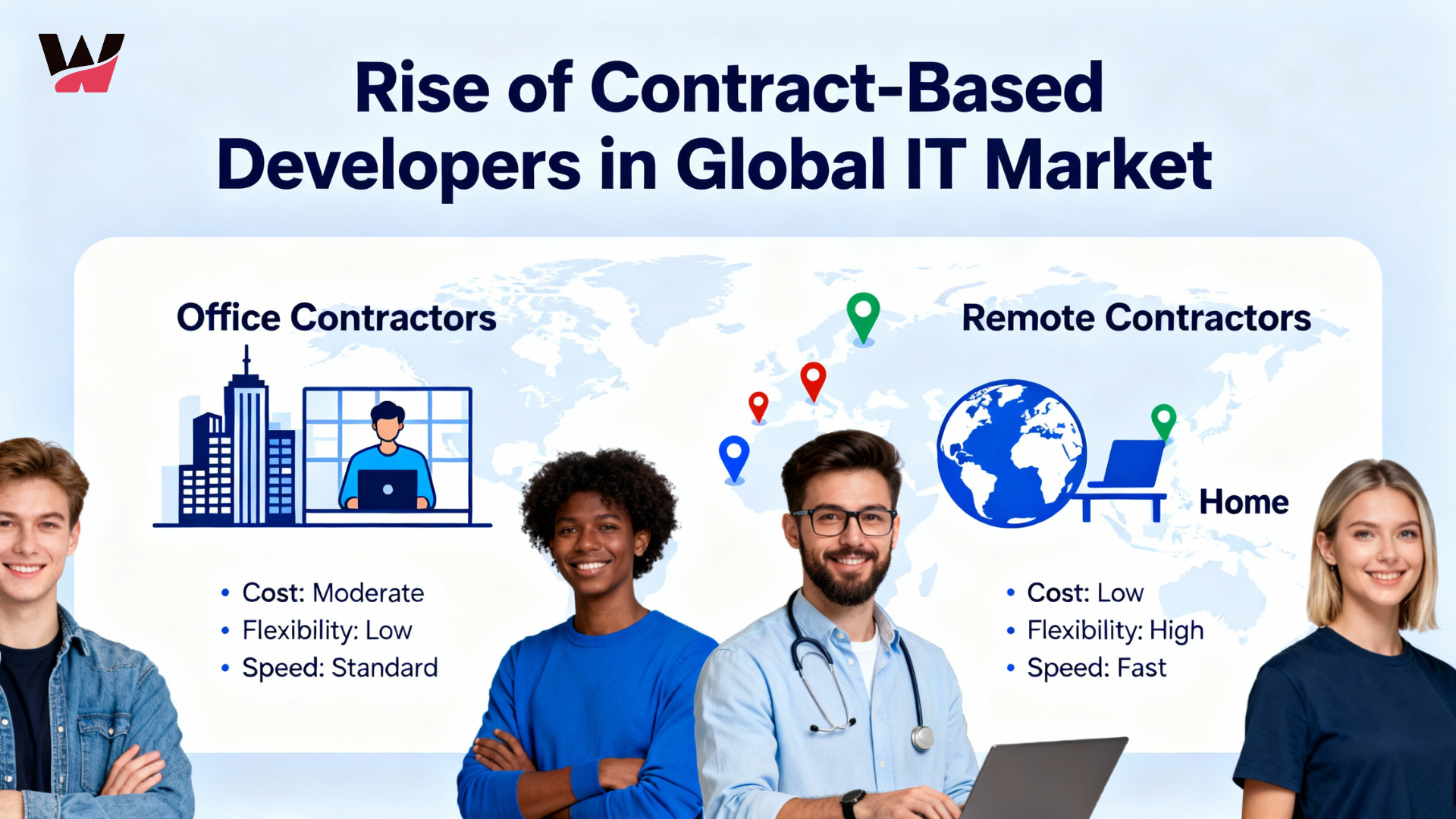 December 4, 2025
The Rise of Contract-Based Developers in the Global IT Market
-
 December 3, 2025
Talent Has No Boundaries: Why the Best Teams Are Built Across Borders
-
 December 2, 2025
From Startups to Enterprises: How Staff Augmentation Supports Every Stage of Growth
-
 December 1, 2025
Great Ideas Need Great Execution – How WitQualis Teams Turn Vision into Reality
-
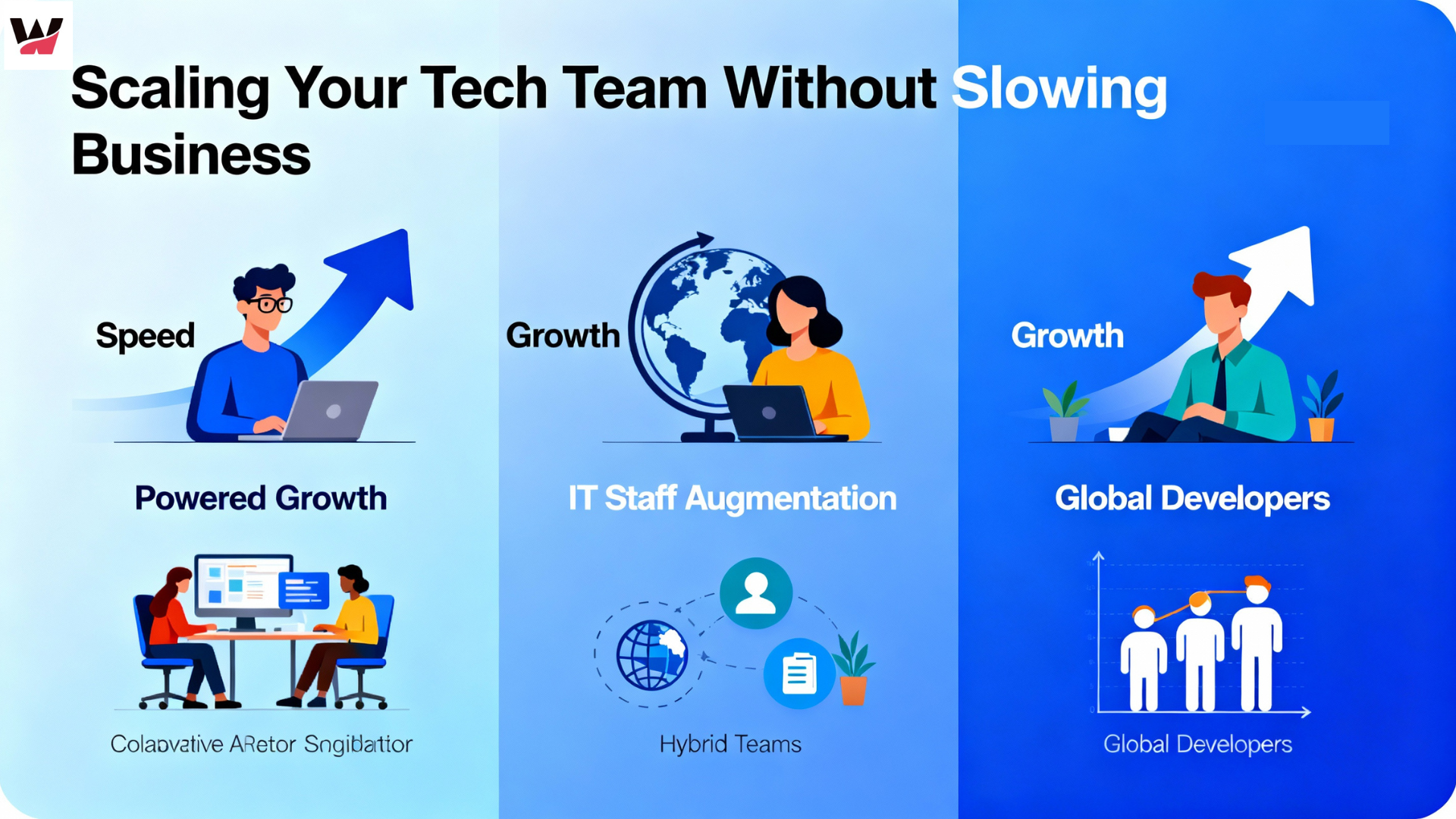 November 28, 2025
Scaling Your Tech Team Shouldn’t Slow Your Business – It Should Power It
-
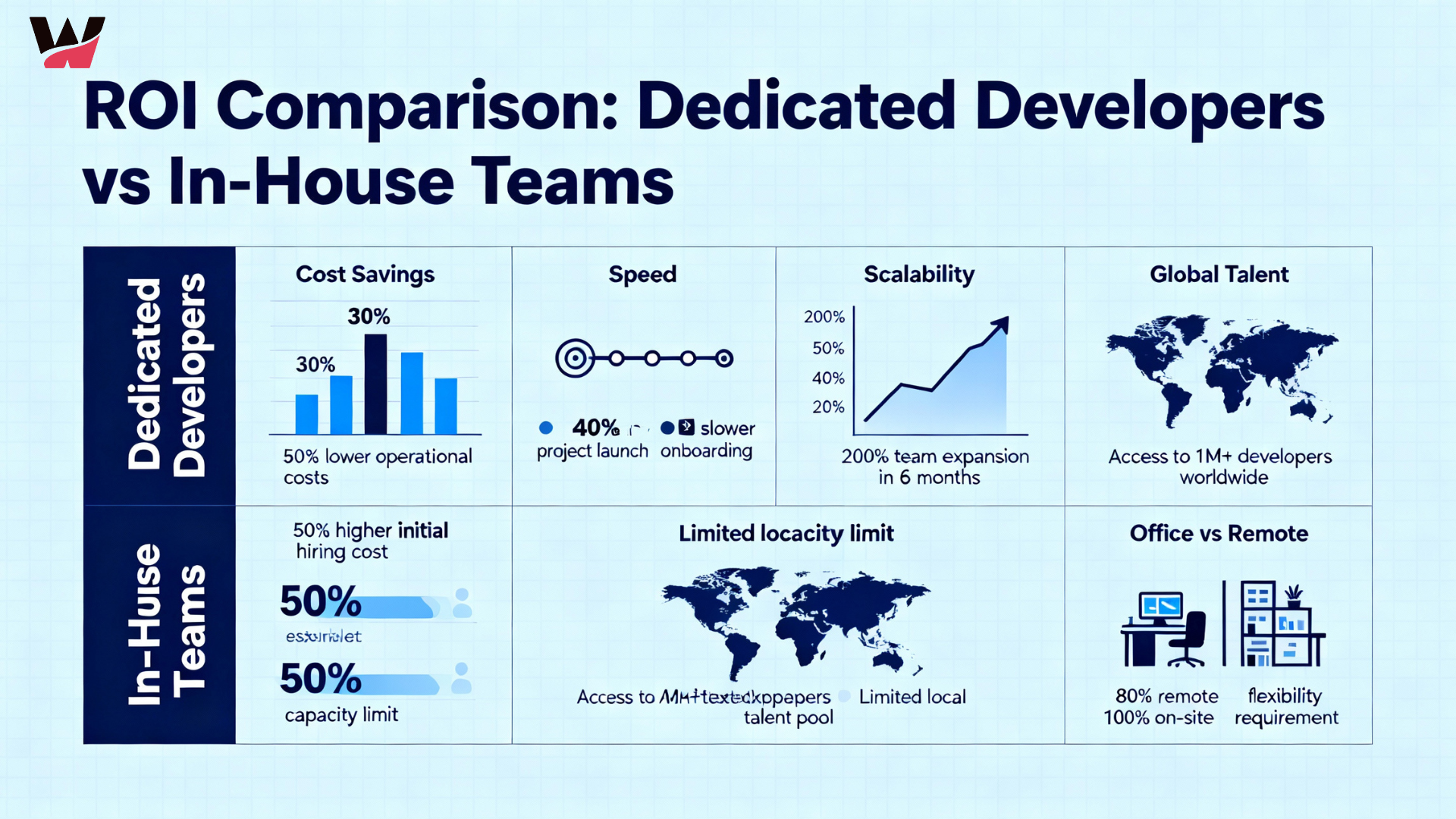 November 27, 2025
The ROI of Hiring Dedicated Developers vs In-House Teams
-
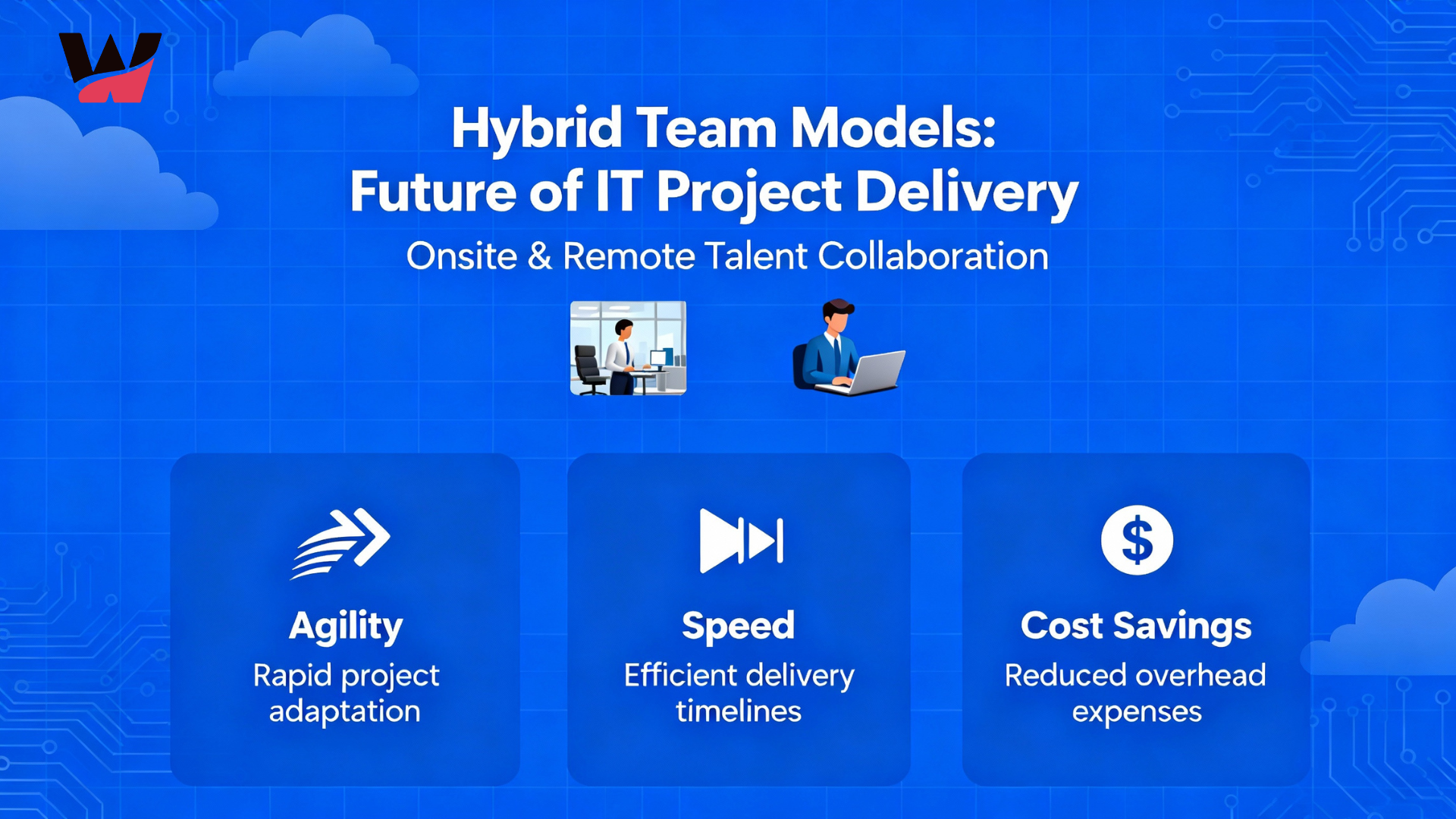 November 26, 2025
Why Hybrid Team Models Are the Future of IT Project Delivery
-
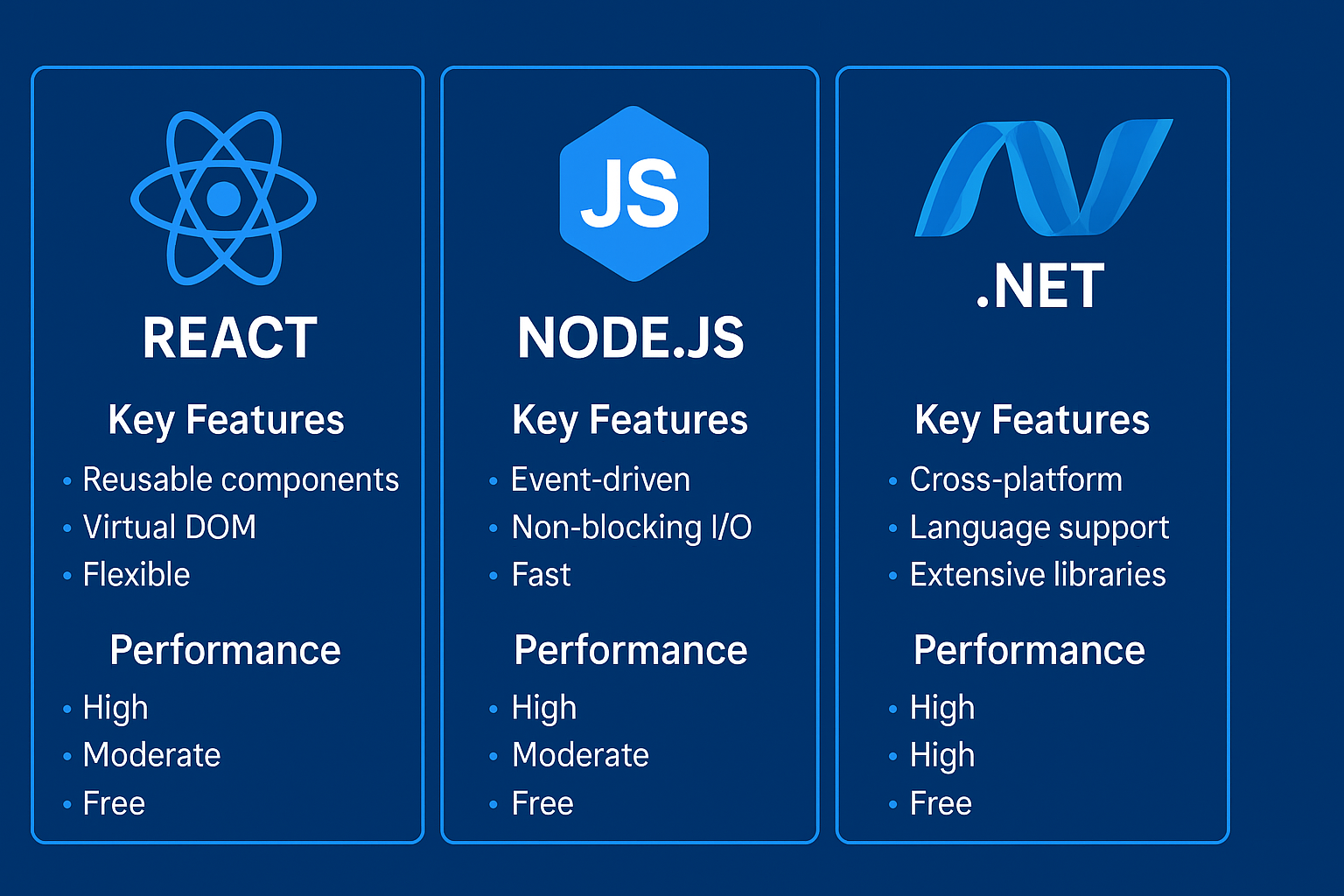 November 24, 2025
React, Node.js, or .NET? Choosing the Right Tech Stack for Your Next Project
-
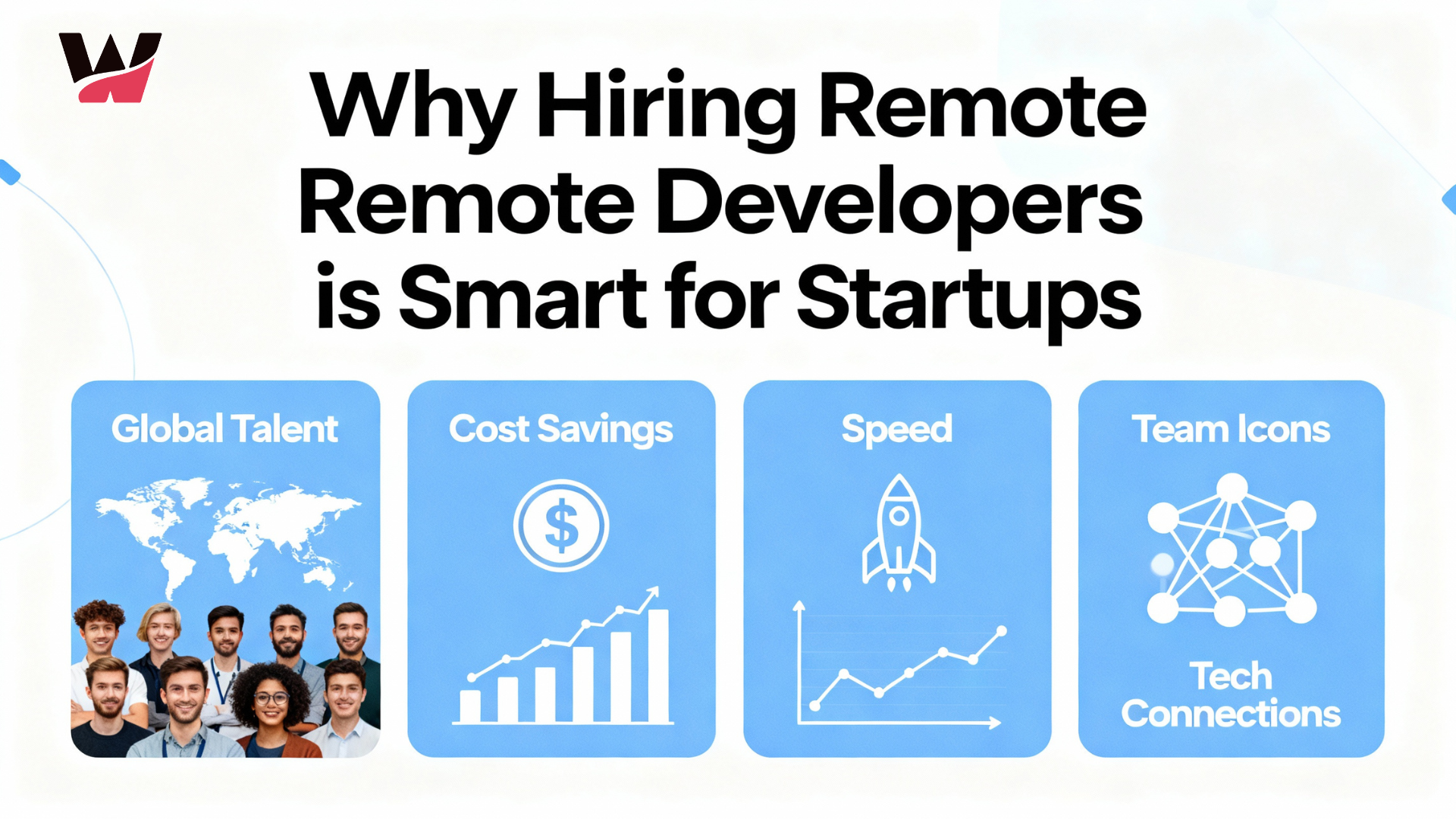 November 21, 2025
Why Hiring Remote Developers Is the Smartest Move for Startups
-
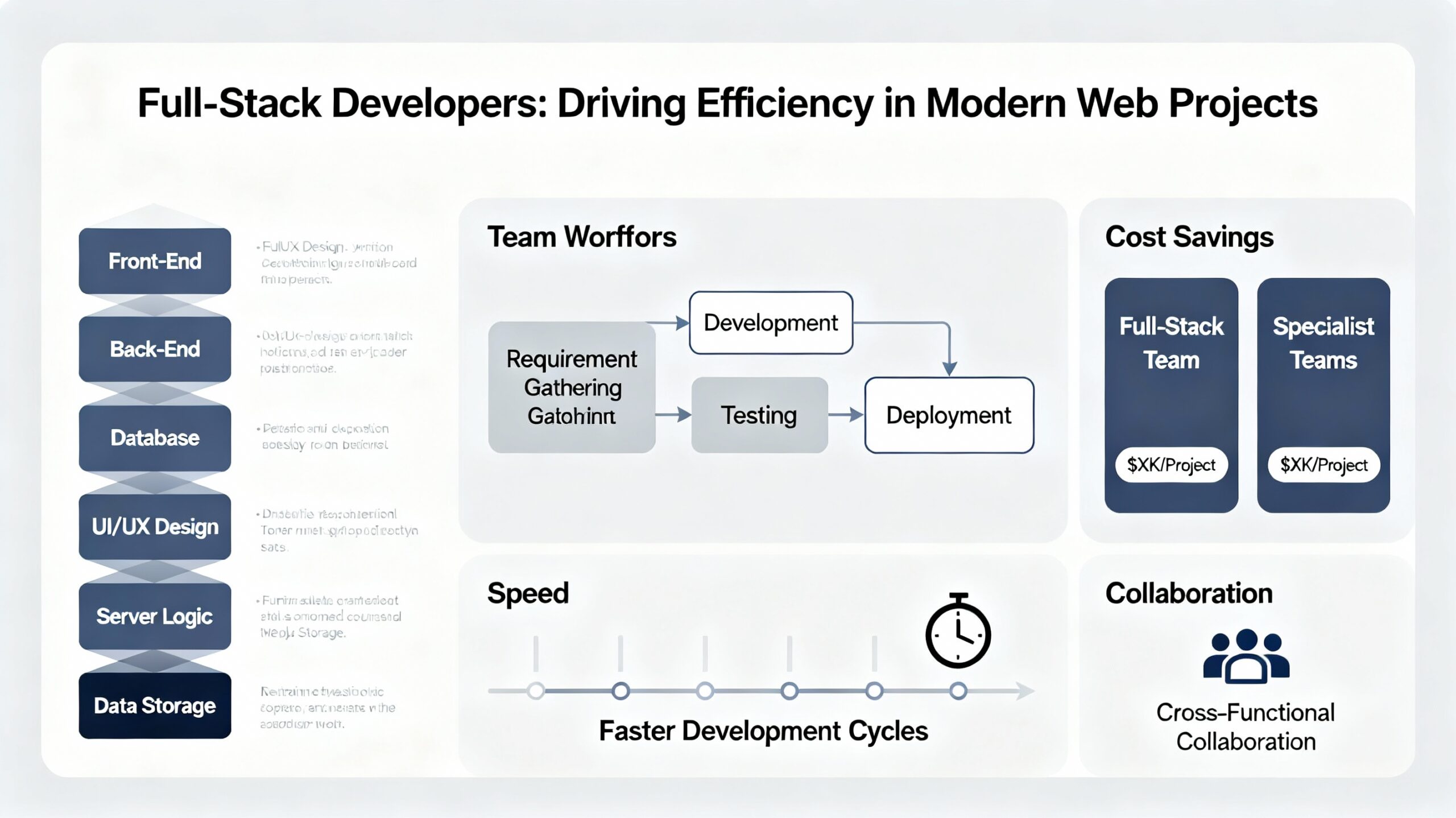 November 20, 2025
How Full-Stack Developers Drive Efficiency in Modern Web Projects
-
 November 19, 2025
Bridging the Skill Gap: How Augmented Teams Empower Digital Transformation
-
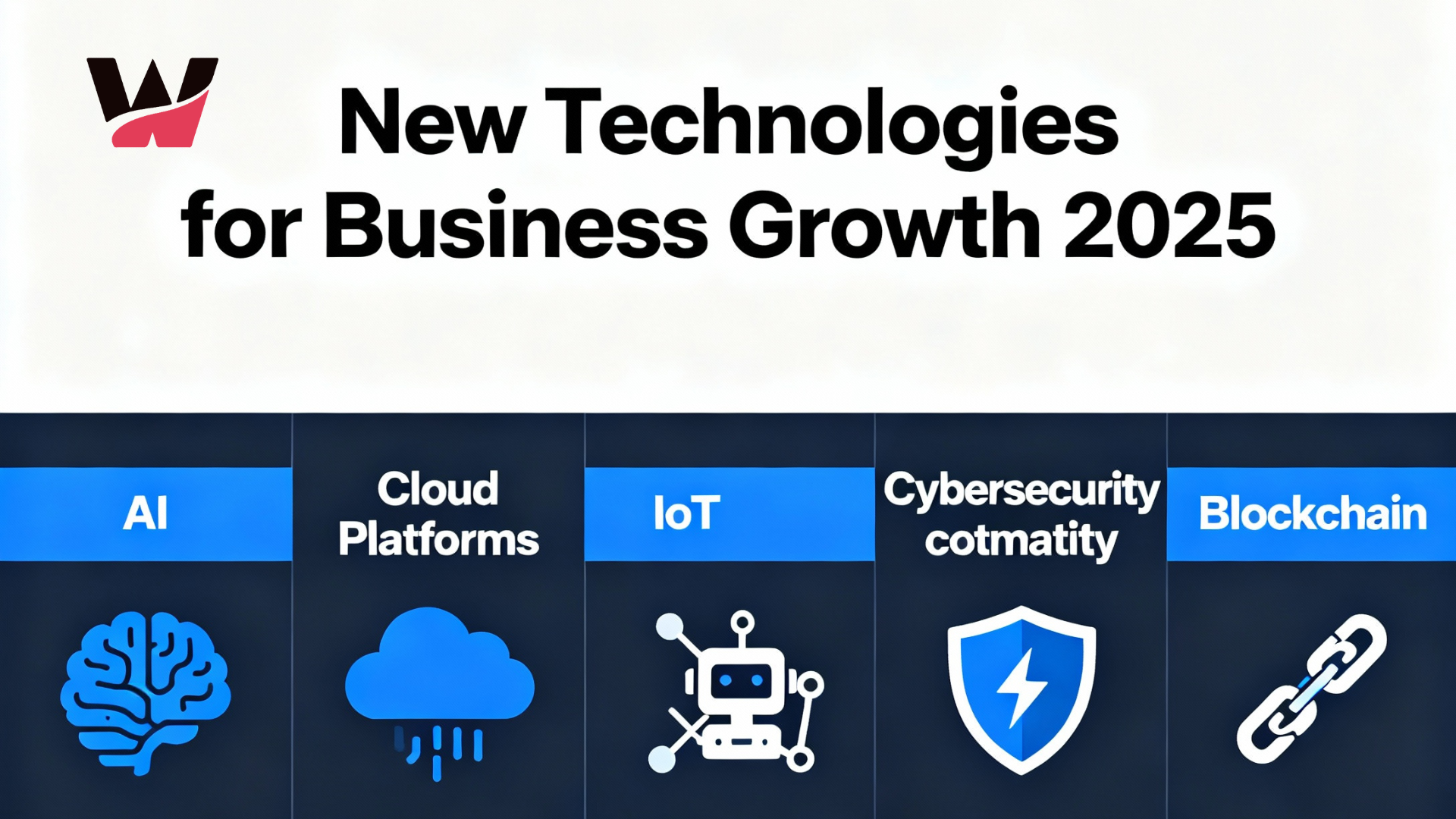 November 18, 2025
New Technologies for 2025: What Businesses Need to Grow
-
 November 14, 2025
IT Staff Augmentation Reduces Project Costs Quality
-
 November 13, 2025
Empowering Global Collaboration: How WitQualis Builds Seamless Remote Teams
-
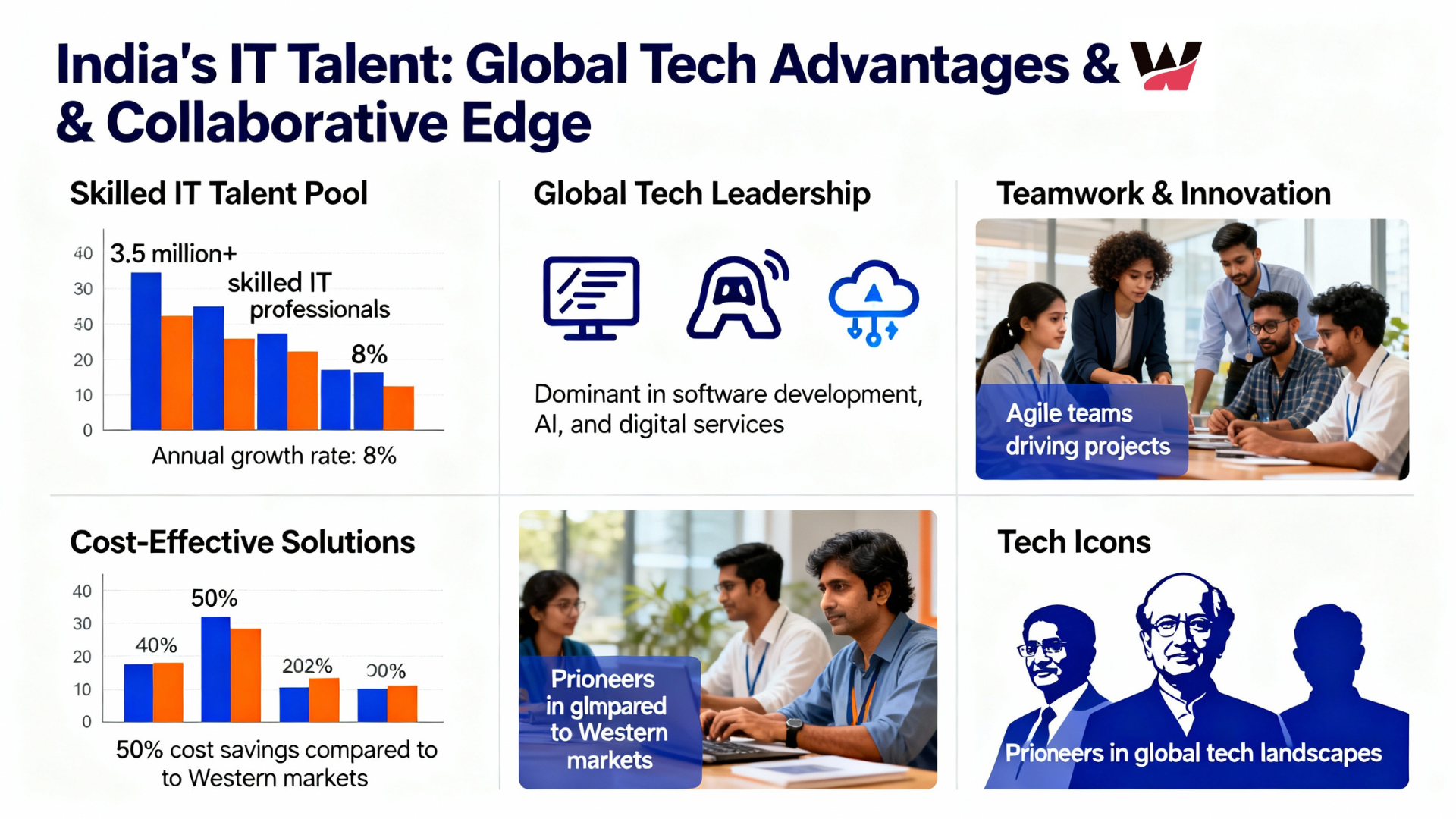 November 12, 2025
Why Global Businesses Are Turning to India for Skilled IT Talent
-
 November 11, 2025
Staff Augmentation Helps You Scale Your Tech Team
-
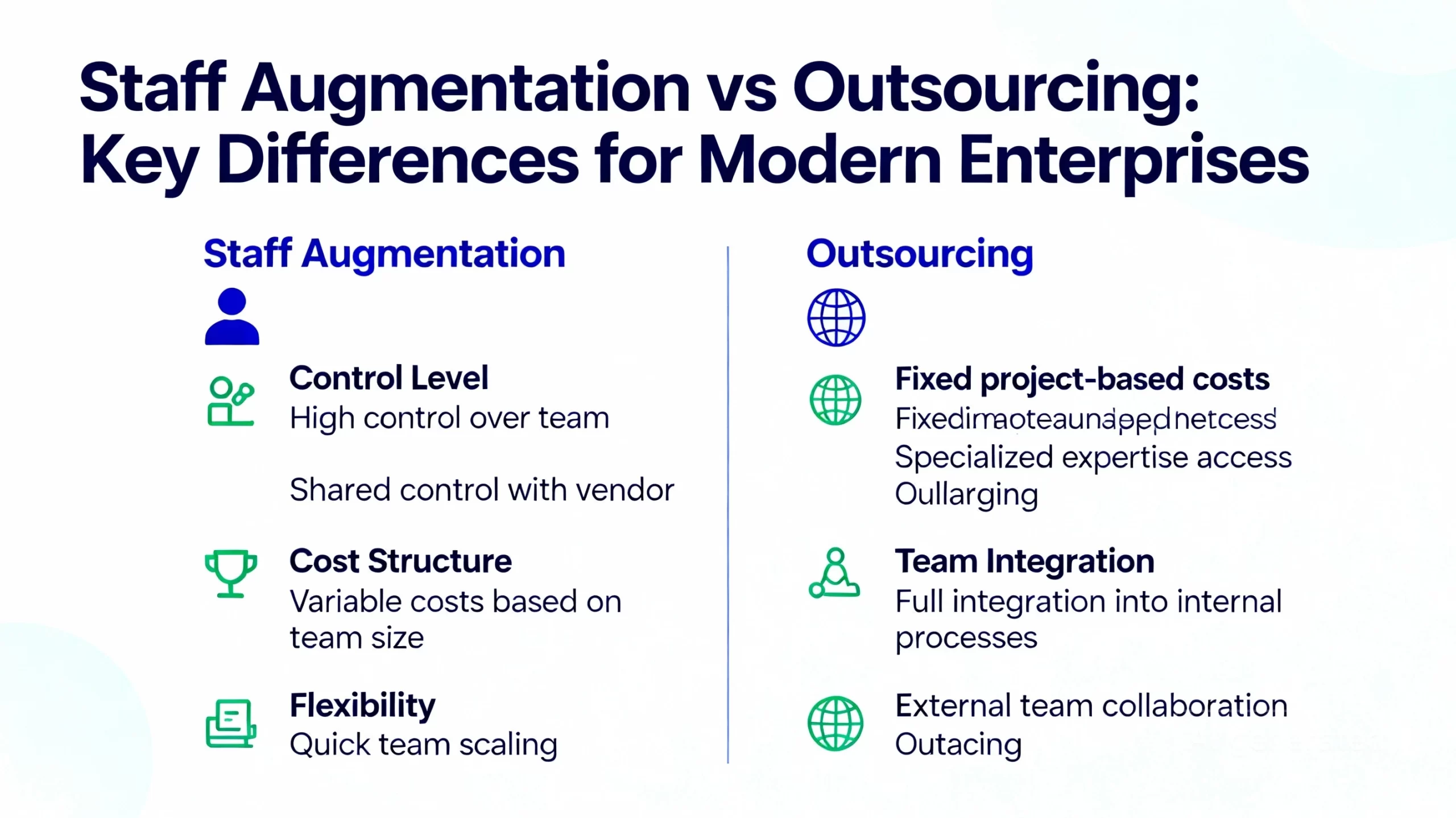 November 10, 2025
Staff Augmentation vs Outsourcing in 2025: Which Is Best for Modern Enterprises?
-
 November 7, 2025
How AI, IoT, and Cloud Are Redefining Software Development in 2025
-
 November 6, 2025
Scaling Smarter: How Augmented Teams Help Deliver Projects Faster in 2025
-
 November 5, 2025
How AI and Automation Are Transforming Software Development Teams in 2025
-
 November 3, 2025
The Future of IT Staffing: Why Businesses Are Choose Staff Augmentation in 2025
-
 October 31, 2025
Why Technology is Essential for Business Growth (2025): Top Reasons & Winning Strategies
-
 October 30, 2025
How the Internet of Things (IoT) Is Revolutionizing Modern Business
-
 October 29, 2025
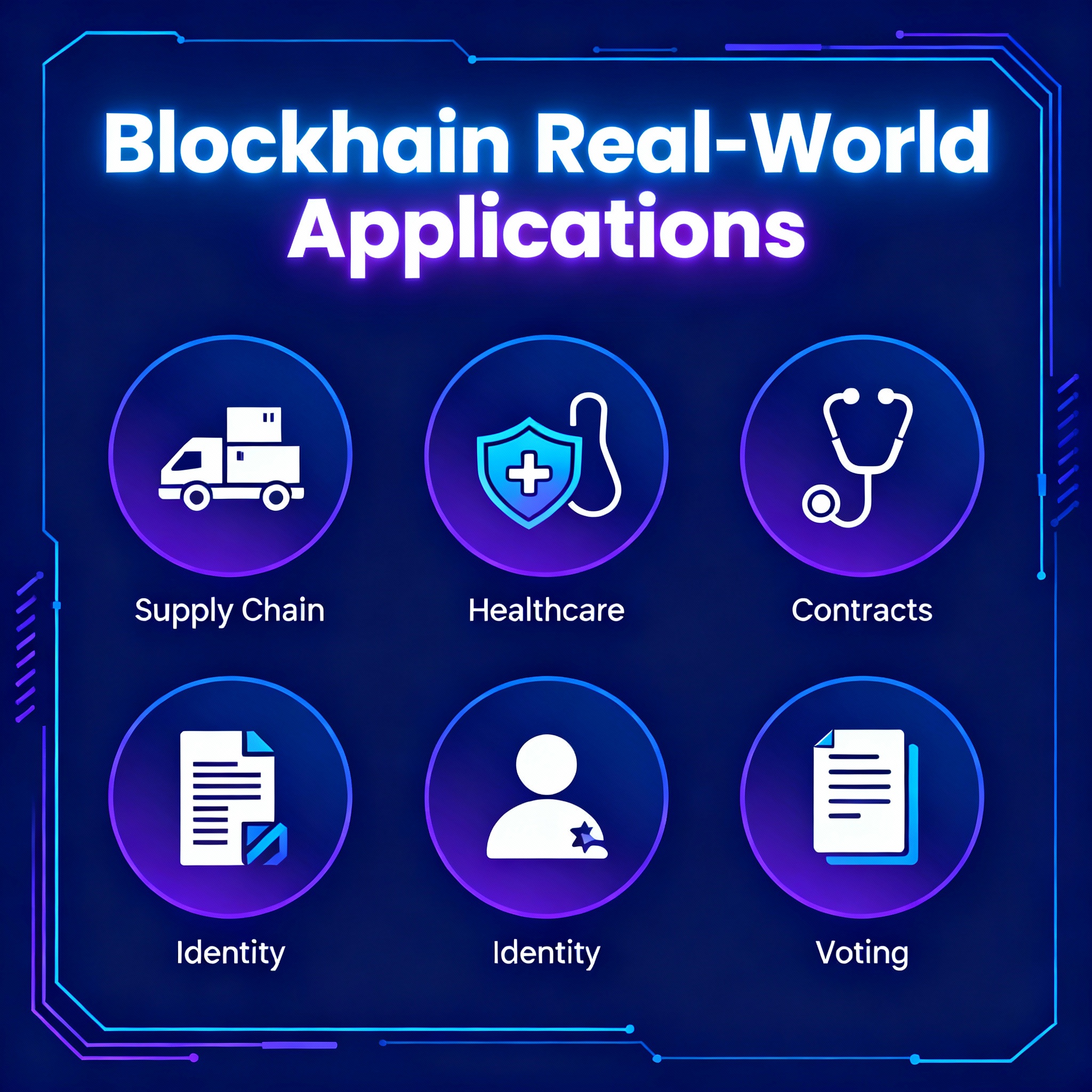
Blockchain Cryptocurrency: Real-World Applications | WitQualis
-
 October 28, 2025
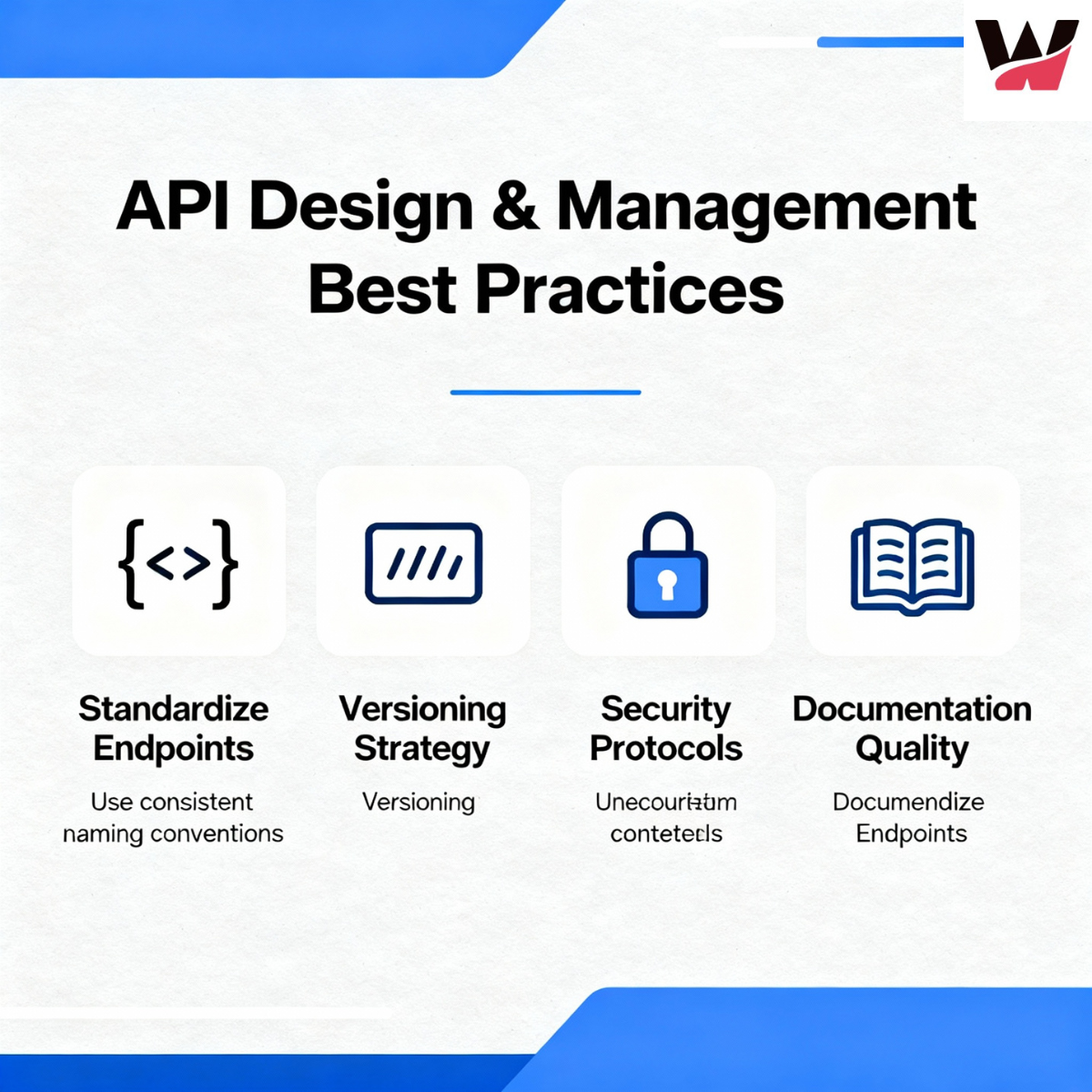
API Design and Management Best Practices for Developers
-
 October 27, 2025
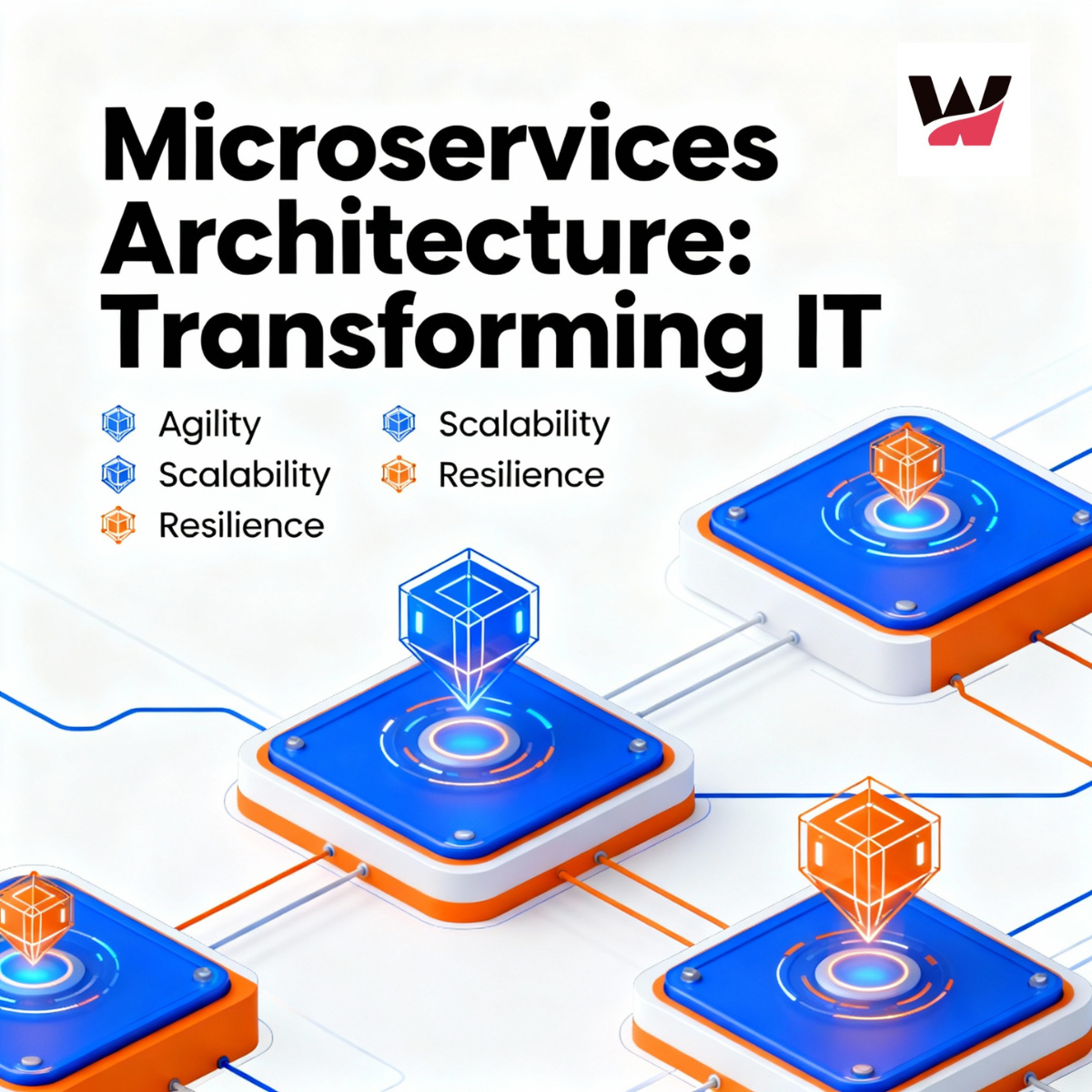
Microservices Architecture: Benefits, Implementation Tips & Real-World Examples
-
 October 24, 2025
How Remote Work Has Transformed the IT Industry Tools in 2025
-
 October 23, 2025
Virtual and Augmented Reality: The Tech Revolution | WitQualis
-
 October 22, 2025
How AI is Revolutionizing Business Decision-Making in 2025 | In-Depth Analysis & Trends
-
 October 16, 2025
Blockchain Beyond Crypto: Building Trust in Business Operations
-
 October 15, 2025
How Custom Software Solutions Drive Business Efficiency | Expert Guide
-
 October 13, 2025
How Automation Reduces Costs & Boosts Productivity in 2025
-
 October 10, 2025
Staff Augmentation: The Key to Building Agile & Scalable Teams
-
 October 9, 2025
The Role of Cloud Computing in Scaling Modern Businesses
-
 October 8, 2025
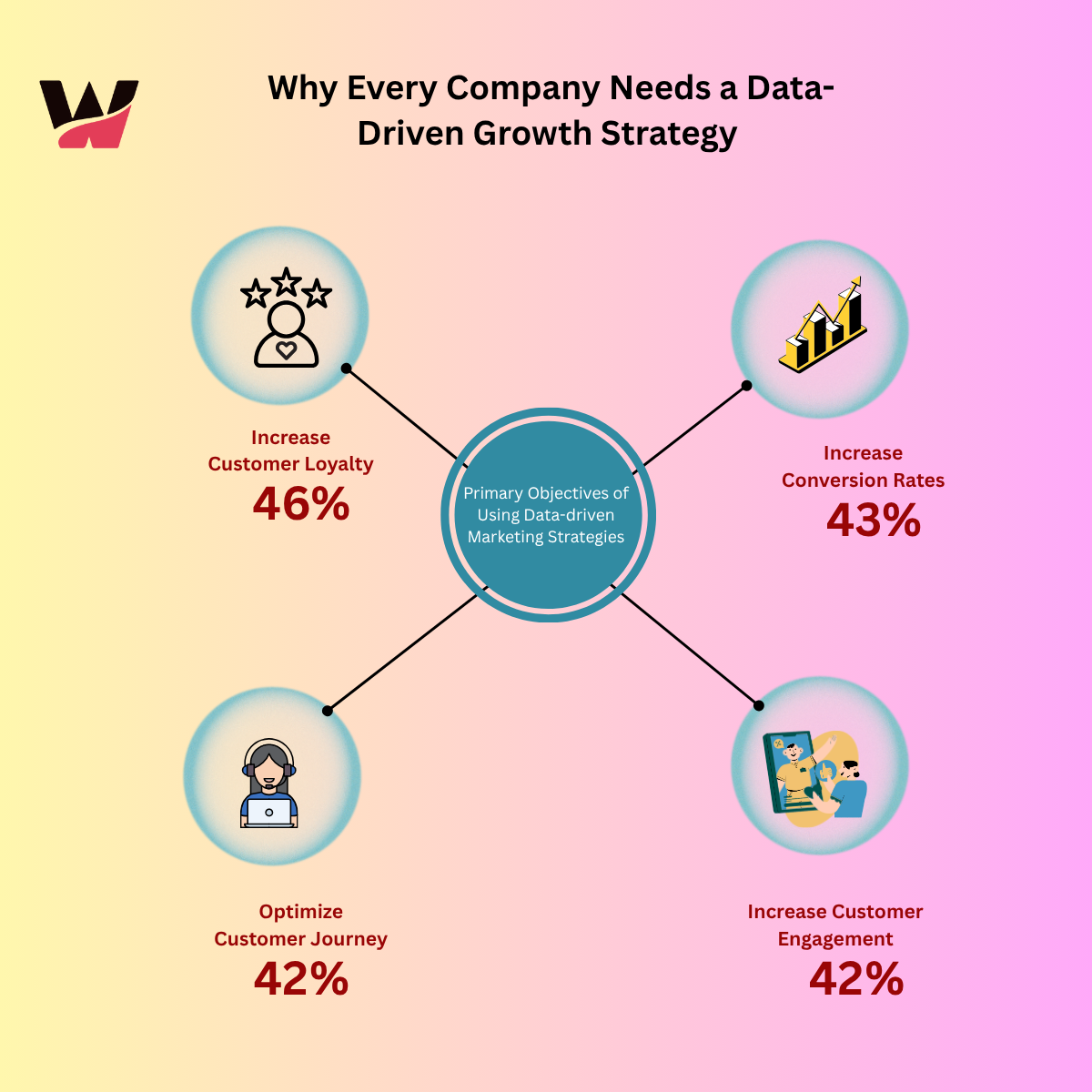
Why Every Company Needs a Data-Driven Growth Strategy
-
 October 7, 2025
API Design Best Practices for Developers in 2025 |API versioning strategies
-
 October 6, 2025
virtual reality vs augmented reality vs mixed reality
-
 October 3, 2025
The Impact of Internet of Things (IoT) on Modern Business
-
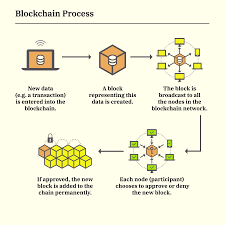 October 1, 2025
Blockchain Beyond Cryptocurrency: Real-World Applications in 2025
-
 September 30, 2025
The Future of Artificial Intelligence: Trends and Opportunities
-
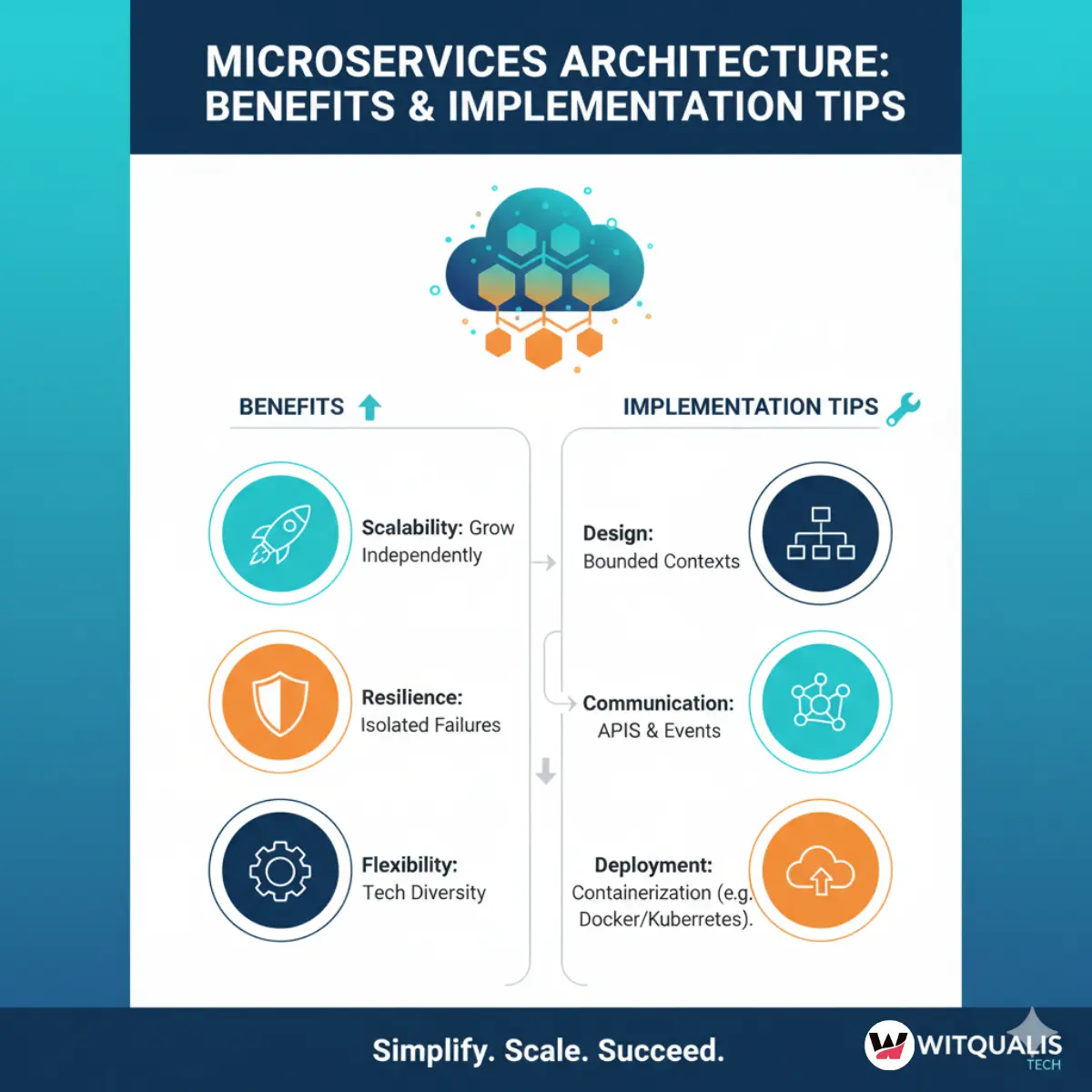 September 26, 2025
Microservices Architecture: Benefits and Implementation Tips
-
 September 25, 2025
Why Staff Augmentation Is a Smart Move for IT Projects in 2025
-
 September 24, 2025
Cloud Computing Explained: Benefits and Best Practices (AWS, Azure, Google Cloud)
-
 September 23, 2025
How Staff Augmentation Can Help Scale Your IT Team Efficiently
-
 January 6, 2025
Choosing the Right Front-End Web Development Service in the UK
-
 January 4, 2025
Why Choose Staff Augmentation Services in India for Your IT Projects?
-
 December 21, 2024
Boost Your Business ROI with Power BI Development Services in the Maldives and Iceland
-
 December 20, 2024
Get a Free Consultation: Is Your E-Commerce Business in the UAE Ready for Digital Transformation?
-
 July 6, 2023
The Future of Small Business and Know-How to Climb up the Ladder


[…] WitQualis Perspective: Building Long-Term Relationships with Augmented Talent […]
[…] How Staff Augmentation Can Support Career Growth – WitQualis […]
[…] How WitQualis Supports Professional Development in Augmented Teams […]
[…] How Staff Augmentation Works Best: Integration and Onboarding – WitQualis […]
[…] Building Long-Term Relationships with Augmented Talent – WitQualis […]