


API Design and Management Best Practices for Developers
In the digital landscape of 2026, APIs (Application Programming Interfaces) are no longer just “connectors”; they are the very fabric of the global economy. Undeniably, the shift toward microservices and cloud-native architectures has made API design a critical skill for any developer. However, creating an API that is both scalable and developer-friendly is a complex challenge. Consequently, many organizations struggle with “API sprawl” and technical debt.
In this extensive guide, we will explore the definitive best practices for API design and management. Furthermore, we will examine how companies like Witqualis are helping enterprises build robust API ecosystems by providing world-class talent. Specifically, we will look at how to balance technical rigor with a great Developer Experience (DX).
1. The Core Philosophy: API-First Design
Before writing a single line of code, developers must embrace the “API-First” philosophy. In essence, this means treating the API as a standalone product rather than a byproduct of the backend. Subsequenty, you design the interface first, ensuring it meets the needs of the end-users (the developers) before implementing the logic.
Moreover, an API-First approach allows frontend and backend teams to work in parallel. As a result, you significantly reduce the time-to-market. Specifically, by using mock servers based on your design, you can test the user journey before the actual infrastructure is even built.
2. Best Practices in RESTful API Design
While GraphQL and gRPC have their place, REST remains the industry standard for most web-based services. Therefore, mastering RESTful principles is non-negotiable.
A. Resource-Oriented Naming
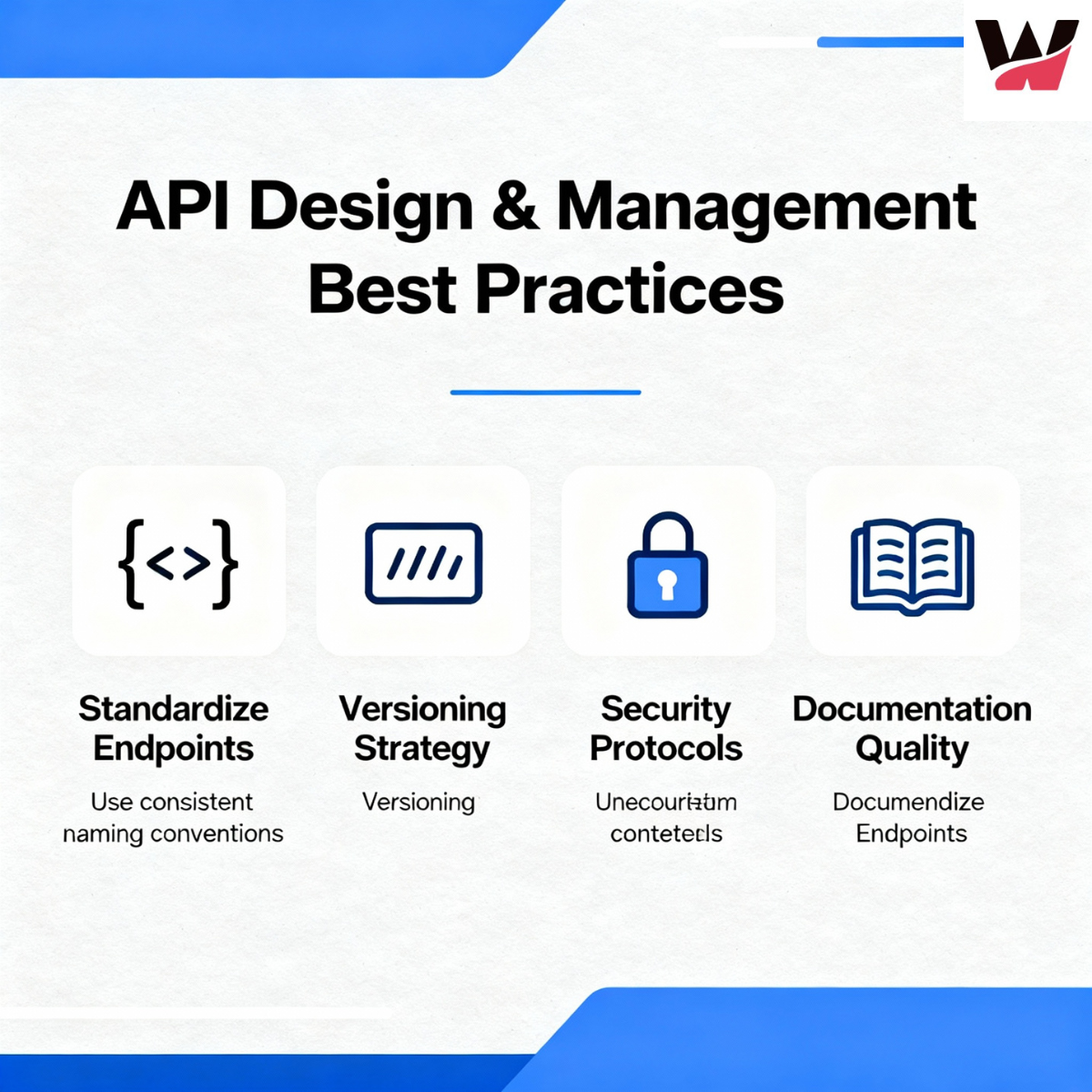
Specifically, your endpoints should be based on nouns, not verbs. For instance, use /users instead of /getUsers. Furthermore, use plural nouns to maintain consistency across the entire collection.
B. Proper Use of HTTP Methods
In addition, developers must strictly adhere to HTTP method semantics:
-
GET: To retrieve a resource.
-
POST: To create a new resource.
-
PUT: To update an existing resource (replace).
-
PATCH: To partially update a resource.
-
DELETE: To remove a resource.
Consequently, following these standards makes your API intuitive and self-documenting. Subsequenty, developers can guess how your API works without constantly checking the manual.
C. Meaningful Status Codes
Moreover, never return a 200 OK for every response. Instead, use the full spectrum of status codes:
-
201 Createdfor successful POST requests. -
400 Bad Requestfor client-side errors. -
401 Unauthorizedfor missing authentication. -
404 Not Foundwhen a resource doesn’t exist.
3. API Security: The Zero Trust Framework
In 2026, security is the top priority. Notably, an API is a direct window into your database, making it a prime target for attackers. Therefore, implementing a Zero Trust framework is essential.
A. Authentication and Authorization
Specifically, you should use OAuth2 and OpenID Connect for robust authentication. Furthermore, never store sensitive data like API keys in plain text. Instead, utilize JSON Web Tokens (JWT) to securely pass information between parties.
B. Rate Limiting and Throttling
In addition, to prevent Denial of Service (DoS) attacks and “noisy neighbor” issues, you must implement rate limiting. Subsequenty, this ensures that no single user can overwhelm your system.
C. Data Encryption
Moreover, all data must be encrypted both in transit (TLS 1.3) and at rest. As a result, even if data is intercepted, it remains unreadable. For businesses looking to secure their infrastructure, the experts at Witqualis provide specialized security audits to ensure your APIs are “unhackable.”
4. Versioning Strategies: Future-Proofing Your API
One of the biggest headaches in API management is making changes without breaking existing integrations. Consequently, a clear versioning strategy is vital.
There are several ways to version an API:
-
URI Versioning: e.g.,
api.example.com/v1/users. Specifically, this is the most common and easiest to cache. -
Header Versioning: e.g.,
Accept: application/vnd.example.v1+json. In contrast, this keeps the URL clean but can be harder for developers to test. -
Query Parameter Versioning: e.g.,
/users?version=1.
Regardless of the method you choose, the key is consistency. Furthermore, always provide a “sunset policy” for old versions to give developers ample time to migrate.
5. Documentation and Developer Experience (DX)
An API is only as good as its documentation. Undeniably, if a developer can’t figure out how to use your API in five minutes, they will move to a competitor. Therefore, focus on Developer Experience (DX).
A. The OpenAPI Specification (Swagger)
Specifically, you should use the OpenAPI Specification to generate interactive documentation. Moreover, tools like Swagger UI allow developers to “Try it out” directly in the browser. Subsequenty, this reduces the learning curve significantly.
B. Code Samples and SDKs
In addition, provide code snippets in multiple languages (Python, JavaScript, Go, etc.). Furthermore, if your API is complex, consider providing a Client SDK. As a result, you make it incredibly easy for third-party developers to integrate with your platform.
6. API Management and Lifecycle Tools
Once an API is deployed, the work isn’t over. Instead, it enters the management phase. Specifically, you need an API Gateway to handle cross-cutting concerns.
An API Gateway provides:
-
Analytics: Tracking who is using the API and how.
-
Logging: Monitoring for errors and latency issues.
-
Caching: Improving performance by storing frequent responses.
-
Transformation: Converting data formats (e.g., XML to JSON).
Subsequenty, by using management tools, you can identify bottlenecks and optimize your infrastructure. For enterprises looking to build these complex gateways, Witqualis’s custom software development offers the technical depth required to manage millions of requests per second.
7. Why Staff Augmentation is the Secret to Great APIs
Building a world-class API requires a diverse set of skills: backend logic, security, DevOps, and technical writing. However, finding a single developer who excels in all these areas is nearly impossible.
This is where Witqualis’s staff augmentation services provide immense value. Instead of struggling with a talent gap, you can augment your team with specialized API architects. By doing so, you ensure that your API is built following the latest industry standards. Specifically, their developers are well-versed in modern frameworks like FastAPI, Spring Boot, and Node.js, ensuring your project remains scalable and future-proof.
8. The Future: AI-Driven API Management
Looking toward 2027, the role of AI in API management will be transformative. Specifically, we are seeing the rise of “Self-Healing APIs” that can automatically adjust rate limits or reroute traffic during a server failure. Moreover, AI-powered documentation tools are now generating “natural language” explanations of complex endpoints.
Nevertheless, the human element remains crucial. Therefore, the future belongs to developers who can combine AI efficiency with human-centric design.
Conclusion
In summary, API design and management is a discipline that requires a balance of technical precision and empathy for the user. From following RESTful standards to implementing Zero Trust security and interactive documentation, every detail matters. Consequently, a well-designed API becomes a powerful business asset that drives innovation and growth.
Furthermore, partnering with the right experts is the fastest way to achieve API excellence. Whether you need full-lifecycle IT services or high-level talent to scale your vision, Witqualis is the partner you need.
One response to “API Design and Management Best Practices for Developers”
Leave a Reply
Recent Posts
-
 March 5, 2026
Microservices Architecture: Benefits and Implementation Tips
-
 March 3, 2026
How Remote Work Has Changed the IT Industry and Tools You Need
-
March 2, 2026
API Design and Management Best Practices for Developers
-
 February 27, 2026
The Impact of Internet of Things (IoT) on Modern Business
-
 February 26, 2026
Virtual and Augmented Reality: Where Tech is Headed Next | 2026 Guide
-
 February 25, 2026
Blockchain Beyond Cryptocurrency: Real-World Applications & Use Cases (2026 Guide)
-
 February 24, 2026
The Role of AI in Enhancing IT Development: A Deep Dive (2026 Guide)
-
 February 23, 2026
Maximizing Productivity: How Staff Augmentation Drives Innovation in IT Projects
-
 February 20, 2026
Staff Augmentation vs. Outsourcing: Which IT Model Wins in 2026?
-
 February 19, 2026
The Rise of Hybrid Teams: How to Leverage Staff Augmentation for Business Success
-
 February 18, 2026
How Staff Augmentation is Transforming the Future of IT Workforce (2026)
-
 February 17, 2026
5 Reasons Why Staff Augmentation is Key for Tech Skill Shortages: staff augmentation for tech skill shortages
-
 February 16, 2026
How Staff Augmentation Helps Scale Your Business Without Overheads in 2026
-
 February 13, 2026
The Power of Diverse Teams: How Staff Augmentation Drives Inclusion (2026)
-
 February 12, 2026
The Role of 5G Technology in Shaping IT Development and Augmentation in 2026
-
 February 11, 2026
The Future of Blockchain: Revolutionizing IT Services in 2026
-
 February 10, 2026
Building an Authentic Employer Brand Through Staff Augmentation in 2026
-
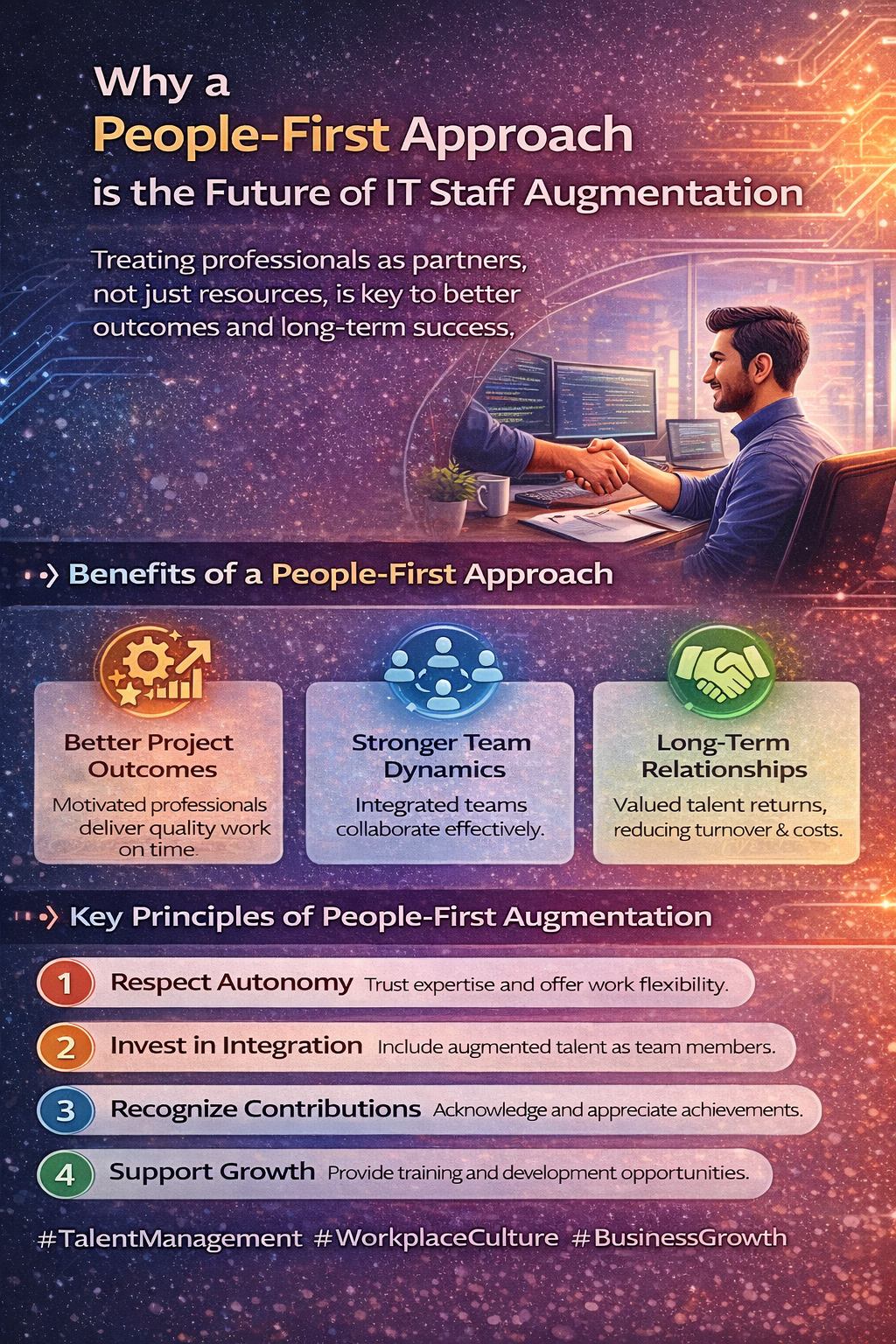 February 9, 2026
Supporting Augmented Professionals During Projects: Best Practices for Success
-
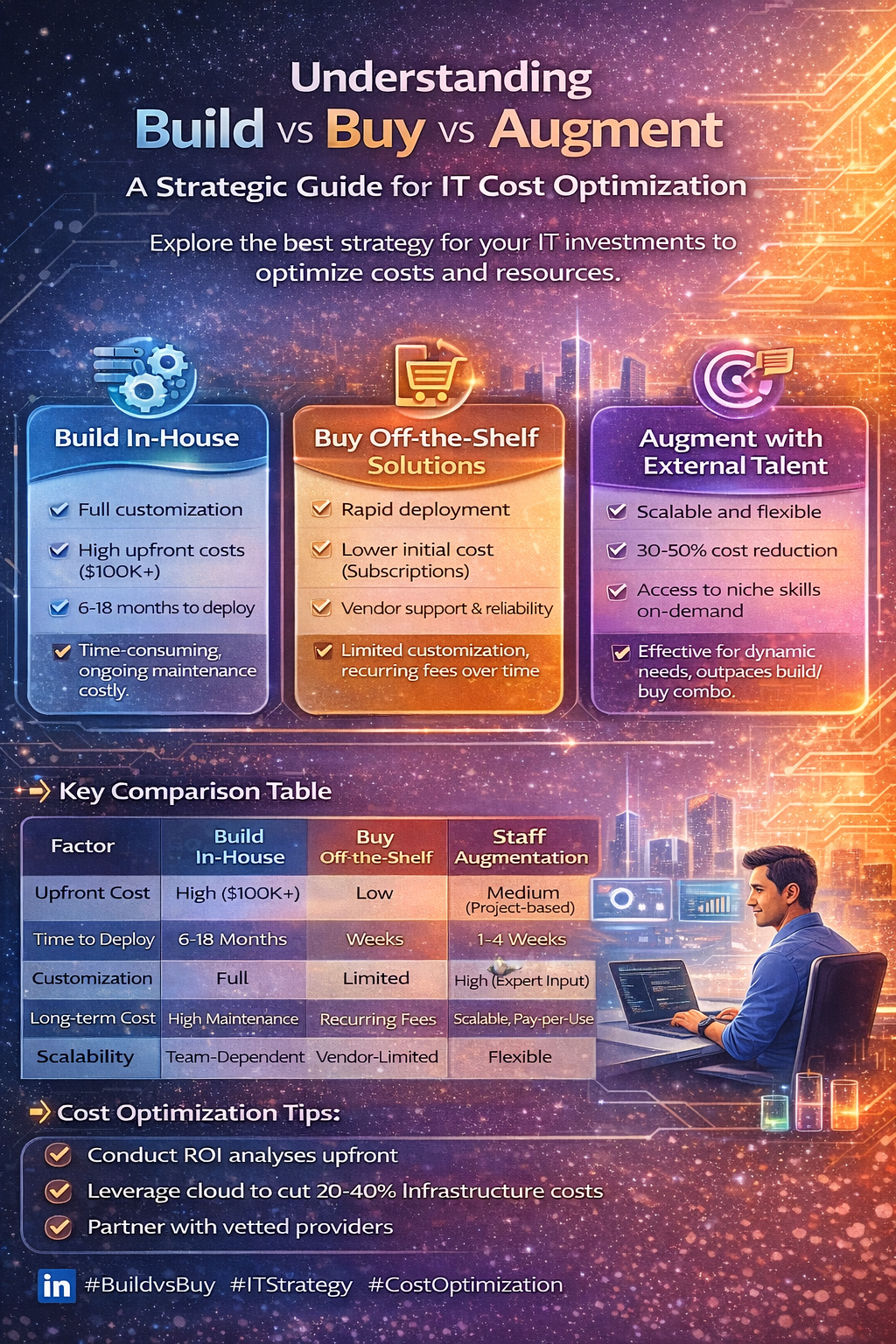 February 6, 2026
Cost Optimization in IT: Build vs Buy vs Staff Augmentation (2026 Guide)
-
 February 5, 2026
The Role of DevOps in High-Performance Engineering Teams: Best Practices Guide
-
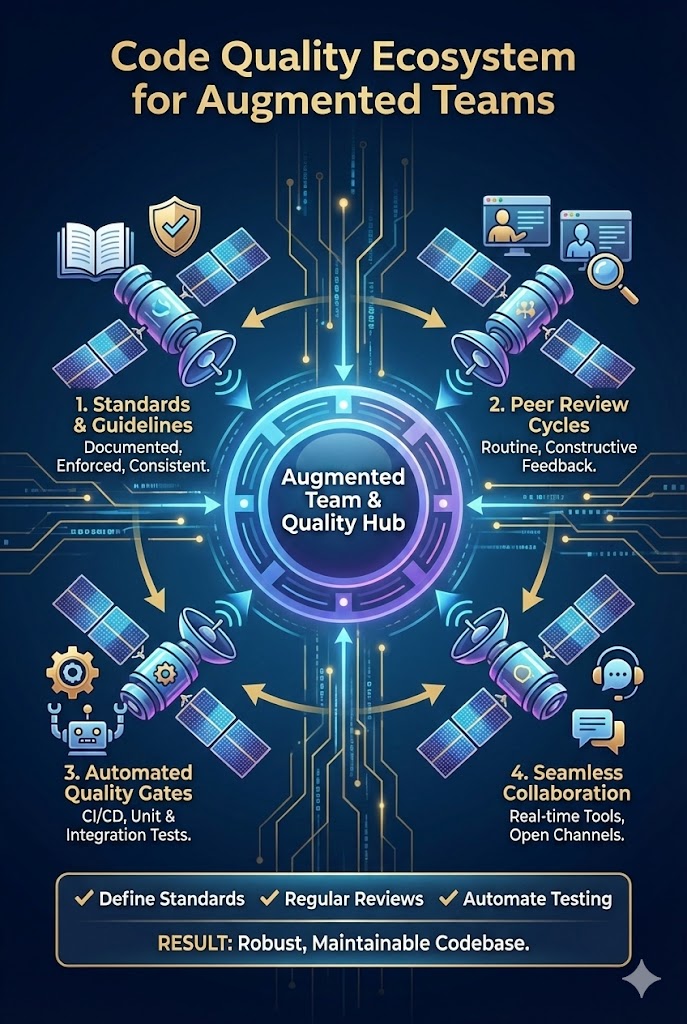 February 4, 2026
How to Ensure Code Quality When Working with Augmented Teams: Best Practices Guide
-
 February 3, 2026
Tech Talent Trends That Will Shape the Next 5 Years: 2026–2031 Outlook
-
 February 2, 2026
The Rise of Hybrid Teams: In-House + Augmented Talent - The Complete Guide
-
 January 30, 2026
How We Support and Retain High-Performing Tech Professionals
-
 January 29, 2026
Aligning Technology Strategy with Business Growth Goals: A Complete Framework
-
 January 28, 2026
What Top Developers Look for in a Staff Augmentation Partner: A Developer's Perspective
-
 January 27, 2026
The Human Side of IT Services: Why People Matter More Than Code
-
 January 23, 2026
Why Culture Fit Matters in Staff Augmentation Models | Witqualis
-
 January 22, 2026
Building Long-Term Relationships with Augmented Talent: A Strategic Approach
-
 January 21, 2026
Cybersecurity Skills in Demand: What Companies Need Now in 2026
-
 January 20, 2026
Why Flexible Hiring Models Drive Better Business Outcomes
-
 January 19, 2026
Reducing Time-to-Market with On-Demand Tech Talent
-
 January 15, 2026
How Dedicated Development Teams Accelerate Product Delivery
-
 January 14, 2026
Scaling Tech Teams Quickly Without Compromising Quality
-
January 12, 2026
Common Mistakes Companies Make When Outsourcing IT Projects (And How to Avoid Them)
-
January 9, 2026
Key Workforce Trends Every CTO Should Watch This Year
-
 January 8, 2026
How AI Is Transforming IT Staffing and Talent Matching
-
 January 7, 2026
How IT Staff Augmentation Helps Startups Scale Faster
-
 January 6, 2026
Choosing the Right Tech Stack for Scalable Digital Products
-
 January 5, 2026
How Remote Talent Is Reshaping Global IT Teams
-
 December 29, 2025
Staff Augmentation vs Traditional Hiring 2025
-
 December 24, 2025
Why Staff Augmentation Is the Future of Agile Hiring
-
 December 22, 2025
Why Hiring Faster Doesn’t Mean Compromising Quality — It Means Finding the Right Partner
-
 December 19, 2025
The Role of Staff Augmentation in Accelerating Digital Transformation
-
 December 18, 2025
5 Tech Hiring Trends Every CTO Should Watch in 2025
-
December 17, 2025
Why Soft Skills Are the Hidden Superpower in Tech Teams
-
 December 15, 2025
How WitQualis Connects Global Talent with Local Opportunities
-
 December 10, 2025
Why Businesses Need Agile, Scalable, and Skilled Tech Teams—Now More Than Ever
-
 December 5, 2025
The Human Side of Technology: Why People Matter as Much as Code
-
 December 4, 2025
The Rise of Contract-Based Developers in the Global IT Market
-
 December 3, 2025
Talent Has No Boundaries: Why the Best Teams Are Built Across Borders
-
 December 2, 2025
From Startups to Enterprises: How Staff Augmentation Supports Every Stage of Growth
-
 December 1, 2025
Great Ideas Need Great Execution – How WitQualis Teams Turn Vision into Reality
-
 November 28, 2025
Scaling Your Tech Team Shouldn’t Slow Your Business – It Should Power It
-
 November 27, 2025
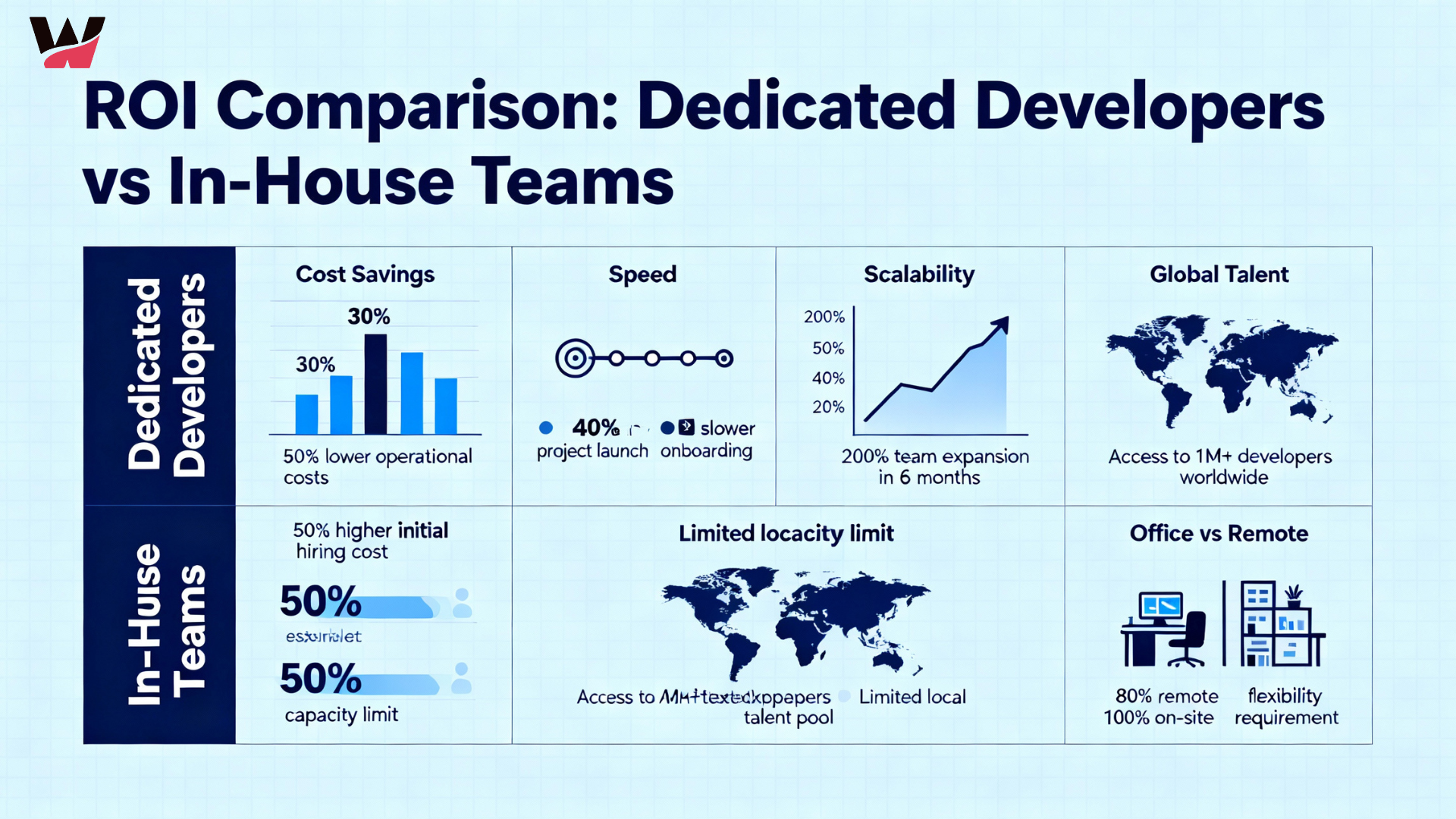
The ROI of Hiring Dedicated Developers vs In-House Teams
-
 November 26, 2025
Why Hybrid Team Models Are the Future of IT Project Delivery
-
 November 24, 2025
React, Node.js, or .NET? Choosing the Right Tech Stack for Your Next Project
-
 November 21, 2025
Why Hiring Remote Developers Is the Smartest Move for Startups
-
 November 20, 2025
How Full-Stack Developers Drive Efficiency in Modern Web Projects
-
 November 19, 2025
Bridging the Skill Gap: How Augmented Teams Empower Digital Transformation
-
 November 18, 2025
New Technologies for 2025: What Businesses Need to Grow
-
 November 14, 2025
IT Staff Augmentation Reduces Project Costs Quality
-
 November 13, 2025
Empowering Global Collaboration: How WitQualis Builds Seamless Remote Teams
-
 November 12, 2025
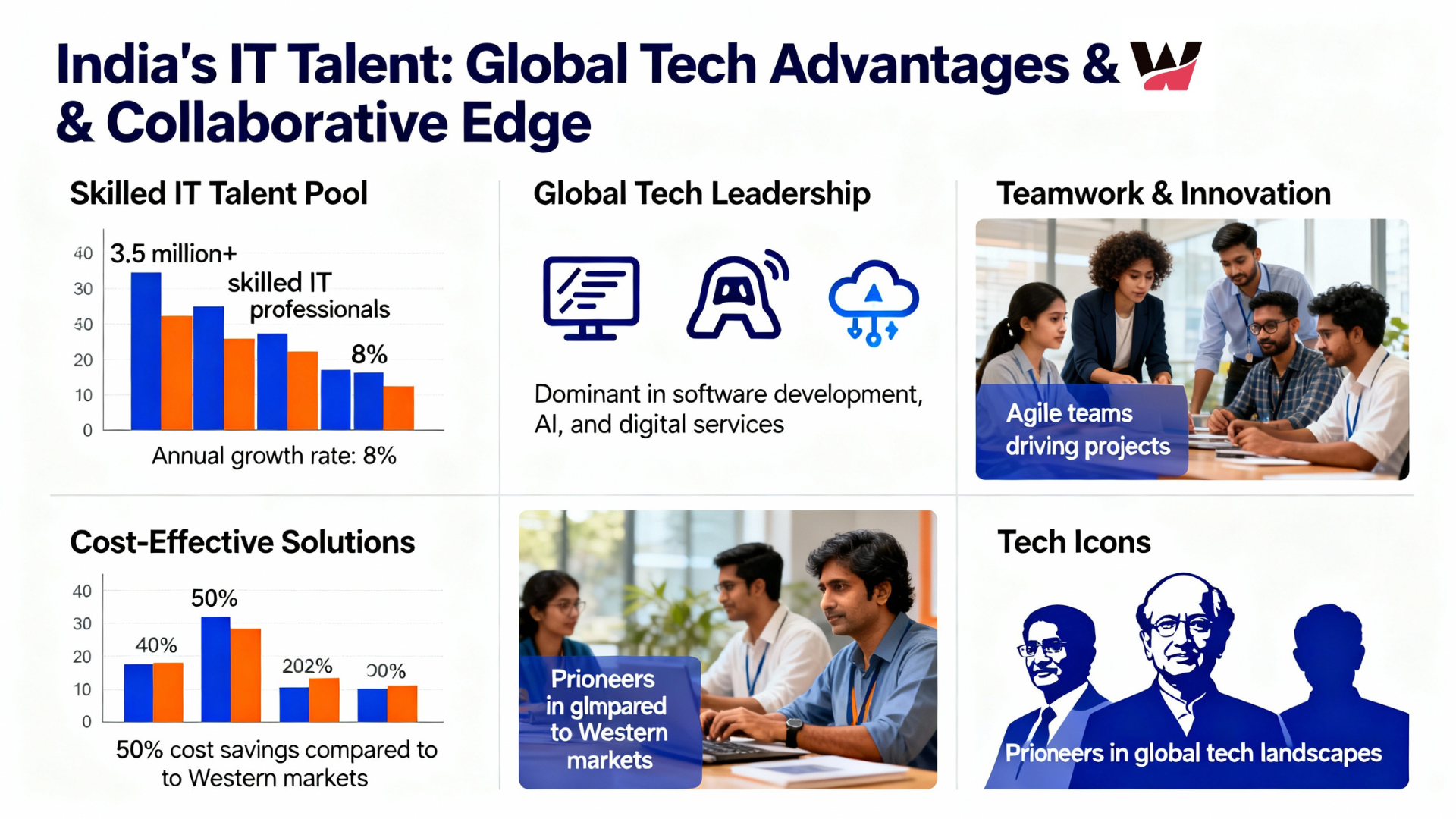
Why Global Businesses Are Turning to India for Skilled IT Talent
-
 November 11, 2025
Staff Augmentation Helps You Scale Your Tech Team
-
 November 10, 2025
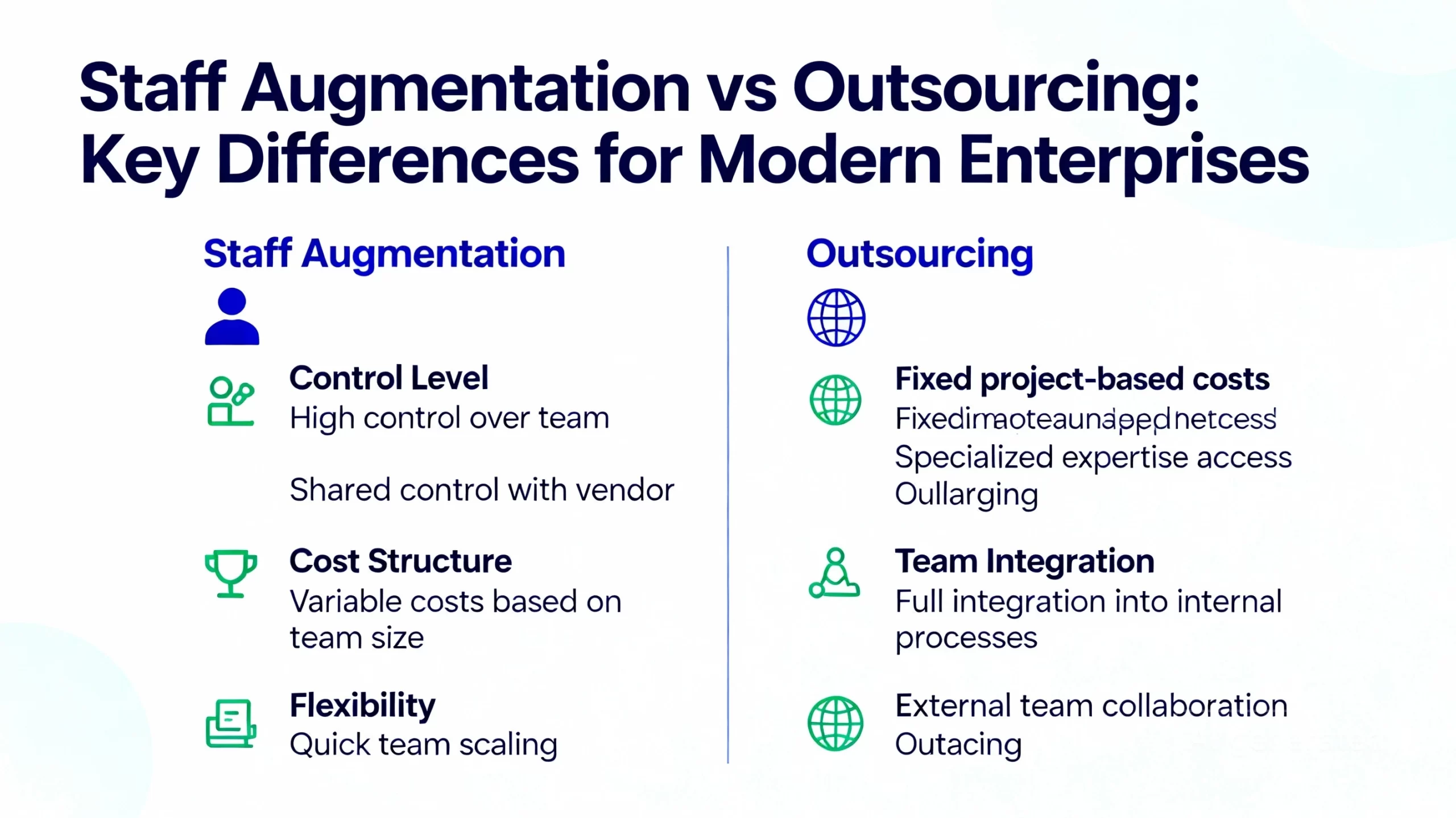
Staff Augmentation vs Outsourcing in 2025: Which Is Best for Modern Enterprises?
-
 November 7, 2025
How AI, IoT, and Cloud Are Redefining Software Development in 2025
-
 November 6, 2025
Scaling Smarter: How Augmented Teams Help Deliver Projects Faster in 2025
-
 November 5, 2025
How AI and Automation Are Transforming Software Development Teams in 2025
-
 November 3, 2025
The Future of IT Staffing: Why Businesses Are Choose Staff Augmentation in 2025
-
 October 31, 2025
Why Technology is Essential for Business Growth (2025): Top Reasons & Winning Strategies
-
 October 30, 2025
How the Internet of Things (IoT) Is Revolutionizing Modern Business
-
 October 29, 2025
Blockchain Cryptocurrency: Real-World Applications | WitQualis
-
 October 28, 2025
API Design and Management Best Practices for Developers
-
 October 27, 2025
Microservices Architecture: Benefits, Implementation Tips & Real-World Examples
-
 October 24, 2025
How Remote Work Has Transformed the IT Industry Tools in 2025
-
 October 23, 2025
Virtual and Augmented Reality: The Tech Revolution | WitQualis
-
 October 22, 2025
How AI is Revolutionizing Business Decision-Making in 2025 | In-Depth Analysis & Trends
-
 October 16, 2025
Blockchain Beyond Crypto: Building Trust in Business Operations
-
 October 15, 2025
How Custom Software Solutions Drive Business Efficiency | Expert Guide
-
 October 13, 2025
How Automation Reduces Costs & Boosts Productivity in 2025
-
 October 10, 2025
Staff Augmentation: The Key to Building Agile & Scalable Teams
-
 October 9, 2025
The Role of Cloud Computing in Scaling Modern Businesses
-
 October 8, 2025
Why Every Company Needs a Data-Driven Growth Strategy
-
 October 7, 2025
API Design Best Practices for Developers in 2025 |API versioning strategies
-
 October 6, 2025
virtual reality vs augmented reality vs mixed reality
-
 October 3, 2025
The Impact of Internet of Things (IoT) on Modern Business
-
 October 1, 2025
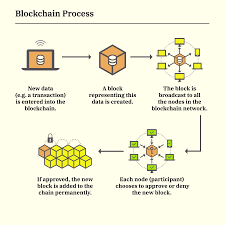
Blockchain Beyond Cryptocurrency: Real-World Applications in 2025
-
 September 30, 2025
The Future of Artificial Intelligence: Trends and Opportunities
-
 September 26, 2025
Microservices Architecture: Benefits and Implementation Tips
-
 September 25, 2025
Why Staff Augmentation Is a Smart Move for IT Projects in 2025
-
 September 24, 2025
Cloud Computing Explained: Benefits and Best Practices (AWS, Azure, Google Cloud)
-
 September 23, 2025
How Staff Augmentation Can Help Scale Your IT Team Efficiently
-
 January 6, 2025
Choosing the Right Front-End Web Development Service in the UK
-
 January 4, 2025
Why Choose Staff Augmentation Services in India for Your IT Projects?
-
 December 21, 2024
Boost Your Business ROI with Power BI Development Services in the Maldives and Iceland
-
 December 20, 2024
Get a Free Consultation: Is Your E-Commerce Business in the UAE Ready for Digital Transformation?
-
 July 6, 2023
The Future of Small Business and Know-How to Climb up the Ladder


It’s great to see how WitQualis Technologies offers a range of specialized developers across both front-end and back-end technologies. It’s important for businesses to have access to tailored teams for each project phase.